

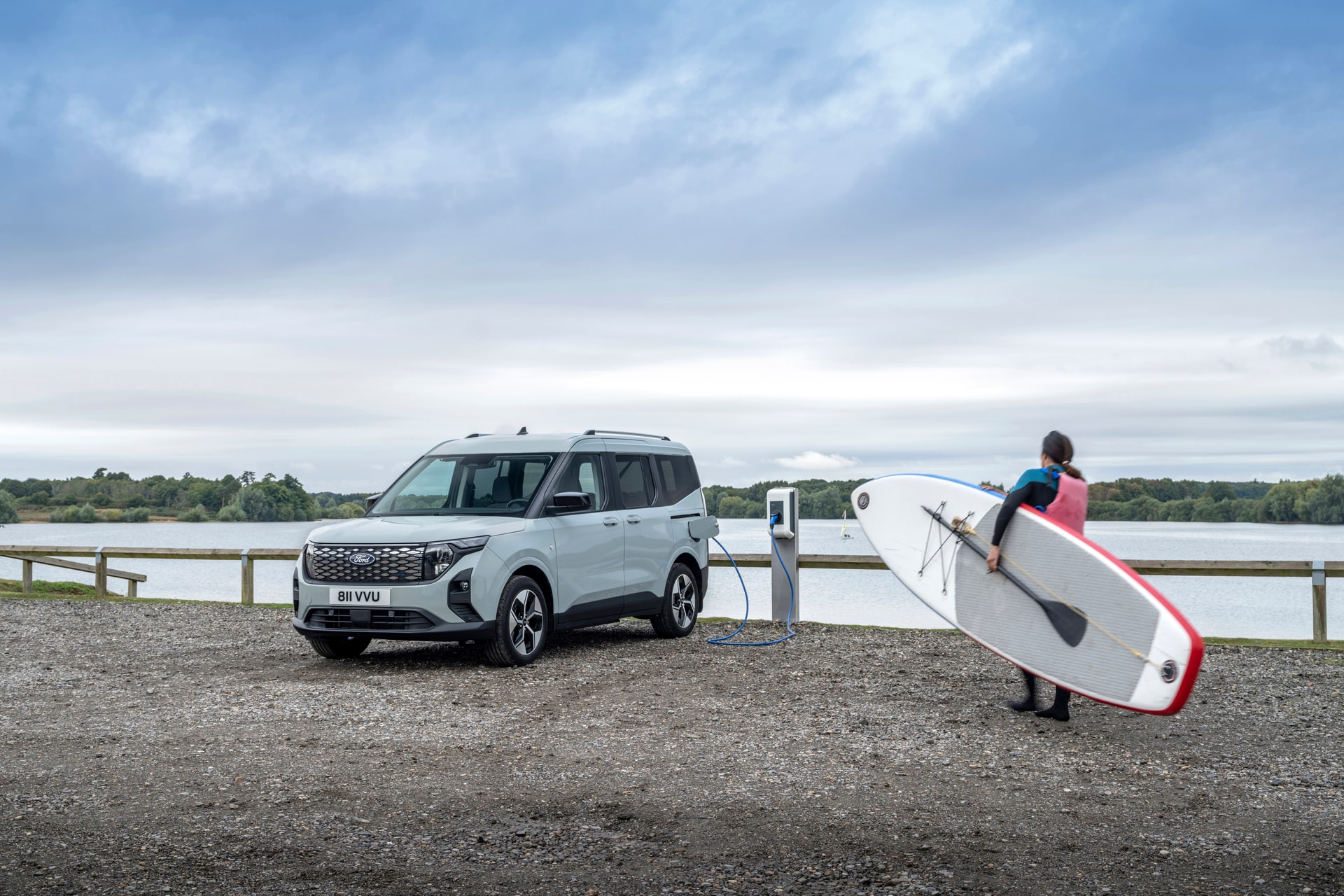
Three child seats in the same row is not a whim: it is the reality of any family with twins and an older sibling, or simply with three children in a row. And this is where the average car falls short. It is not a matter of seats, but of millimeters: between a group 0+ seat and a booster there are shells that overlap, ISOFIX anchors that do not line up with the width of the bench, and parents who end up installing the middle one with the seat belt because it won’t fit any other way.
Why rear seat width decides whether three ISOFIX seats fit
The figure that really matters is not the exterior width of the bodywork, but the actual distance between the door panels in the second row, measured shoulder to shoulder. A standard child seat is roughly 440-480 mm wide at its base; multiplied by three, that requires at least 1,400-1,500 mm of free space. Below that figure, fitting the third seat becomes a forced squeeze that ends up deforming the backrest of the central seat.
The number of ISOFIX anchors certified by the manufacturer in that row also counts. Most passenger cars certify only two ISOFIX points (side seats), leaving the central seat secured by a three-point seat belt and an upper Top Tether anchor. Only some passenger vans and MPVs with individual seat configurations certify three ISOFIX points in the same row. That difference, which seems like fine print, is what truly separates a car that “fits” from one designed for this purpose.
The 5 MPVs and vans with the widest rear seat in 2026
1. Mercedes-Benz V-Class — the widest bench in the segment
The V-Class does not compete on price with anyone on this list, but it wins where it matters here: its configuration with individual seats in the second row allows three child seats, each on its own sliding seat, with its own ISOFIX anchor at each position. There is no width compromise because there is no shared continuous bench: they are three independent seats.
| Engine | Power | Consumption | Label | Fuel | Price from |
|---|---|---|---|---|---|
| 220d | 120 kW / 163 CV | ~7.0 l/100 km | C | Diesel | 55,000 € |
2. Citroën Berlingo — the MPV that best solves three seats for the price
The Berlingo inherits from its commercial van platform a cabin width that few passenger car rivals match. Its rear bench, in the single split-folding 1/3-2/3 versions, accommodates three child seats with the two side ISOFIX anchors plus central seat-belt fixing and Top Tether. It is not the perfect layout of the V-Class, but at less than half the price it is the most reasonable option for anyone who does not need individual seats.
| Engine | Power | Consumption | Label | Fuel | Price from |
|---|---|---|---|---|---|
| BlueHDi 130 | 96 kW / 130 CV | ~5.3 l/100 km | C | Diesel | 27,000 € |
3. Ford Tourneo Connect — balance between width and maneuverability
It shares its platform with the Volkswagen Caddy, and that shows in a generous bench width without giving up a manageable exterior size in town. It accommodates three seats with the two usual ISOFIX anchors and a seat-belt-secured central position, and its access to the rear seats (sliding doors in several versions) makes it easier to buckle in the youngest without leaning awkwardly into the car.
| Engine | Power | Consumption | Label | Fuel | Price from |
|---|---|---|---|---|---|
| 1.5 EcoBlue | 86 kW / 115 CV | ~5.0 l/100 km | C | Diesel | 29,000 € |
4. Volkswagen Touran — the classic with nuances
The Touran remains one of the passenger-car MPVs with the most interior width in the second row, which means three seats fit, although the central one is tighter than in the vans on this list. Two side ISOFIX anchors, three-point seat belt in the center. For families who want road behavior more like a car than a van, it remains among the best in the segment.
| Engine | Power | Consumption | Label | Fuel | Price from |
|---|---|---|---|---|---|
| 1.5 TSI | 110 kW / 150 CV | ~6.5 l/100 km | C | Petrol | 34,000 € |
5. Dacia Jogger — the cheapest that also delivers
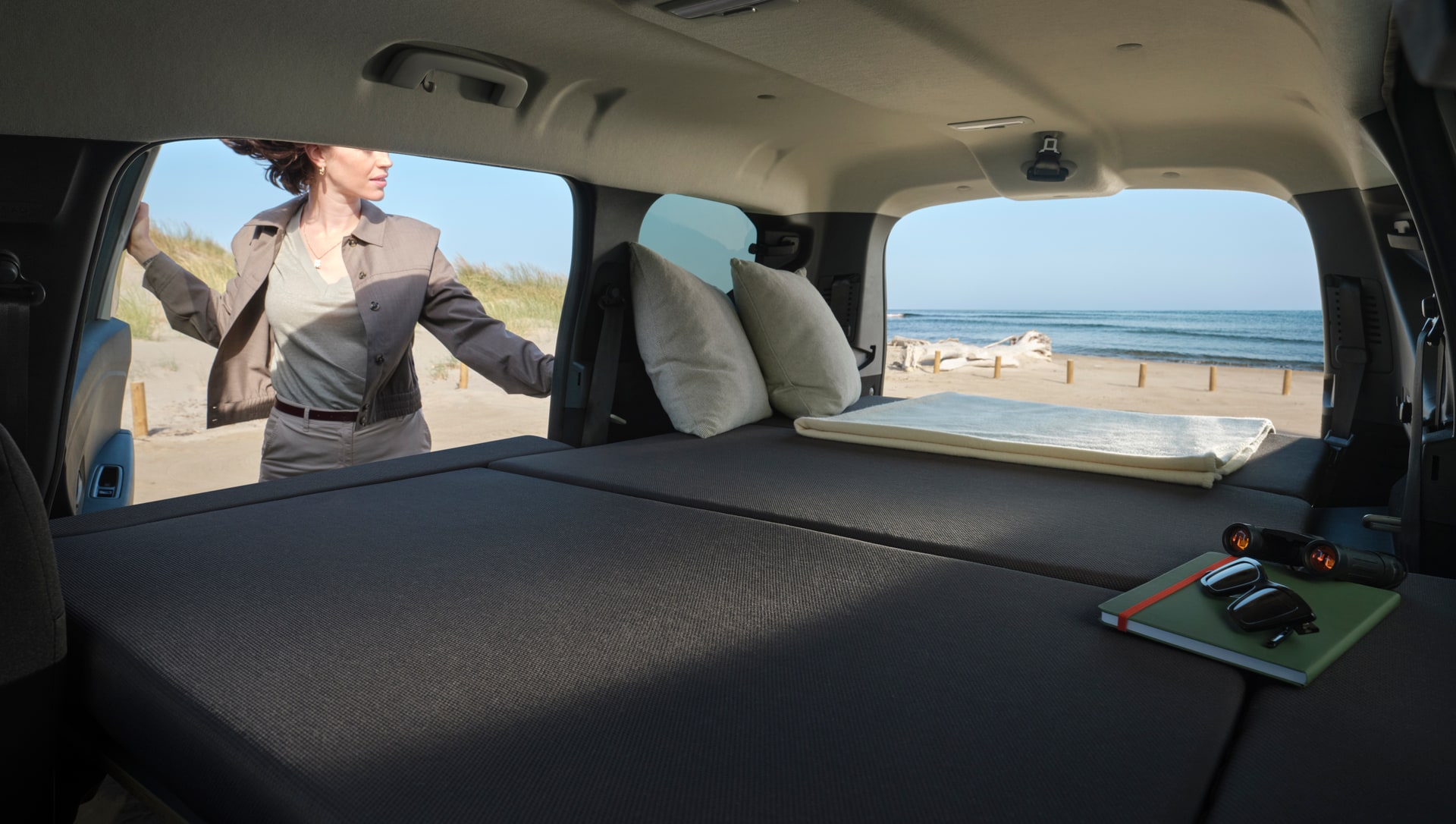
The Jogger does not have the width of a Berlingo or the finish of a Touran, but its rear bench allows three child seats to be installed without resorting to narrow-shell models. With almost half the budget of the rest of the list, it is the real entry point for those who need this and cannot afford more.
| Engine | Power | Consumption | Label | Fuel | Price from |
|---|---|---|---|---|---|
| 1.0 TCe 110 | 81 kW / 110 CV | ~6.0 l/100 km | C | Petrol | 17,000 € |
Summary table: width, certified ISOFIX and starting price
| Model | Approx. bench width | Certified ISOFIX | Price from | Score (1-10) |
|---|---|---|---|---|
| Mercedes-Benz V-Class | ~1,540 mm (individual seats) | 3 (one per seat) | 55,000 € | 9.5 |
| Citroën Berlingo | ~1,500 mm | 2 side + central seat belt | 27,000 € | 8.5 |
| Ford Tourneo Connect | ~1,480 mm | 2 side + central seat belt | 29,000 € | 8 |
| Volkswagen Touran | ~1,450 mm | 2 side + central seat belt | 34,000 € | 7.5 |
| Dacia Jogger | ~1,430 mm | 2 side + central seat belt | 17,000 € | 7 |
Verdict: which car to choose depending on your case
If budget is not the deciding variable and you want the solution without compromises, the V-Class wins by a landslide: it is the only one on the list with three ISOFIX anchors as standard, one per seat, which eliminates the width problem at its root. That said, its price from 55,000 € is more than 60% above the rest of the list, so you have to be willing to pay for it.
For those who need three seats without that outlay, the Berlingo is the most honest option: sufficient width, two reliable ISOFIX anchors and a price that does not force you to give up other things. The Tourneo Connect is very close, with the advantage of easier access thanks to its sliding doors.
The Touran still deserves a place for those who prioritize road behavior over maximum width, although the central seat will be tighter with large-shell child seats. And the Jogger, with all its finish limitations, is the one that solves this for less than 17,000 €: the undisputed price-performance option.
Frequently asked questions
Which car allows three ISOFIX child seats in the same row in 2026?
The Mercedes-Benz V-Class is the only model on this list that certifies three ISOFIX anchors in the second row, one for each individual seat. The rest allow three seats to be installed physically, but with only two ISOFIX and the central one secured by a seat belt.
How much rear seat width do three child seats need?
As a practical reference, it is advisable to have at least 1,430-1,500 mm of free space between door panels in the second row, enough to fit three bases of 440 to 480 mm without forcing the backrests.
Is a seven-seat MPV equivalent to a passenger van for this?
Not necessarily. Many passenger-car MPVs share a platform with commercial vans (such as the Berlingo), which gives them a greater cabin width than an MPV designed from the outset as a car.
Do public car purchase grants cover these family models?
Yes, depending on the engine and the case, these models may fall within the framework of the Plan Auto+ in force in Spain. The specific amounts and requirements should always be checked on the plan’s official website before closing the purchase.
