

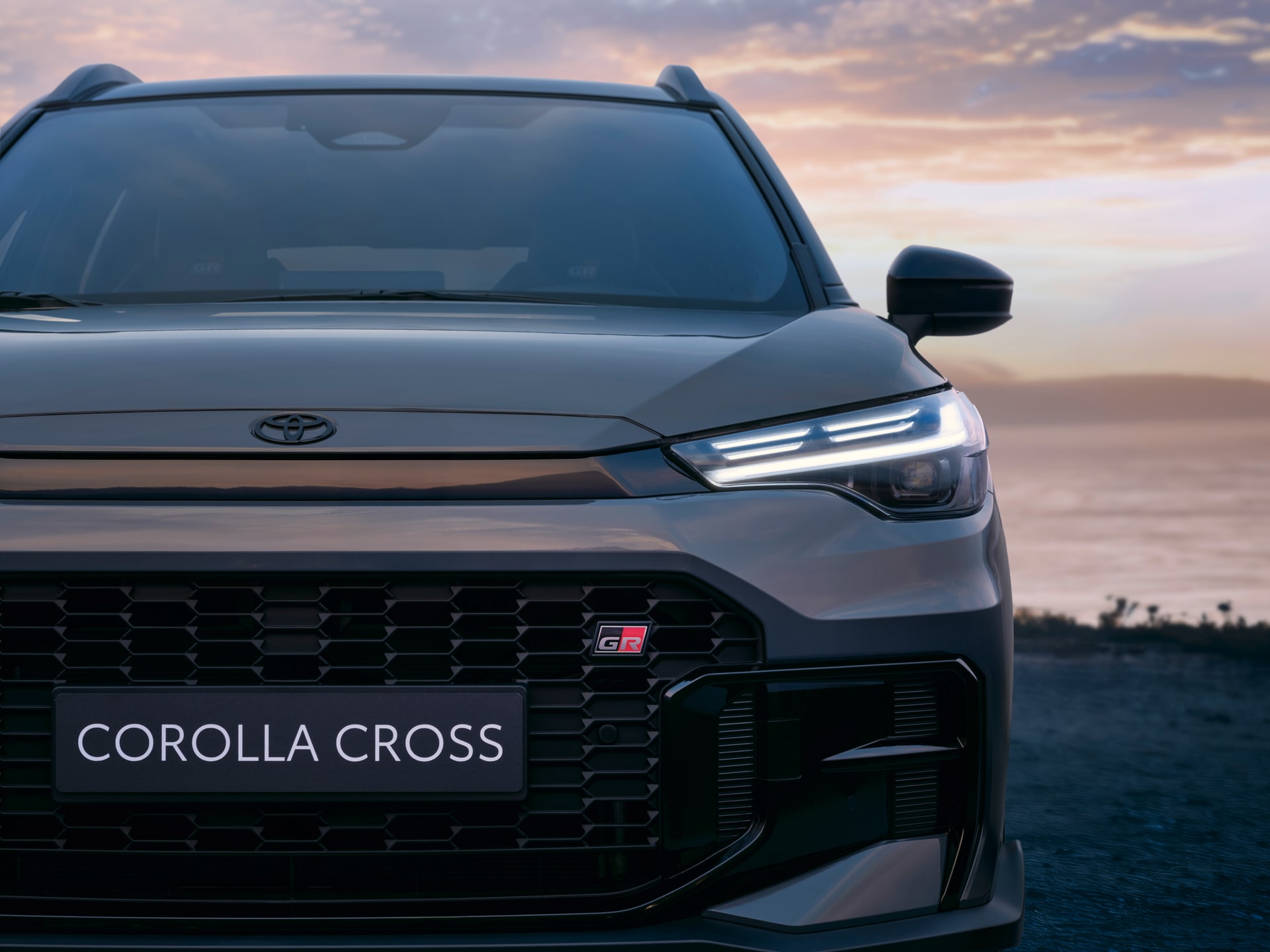
Choosing between these two compact SUVs isn’t just a question of brand. Toyota has spent years promoting the self-charging hybrid as a synonym for low consumption and proven reliability; Honda took longer to enter this segment, but does so with an i-MMD system that prioritises performance and smoothness over extreme fuel savings. They are different philosophies applied to the same problem: getting around town and on the open road while spending little and without jolts.
Toyota Corolla Cross 140H, from 41,000 €: the safe bet on consumption
The Corolla Cross comes in the 140H Style version, with an e-CVT gearbox and a hybrid powertrain delivering 140 CV combined. It isn’t trying to impress at the traffic lights. It’s trying to make the tank last. And it does: with a homologated consumption of 5 l/100 km, it is among the most efficient compact SUVs you can buy new in Spain today without going for a pure electric car.
Toyota Corolla Cross 140H technical specifications
| Power (kW) | Power (CV) | Top speed | Consumption | CO₂ | Fuel | Starting price |
|---|---|---|---|---|---|---|
| 100 kW | 140 CV | 170 km/h | 5 l/100 km | 110 g/km | Hybrid (petrol/electric) | 41,000 € |
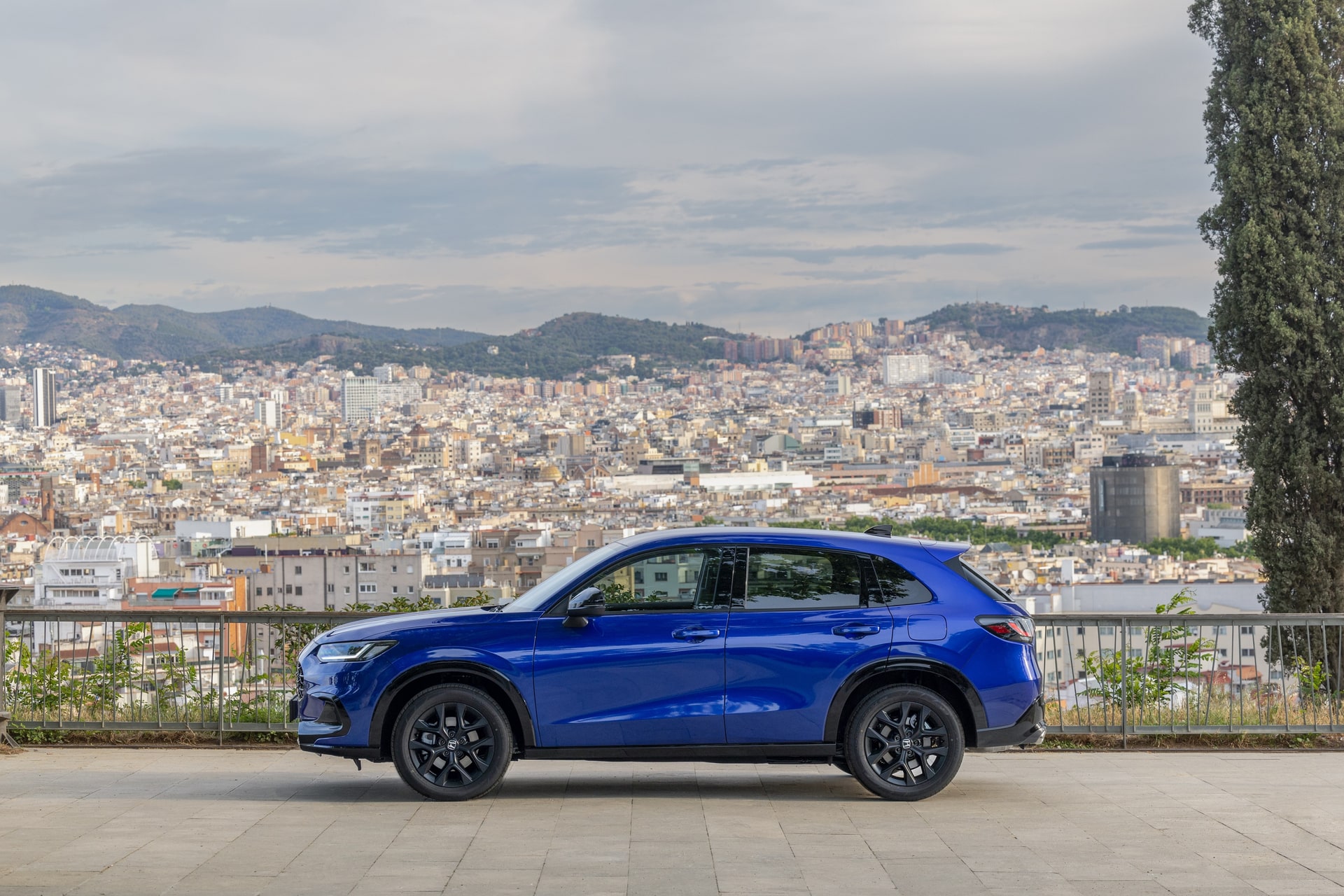
Honda ZR-V Hybrid 2.0 i-MMD, from 45,000 €: more power and refinement
The ZR-V uses Honda’s i-MMD system, with 184 CV combined and in Sport trim. Here the argument changes: it isn’t the cheapest SUV to run, but you feel it in how it pulls on overtakes and in how it filters out imperfections in the road surface. Homologated consumption rises to 6 l/100 km, one litre more than the Toyota, and with a full tank that translates into quite a few euros less over the year if you cover a lot of kilometres.
Honda ZR-V Hybrid 2.0 i-MMD technical specifications
| Power (kW) | Power (CV) | Top speed | Consumption | CO₂ | Fuel | Starting price |
|---|---|---|---|---|---|---|
| 140 kW | 180 CV | 170 km/h | 6 l/100 km | 130 g/km | Hybrid (petrol/electric) | 45,000 € |
Real-world consumption: the difference of almost a litre per 100 km
A litre of homologated difference doesn’t sound like much until you multiply it by 20,000 km a year. That’s where the Corolla Cross gains a clear advantage, and it also has a more favourable emissions label in everyday urban driving, where the Toyota hybrid spends more time in pure electric mode than the Honda. In sustained motorway driving, though, the gap narrows: the more powerful ZR-V doesn’t need to work as hard to hold cruising speed, and there it recovers some of the ground it loses in town.
Standard equipment: what each reference trim includes
The Corolla Cross in Style trim comes with what you’d expect from its range: Toyota Safety Sense driver assistance, automatic climate control and a multimedia screen with smartphone connectivity. The ZR-V Sport raises the bar on interior materials and on the perceived quality to the touch, something you notice as soon as you sit down. If technological equipment weighs heavily in your decision, the Honda feels a step above; if what you want is for everything to work without surprises, Toyota has spent more years refining its software.
Price and warranty: the 4,000-euro gap you need to justify
Here is the first fact that conditions everything else: the ZR-V starts at 45,000 € compared with the Corolla Cross’s 41,000 €, a difference of almost 10% which, added to its higher consumption, means the Honda has to justify its price with more than horsepower. Both brands offer extendable warranty programmes linked to maintenance at official dealers; it’s worth checking the conditions in force at the dealership, as they vary by campaign. The prices shown are the manufacturer’s recommended RRP, without dealer discounts or one-off promotions.
Dimensions and space: which one makes better use of the interior?
The ZR-V is slightly longer, which translates into somewhat more generous legroom in the rear seat. The Corolla Cross doesn’t fall short, but its design priority has always been aerodynamics before raw space, something that also helps explain its lower consumption.
Toyota Corolla Cross vs Honda ZR-V comparison table
| Model | Power | Consumption | CO₂ | Starting price | Score |
|---|---|---|---|---|---|
| Toyota Corolla Cross 140H | 140 CV | 5 l/100 km | 110 g/km | 41,000 € | 8.3/10 |
| Honda ZR-V Hybrid 2.0 i-MMD | 180 CV | 6 l/100 km | 130 g/km | 45,000 € | 7.9/10 |
Where each one wins (no fine print)
The Toyota wins on real-world consumption and on entry price, two arguments that weigh heavily if the car is used daily for commuting. The Honda wins on available power and on that sense of interior solidity you perceive when closing the door; for anyone who values ride comfort above the fuel bill, it’s a genuine argument, not a minor nuance.
Verdict: which Japanese compact hybrid SUV to choose in 2026
For intensive urban use and high mileage, the Corolla Cross 140H clearly wins: lower consumption, lower starting price, and a formula Toyota has long since refined as standard. For those looking for an SUV with more presence on the motorway who don’t mind paying that extra 10%, the ZR-V Hybrid offers a more refined driving experience that you notice above all on long journeys. Consumption-to-price ratio: Toyota Corolla Cross. Performance and interior finish: Honda ZR-V.
Frequently asked questions
What is the most efficient compact hybrid SUV from Japan in 2026?
The Toyota Corolla Cross 140H, with a homologated consumption of 5 l/100 km against the 6 l/100 km of the Honda ZR-V Hybrid, is the more efficient of the two in mixed use and especially in town.
Is it worth paying more for the Honda ZR-V Hybrid?
If you value more power (180 CV against 140 CV) and an interior with more carefully finished materials, yes. If your priority is monthly fuel spending, the Corolla Cross makes up for the premium of around 4,000 € better.
How much does the Toyota Corolla Cross 140H cost in Spain?
It starts at approximately 41,000 € RRP in its Style trim, not counting dealer discounts or one-off offers.
Does the Honda ZR-V Hybrid consume a lot for a hybrid?
No, but its homologated consumption of 6 l/100 km sits a step above the Corolla Cross, which is logical given that it delivers 40 CV more combined power.
If your comparison is within a tighter budget, it’s also worth looking at the most urban Japanese hybrid SUV-B, a category below but with the same philosophy of low consumption. And if you want to understand how the warranty weighs on the final decision, this guide to compact hybrid SUVs breaks down that criterion in more detail.
