

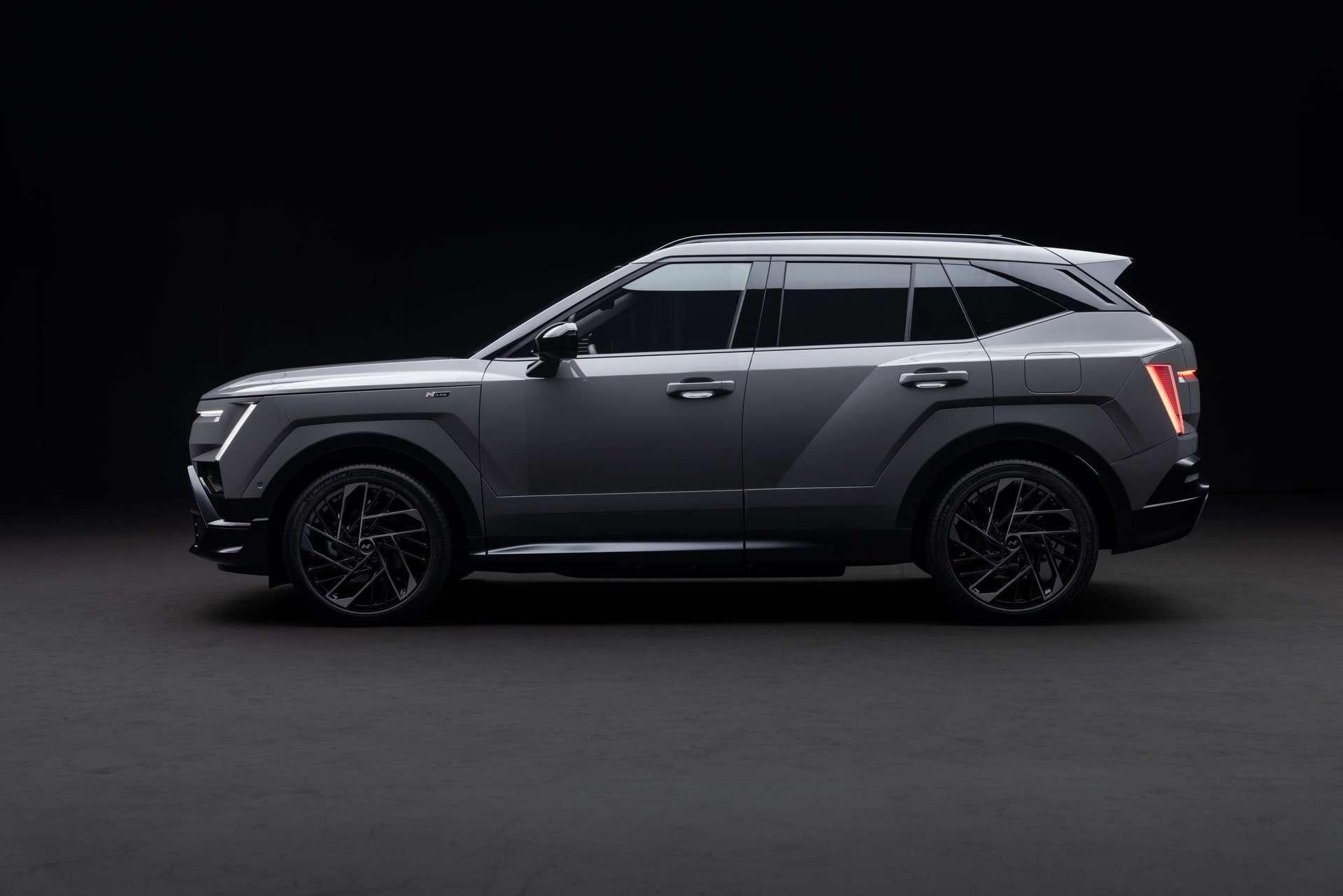
Every time someone asks at a dealership "is this really a hybrid?", the answer tends to be more confusing than it should be. Some cars carry the word "hybrid" on the boot and barely save any fuel, while others don’t and run in electric mode for half of their urban life. The difference isn’t marketing: it’s mechanical, and you notice it at the petrol station.
What a SUV-B full hybrid (HEV) is
A full hybrid, technically an HEV (Hybrid Electric Vehicle), combines a combustion engine with one or more electric motors and a small battery that is charged exclusively through regenerative braking and the combustion engine itself. It is never plugged in. Its strength lies in the fact that, at low speeds and in dense traffic, it can move the car on electricity alone over short distances, which drastically reduces city consumption. This is the technology fitted to the Hyundai Kona in its Hybrid version, and it is indeed one of the areas where this SUV-B clearly outperforms rivals in the segment that only offer a mild hybrid.
What a mild hybrid (MHEV 48V) is and why it is not the same
A mild hybrid, or MHEV, uses a small electric motor (typically between 10 and 20 kW) powered by a 48V battery that assists the combustion engine during starts and acceleration, but never moves the car on its own. There is no pure electric mode. Its role is to smooth out stop&start, recover some energy during braking and slightly relieve the load on the combustion engine. The saving exists but is modest: we are talking about consumption improvements of between 5% and 10% compared with an equivalent petrol engine without electrification, nothing comparable to the 20-30% a HEV can achieve in urban cycle.
The real difference in consumption: city, country roads and motorway
Here is the key point that almost nobody explains well. A self-charging HEV shines in the city, where constant starting and stopping allows it to draw on its battery frequently; on the motorway, with the combustion engine working almost all the time, its advantage shrinks considerably because there is hardly any opportunity to recover energy. A mild hybrid, on the other hand, maintains a flatter consumption profile between city and road driving, because its electric contribution is constant but small in every scenario. A petrol engine, naturally aspirated or turbo, without any form of electrification, such as the one fitted to the Hyundai Bayon, serves as a benchmark for "no-tricks" consumption: what the homologated cycle states is, broadly speaking, what you get with reasonable use.
Hyundai Kona: the benchmark for the full hybrid in the B-SUV segment
The Hyundai Kona Hybrid is, within the Korean lineup, the clearest example of how a well-engineered self-charging SUV-B should behave: capable of running in electric mode at low speeds in urban traffic and of noticeably reducing consumption compared with its own petrol version. We already analysed it in detail in our review of the Kona as a single family car, and we also compared it against its most direct Korean rival in Kona Hybrid vs Kia Niro Hybrid. For the current price of each trim, it is advisable to check the up-to-date configuration, as it varies by engine and equipment level.
Hyundai Bayon: the example of efficient combustion without electrification
The Hyundai Bayon is not a mild hybrid: it is a 1.0 TGDi 90 hp petrol with no form of electric assistance, and that makes it the perfect contrast for understanding what light electrification adds and what it does not. In its entry version, the Bayon 1.0 TGDi 90 Essence 5p S/S, it homologates a consumption of 5.8 l/100 km and 132 g/km of CO₂, with a price from approximately €25,100 base RRP. It is an honest figure: it doesn’t promise city miracles, but it doesn’t need them to deliver in moderate mixed use.
| Model | Power | Top speed | Homologated consumption | CO₂ | Fuel | Price from |
|---|---|---|---|---|---|---|
| Hyundai Bayon 1.0 TGDi 90 Essence 5p S/S | 66 kW (90 hp) | 174 km/h | 5.8 l/100 km | 132 g/km | Petrol | ~€25,100 |
| Hyundai Kona Hybrid (conceptual reference) | data not available in this sheet | data not available | check current sheet | check current sheet | Hybrid (HEV) | check configurator |
When the full hybrid pays off and when an efficient petrol is enough
If your daily routine is city driving, traffic jams and short trips with many stops, the self-charging HEV of the Kona will pay back its extra cost fairly quickly, because that is precisely where its electric motor works hardest. If your use is mostly highway or motorway driving, with few traffic lights and steady speed, the consumption gap between a HEV and a well-engineered petrol like the Bayon narrows almost to nothing, and then the entry price matters more than the technology label.
Verdict: what to choose depending on your case
For city and intensive urban use, with many starts and stops: the self-charging hybrid of the Hyundai Kona is the option that genuinely shows up in your monthly fuel bill. For those who prioritise the entry price and do moderate mixed use without overworking the engine in dense traffic, the Hyundai Bayon offers a simple, reliable mechanical solution without the premium of electrification. The mild hybrid, as a category, sits in a middle ground that rarely justifies paying more than a well-tuned petrol if you will almost always be driving in the city.
| Use case | Recommendation | City consumption score (1-10) | Entry price score (1-10) |
|---|---|---|---|
| City and frequent traffic jams | Hyundai Kona Hybrid (HEV) | 9 | 6 |
| Mixed use, price priority | Hyundai Bayon 1.0 TGDi 90 | 6 | 9 |
The prices shown are manufacturer’s recommended RRP, without dealer discounts, one-off campaigns or aids such as the Plan Auto+, whose amount should be verified on the official website before closing the purchase.
Frequently asked questions
Does a self-charging hybrid use less than a mild hybrid on the motorway?
Not necessarily. On the motorway the HEV can hardly use its electric motor, so its advantage shrinks compared with a mild hybrid or even with a well-sized petrol like the Bayon.
Can a self-charging hybrid like the Hyundai Kona Hybrid be plugged in?
No. It is charged solely by the combustion engine and regenerative braking, unlike a PHEV, which does incorporate an external plug.
What real consumption difference is there between an HEV and an MHEV in the city?
In urban cycle, a well-designed HEV can reduce consumption by between 20% and 30% compared with its petrol equivalent, while a mild hybrid usually stays at an improvement of between 5% and 10%.
Why is the Hyundai Bayon not a mild hybrid?
Because its 1.0 TGDi 90 hp mechanics include no electric assist motor and no 48V battery: it is a conventional petrol, and that is precisely what makes it a clean point of comparison against electrification.

1 Comment
Pingback: Omoda 5 SHS vs Toyota C-HR: qué SUV-B híbrido convence más por su precio en 2026 – Comparativa de Coches