

Buying a compact SUV for the city seems simple until you reach the communal garage and find that the space measures 4.20 metres while the car you liked measures 4.24. That unglamorous detail decides more purchases than any power specification. And the boot has the same problem: the brochure says 405 litres, but once you load two hard-shell suitcases and the shopping trolley, there is considerably less room than the number promised.
What “compact urban SUV” means in Spain in 2026
The B-SUV segment has become the best-selling in the country precisely because it promises the impossible: SUV driving height, supermini running costs and a size that, in theory, remains manageable in town. In practice, not all of them deliver all three equally well. Models such as the Hyundai Bayon, the SEAT Arona, the Toyota Yaris Cross and the Renault Captur compete in the same price bracket and buying intent, but they differ by the centimetres you notice when parallel parking on a narrow pre-war street.
The criterion that really matters: exterior size for parking
Length and turning circle: the numbers to check
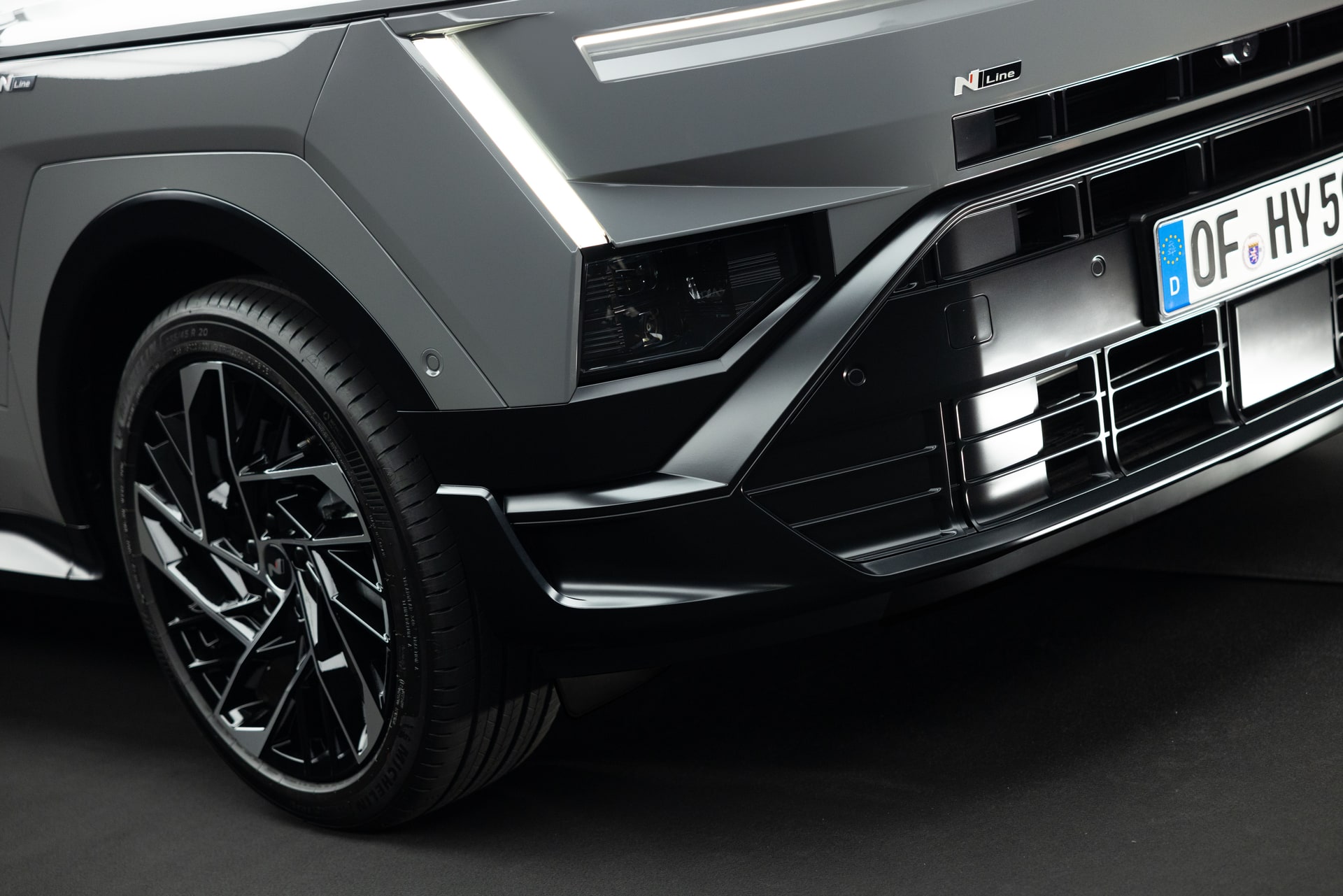
Before looking at screens or power, check two figures: overall length and turning circle. In an average Spanish city, with parking bays of around 4.5 metres, every extra centimetre complicates the manoeuvre. The Hyundai Bayon sits at the most restrained dimensions in the segment, which makes it especially comfortable for anyone parking on the street every day without a dedicated space. The Hyundai KONA, stepping up within the B-SUV class itself, grows in length and width compared with the Bayon, and that becomes noticeable when entering a underground car park with tightly spaced pillars, although in return it gains stability on motorways and a more generous cabin feel.
Rivals such as the SEAT Arona and the Toyota Yaris Cross play in a size band similar to the Bayon’s, while the Renault Captur usually sits one step higher in width, something appreciated in parking bays but which complicates two-way streets with cars parked on both sides.
Useful boot space: why the brochure litres mislead
Here lies the segment’s trap. The litre figure is measured up to the parcel shelf and with the boot floor in its lowest position, something almost nobody uses day to day if they carry a puncture repair kit or an organiser. What really counts is the width between the wheel arches, because that is where hard-shell suitcases fit or don’t, and the height of the loading lip.
The Bayon offsets its reduced exterior size with a boot adequate for the weekly shop and a weekend trip for two people, although it falls short if the family grows or if the dog travels loose in the back. The KONA, once again, is the natural step up: the cargo area increases noticeably and the loading lip is more comfortable for lifting weight, something we already analysed in detail in our review of the Hyundai KONA as a single family car.
Hyundai Bayon, from 25,100 €: the entry point to the B-SUV
The Bayon 1.0 TGDi 90 Essence is the entry version and the model’s price reference in Spain. With 66 kW (90 CV) and front-wheel drive, it doesn’t seek to impress on performance: it aims to be easy to park, cheap to maintain and sufficient for genuine urban use.
| Version | Power | Top speed | Consumption | CO₂ emissions | Fuel | Price from |
|---|---|---|---|---|---|---|
| Bayon 1.0 TGDi 90 Essence | 66 kW (90 CV) | 174 km/h | 5.8 l/100 km | 132 g/km | Petrol | ~25,100 € |
Where the Bayon clearly wins: it is the easiest to fit into a tight space and the most affordable entry point in Hyundai’s SUV range. Where it loses: boot and rear space fall short as soon as a second child seat or a trip with real luggage comes along.
Hyundai KONA: the natural step up when more urban space is needed without losing manoeuvrability
The KONA does not appear in the base price listings we work with here, so we avoid giving it a fixed figure, but its positioning in Hyundai’s range places it clearly above the Bayon. What can be stated with real-world usage data is that it solves the problem the Bayon leaves open: more boot space, more rear room and a drive that, despite its larger size, remains docile in town thanks to its direct steering. It is the option when the Bayon has become too small but you don’t want to give up parking without drama.
Other segment rivals: Toyota Yaris Cross, SEAT Arona and Renault Captur
The Toyota Yaris Cross plays in the contained-size league, similar to the Bayon, with the addition of hybrid technology as standard across much of its range, which counts for a great deal in real-world consumption in traffic jams. The SEAT Arona competes almost centimetre for centimetre with the Bayon and adds a slightly more practical boot thanks to its adjustable floor. The Renault Captur, larger, approaches the KONA’s territory in space, with an entry price that usually falls in a range similar to the Bayon’s in its better-equipped versions.
| Model | Parking size | Useful boot | Price from | Score (1-10) |
|---|---|---|---|---|
| Hyundai Bayon | 9 | 6 | ~25,100 € | 7.8 |
| Hyundai KONA | 7 | 8.5 | Above the Bayon | 8.2 |
| Toyota Yaris Cross | 8.5 | 6.5 | Similar to the Bayon | 7.6 |
| SEAT Arona | 8.5 | 6.5 | Similar to the Bayon | 7.4 |
| Renault Captur | 6.5 | 7.5 | Somewhat above the Bayon | 7.3 |
These prices are the manufacturer’s indicative RRP, without dealer discounts, occasional campaigns or public aid schemes such as Plan Auto+, so it is advisable to request a real quote before deciding.
Verdict: which compact SUV to choose depending on your case
For anyone parking every day on narrow streets and not needing a family-sized boot, the Hyundai Bayon wins on size and on entry price, the lowest of those compared here. For anyone who already has a child, a dog or simply tires of a tight boot, the Hyundai KONA is the right step up: more space without becoming a car that is hard to move around in town. For anyone who prioritises consumption in traffic above all else, the Toyota Yaris Cross with its hybrid powertrain deserves a direct comparison, although its boot does not substantially improve on the Bayon’s. The SEAT Arona remains a valid alternative if you want a different dealer experience, and the Renault Captur only pays off if space weighs more than ease of parking.
Frequently asked questions
Is the Hyundai Bayon easier to park than the Hyundai KONA?
Yes. The Bayon has more restrained exterior dimensions, which makes manoeuvring in narrow car parks and streets with double parking easier. The KONA, being larger, compensates with more interior and boot space.
Which compact SUV has the most useful boot for everyday life?
The Hyundai KONA offers the most practical cargo area of the group compared, with a more comfortable loading lip. Among those of similar size to the Bayon, the SEAT Arona stands out for its adjustable floor.
How much does the entry-level Hyundai Bayon cost in Spain?
The entry version, the Bayon 1.0 TGDi 90 Essence, starts from an indicative RRP of about 25,100 €, excluding discounts and public aid.
Is it worth paying more for the Hyundai KONA instead of the Bayon?
It depends on use. If the car is only for getting around alone or as a couple in the city, the Bayon more than suffices and costs less. If there are children, recurring luggage or frequent motorway journeys, the KONA’s extra space is noticed every week.
