

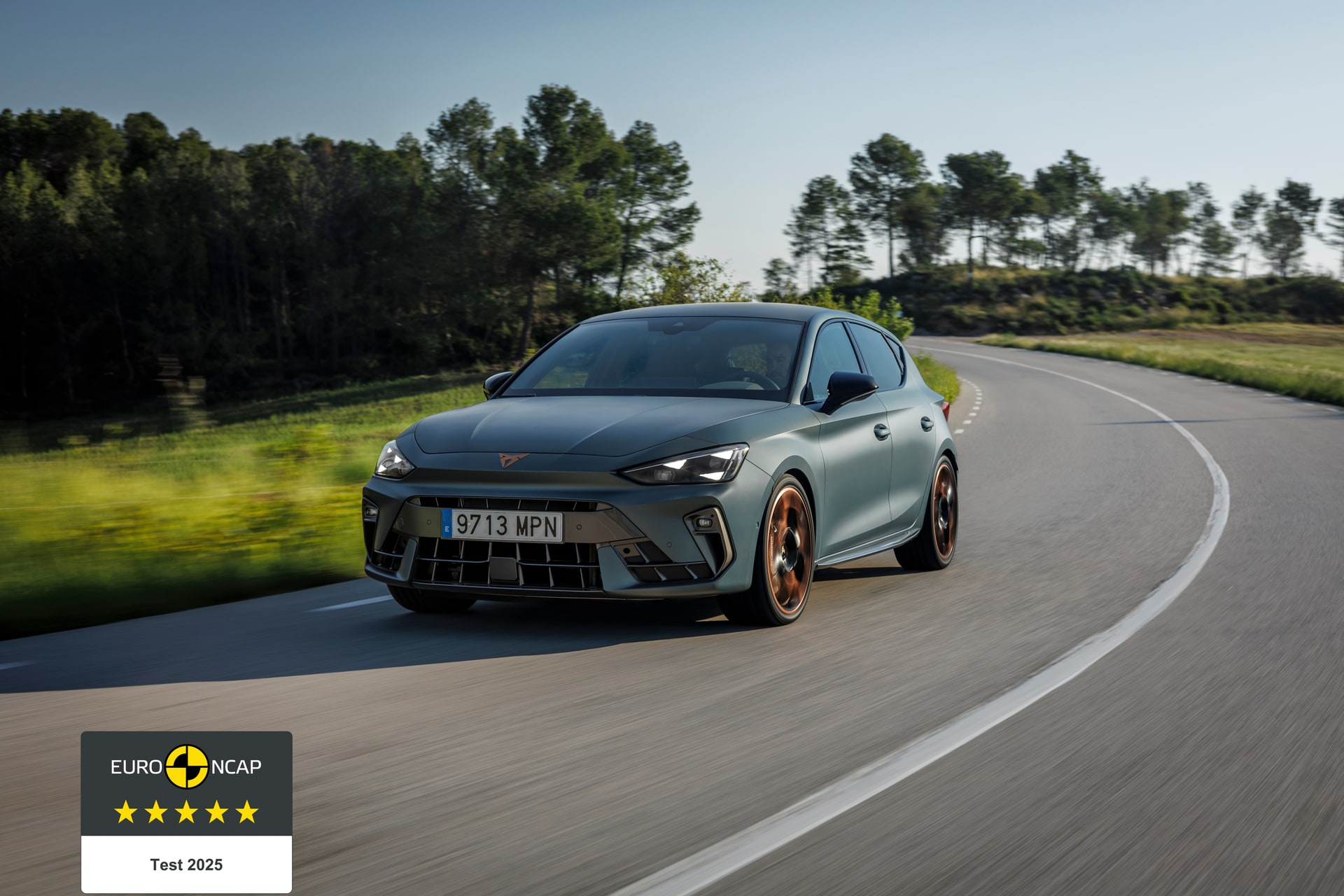
Comparing the Cupra Born with the Volkswagen ID.3 is, at heart, comparing the same car dressed in two different ways. They share the MEB platform, much of the mechanical hardware and even the factory. And yet, behind the wheel, they feel like different propositions: one wants you to enjoy the drive, the other wants to keep things simple for you. That is the point of this comparison, and also the trap of thinking they are "the same thing with a different badge".
Cupra Born 190 58 kWh: the MEB electric with a sporty side (from ≈39,500 €)
The Born is the version of the MEB that the group decided to sharpen. With ≈140 kW (≈190 CV) and a chassis tuned more firmly than that of its cousins in the group, the aim is not only to move without fuss: it is to make the driver feel that there is something behind the wheel. The 58 kWh battery gives it enough margin for everyday use, and the motor’s response is livelier in the mid-range than in an electric car designed only for comfort.
| Power (kW) | Power (CV) | Top speed | Battery | Fuel | Price from |
|---|---|---|---|---|---|
| 140 kW | 190 CV | 160 km/h | 58 kWh | Electric | ≈39,500 € |
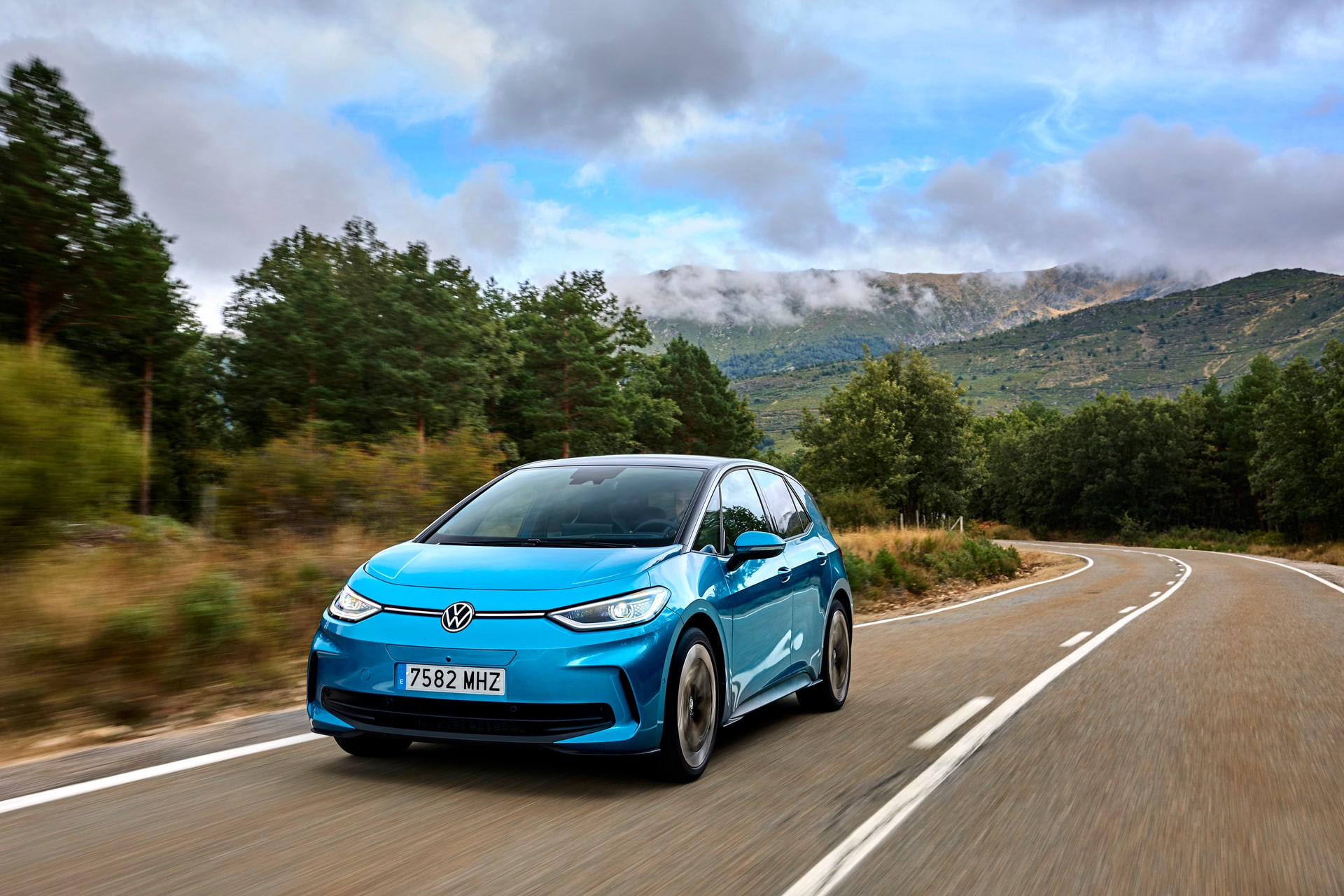
Volkswagen ID.3 Pure 170 55 kWh: the sensible choice from the MEB family (from ≈36,300 €)
The ID.3 Pure, on the other hand, does not hide its intention: to be the sensible electric car. With ≈130 kW (≈170 CV) and a slightly smaller 55 kWh battery, its homologated range is around 380 km, a figure that comfortably covers most daily journeys and weekend trips. It does not aim to thrill; it aims to make you think about the car as little as possible.
| Power (kW) | Power (CV) | Top speed | Range | Battery | Fuel | Price from |
|---|---|---|---|---|---|---|
| 130 kW | 170 CV | 160 km/h | 380 km | 55 kWh | Electric | ≈36,300 € |
Head-to-head comparison: power, battery and price
Placed side by side, the 20 CV difference between the Born and the ID.3 Pure does not sound like much on paper, but it is noticeable in every overtake. The Born accelerates with more authority and the motor responds sooner when you press the accelerator in town. The ID.3 Pure, with 3 kWh less battery, gives up some range, although it remains sufficient for anyone making journeys of under 300 km between charges.
| Model | Power (CV) | Battery | Top speed | Price from | Score |
|---|---|---|---|---|---|
| Cupra Born 190 58 kWh | 190 CV | 58 kWh | 160 km/h | ≈39,500 € | 8/10 |
| Volkswagen ID.3 Pure 170 55 kWh | 170 CV | 55 kWh | 160 km/h | ≈36,300 € | 7.5/10 |
Where the Cupra Born wins
The larger battery (58 kWh versus 55 kWh) gives it a higher range margin on paper, and the extra power (20 CV more) translates into a more agile response, which is appreciated when joining motorways or overtaking on conventional roads. The chassis, moreover, conveys more information to the driver: it is not a car that invites you to drive fast as a matter of course, but it rewards you when you do.
Where the Volkswagen ID.3 wins
The ID.3 Pure wins where it really matters to most people: price. Starting from ≈36,300 € compared with the Born’s ≈39,500 € represents a difference of close to 9% in RRP, which is no small matter in a segment where every euro shows up in the monthly finance payment. It also has a declared homologated range (380 km), a figure the manufacturer puts on the table without beating around the bush, which is welcome when planning journeys.
Price and RRP: the difference that really matters
It is worth clarifying that these figures are the manufacturer’s recommended RRP, without dealer discounts, one-off campaigns or purchase aids such as the Plan Auto+, whose exact amount should always be checked on the official website before closing a quote. With those aids applied, the gap between the two models can narrow considerably, but at the outset the ID.3 remains the more accessible of the two.
If you want to go deeper into how to calculate real-world range for your journeys, this analysis of electric compacts and real kilometres between charges helps you avoid relying solely on the brochure figure. And if the Born or the ID.3 do not quite convince you, this comparison of electric compacts by range and price widens the field to other brands in the segment.
Verdict: which car to choose according to your use
For urban use and short journeys where price matters more than extra CV: Volkswagen ID.3 Pure. For those who want the electric car to feel alive behind the wheel and are willing to pay that premium: Cupra Born. And if what you are looking for is the best car-for-money value without giving up clear homologated range: the ID.3 as well, because its price difference (almost 9% less) is not fully offset by the Born’s extra 20 CV for city and conventional-road use.
Final summary table
| Model | Power | Battery/Range | Price from | Recommended profile | Score |
|---|---|---|---|---|---|
| Cupra Born 190 58 kWh | 190 CV | 58 kWh | ≈39,500 € | Active driving, open road | 8/10 |
| Volkswagen ID.3 Pure 170 55 kWh | 170 CV | 55 kWh / 380 km | ≈36,300 € | City, sensible use | 7.5/10 |
Frequently asked questions
Do the Cupra Born and the Volkswagen ID.3 share a battery?
They share the MEB platform, but not the same capacity in these versions: the Born analysed here has 58 kWh and the ID.3 Pure 55 kWh, a difference that shows up in available range.
Which has more real-world range, the Born or the ID.3?
The ID.3 Pure declares 380 km homologated with its 55 kWh battery. The Born, with a slightly larger battery (58 kWh), does not turn that capacity advantage into an official figure in this sheet, although its larger battery suggests a similar or greater margin.
Is it worth paying more for the Cupra Born?
It depends on how you use it. If you drive on open roads often and value the motor’s response and the feel of the chassis, the ≈3,200 € difference is justified. If your day-to-day use is urban, the ID.3 covers the same needs for less money.
Do public aids apply to these two models?
Both may benefit from the Plan Auto+ in force in Spain, although the exact amount and requirements should be checked on the plan’s official website before calculating the final price, since the figures in this article are RRP without discounts or aids applied.

3 Comments
Pingback: SEAT Arona vs Volkswagen T-Cross: qué SUV-B urbano del grupo VW ofrece más coche por su precio – Comparativa de Coches
Pingback: Cupra Leon e-Hybrid vs Volkswagen Golf eHybrid: qué compacto PHEV del grupo VW ofrece más coche por su precio en 2026 – Comparativa de Coches
Pingback: BYD Seal U DM-i vs Omoda 7 PHEV vs MG HS PHEV: qué SUV-C PHEV chino ofrece más coche para familia por menos de 40.000€ – Comparativa de Coches