

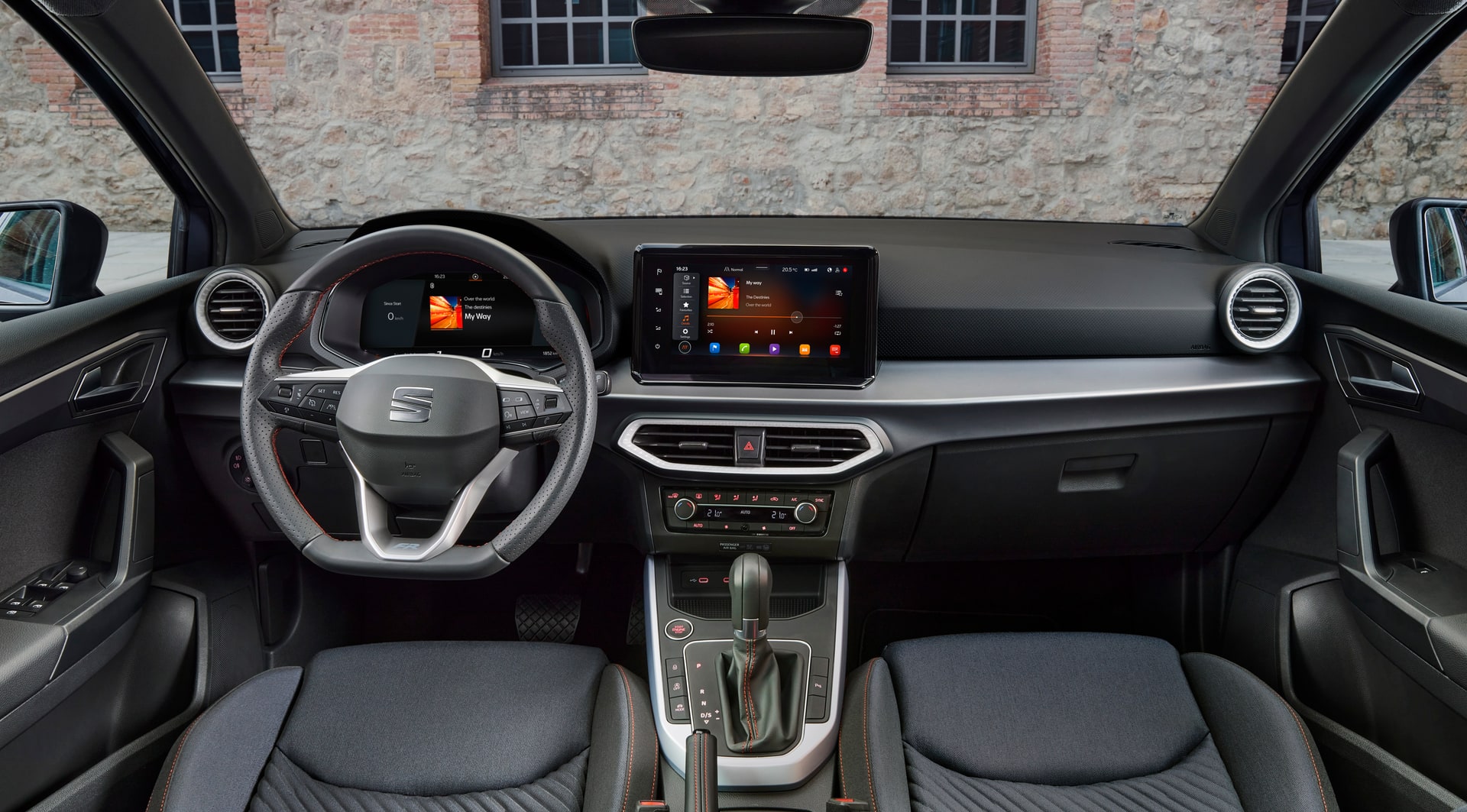
Comparing the SEAT Arona with the Volkswagen T-Cross is, at heart, comparing the same car dressed in two different ways. They share the MQB A0 platform, the same 1.0 TSI 100 CV engine and a good part of the interior suppliers. Yet the RRP separates them by almost 2,500 €. Is that difference noticeable behind the wheel? Let’s see, version against version, with no half measures.
SEAT Arona 1.0 TSI 95 Arona+ from 23,100 €: what it offers
The Arona comes in its 1.0 TSI 95 Arona+ 5-door S/S version, with 70 kW (100 CV), a top speed of around 180 km/h and a homologated consumption of about 5 l/100 km. It emits close to 120 g/km of CO₂. It is the entry trim with genuine purchase sense: not the showroom one, but not the bare-bones one either.
| Engine | Power | Top speed | Consumption | CO₂ emissions | Fuel | Price from |
|---|---|---|---|---|---|---|
| 1.0 TSI 95 Arona+ 5-door S/S | 70 kW / 100 CV | ≈180 km/h | ≈5 l/100 km | ≈120 g/km | Petrol | ≈23,100 € |
Volkswagen T-Cross 1.0 TSI 95 from 25,600 €: what it offers
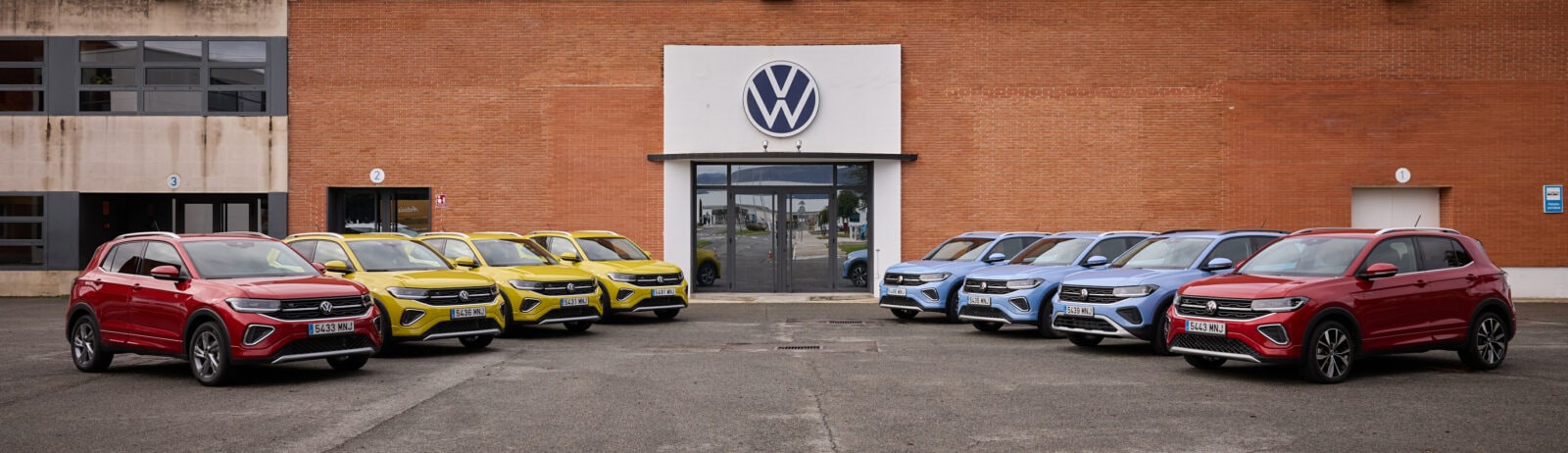
The T-Cross uses exactly the same engine, the same 70 kW (100 CV) and an identical top speed, around 180 km/h. Its homologated consumption rises slightly, to about 5.5 l/100 km, with emissions similar to the Arona’s, close to 120 g/km. The starting difference with its Spanish sibling: 2,500 € more in RRP.
| Engine | Power | Top speed | Consumption | CO₂ emissions | Fuel | Price from |
|---|---|---|---|---|---|---|
| 1.0 TSI 95 5-door | 70 kW / 100 CV | ≈180 km/h | ≈5.5 l/100 km | ≈120 g/km | Petrol | ≈25,600 € |
Shared mechanics and platform: MQB A0
There are no surprises here and no room for marketing storytelling: the 1.0 TSI three-cylinder is identical in both, with the same 5-speed manual gearbox in the entry versions. City response is lively up to 100 km/h, and from there it requires patience when overtaking. Neither shines on the motorway loaded with four adults and luggage, but that is not their terrain either.
Design, interior and perceived quality
The T-Cross feels a step above in the feel of its plastics and in the overall sensation of the dashboard, something Volkswagen traditionally takes more care over than SEAT in its entry ranges. The Arona makes up for it with a sportier exterior design, with that marked waistline that, several years after its tuning, still ages better than the T-Cross’s.
Boot and interior space
Both share the same mechanical base and therefore very similar interior dimensions: they are cars designed for four real occupants, five on short trips. The difference in boot capacity between them is minimal and does not affect the purchase decision in either direction.
Consumption and behaviour in town and on the road
The homologated figure slightly favours the Arona, with 5 l/100 km against the T-Cross’s 5.5 l/100 km. In real use, in town with free-flowing traffic, that difference shrinks to almost nothing: we are talking about tenths that depend more on the driver’s right foot than on the badge on the steering wheel. On the motorway, with the air conditioning on and constant speed, both come in at similar figures to each other.
Equipment and safety
Both entry trims include speed control, manual air conditioning and the active safety systems required by European regulation. The T-Cross adds as standard some interior finish detail that the Arona reserves for higher levels, but we are not talking about differential safety equipment, rather comfort and perception.
Price and versions: where the real difference lies
The 2,500 € difference, roughly 11% above the Arona’s RRP, does not translate into more power, better consumption or more boot space. It translates, above all, into the badge on the bonnet and nuances of interior finish. For anyone who values the Volkswagen brand image above all else, that difference makes sense. For anyone seeking the same car at the best price, less so. Remember these are manufacturer’s recommended RRPs, without dealer discounts, occasional campaigns or aid such as the Plan Auto+, which can significantly reduce the final bill for both models.
If your interest lies more in the electric field within the group itself, the logic repeats almost identically in the comparison between the Cupra Born and the Volkswagen ID.3, where the brand also weighs more than the spec sheet.
Summary comparison table
| Model | Power | Consumption | Price from | Score |
|---|---|---|---|---|
| SEAT Arona 1.0 TSI 95 Arona+ | 100 CV | ≈5 l/100 km | 23,100 € | 8.2/10 |
| Volkswagen T-Cross 1.0 TSI 95 | 100 CV | ≈5.5 l/100 km | 25,600 € | 7.8/10 |
Verdict: which SUV-B to choose for your case
For a tight budget and intensive urban use: the Arona. It is the same car for less money and with better homologated consumption. For those who want to perceive a slightly more refined interior and don’t mind paying the brand premium: the T-Cross. And on price-to-performance ratio, the winner is beyond debate: the SEAT Arona delivers 95% of the T-Cross experience for 11% less outlay. For most buyers, that sum closes by itself.
FAQ
Do the SEAT Arona and the Volkswagen T-Cross share a platform?
Yes, both are built on the Volkswagen Group’s MQB A0 platform and share the 1.0 TSI 100 CV engine in their entry versions.
How much does the entry-level SEAT Arona 1.0 TSI 95 cost?
The Arona+ 1.0 TSI 95 5-door S/S starts from approximately 23,100 € RRP, not counting discounts or Plan Auto+ aid.
How much does the entry-level Volkswagen T-Cross 1.0 TSI 95 cost?
The T-Cross 1.0 TSI 95 5-door starts from approximately 25,600 € RRP, about 2,500 € more than the equivalent Arona.
Which one consumes less, the Arona or the T-Cross?
The Arona homologates around 5 l/100 km against the T-Cross’s 5.5 l/100 km, although in real use the difference shrinks considerably.

2 Comments
Pingback: Cómo elegir un SUV-B gasolina por menos de 30.000€ en 2026 según el equipamiento de serie que realmente usas – Comparativa de Coches
Pingback: Hyundai Bayon vs Volkswagen Taigo vs SEAT Arona: qué SUV-B gasolina ofrece más coche por debajo de 24.000€ – Comparativa de Coches