

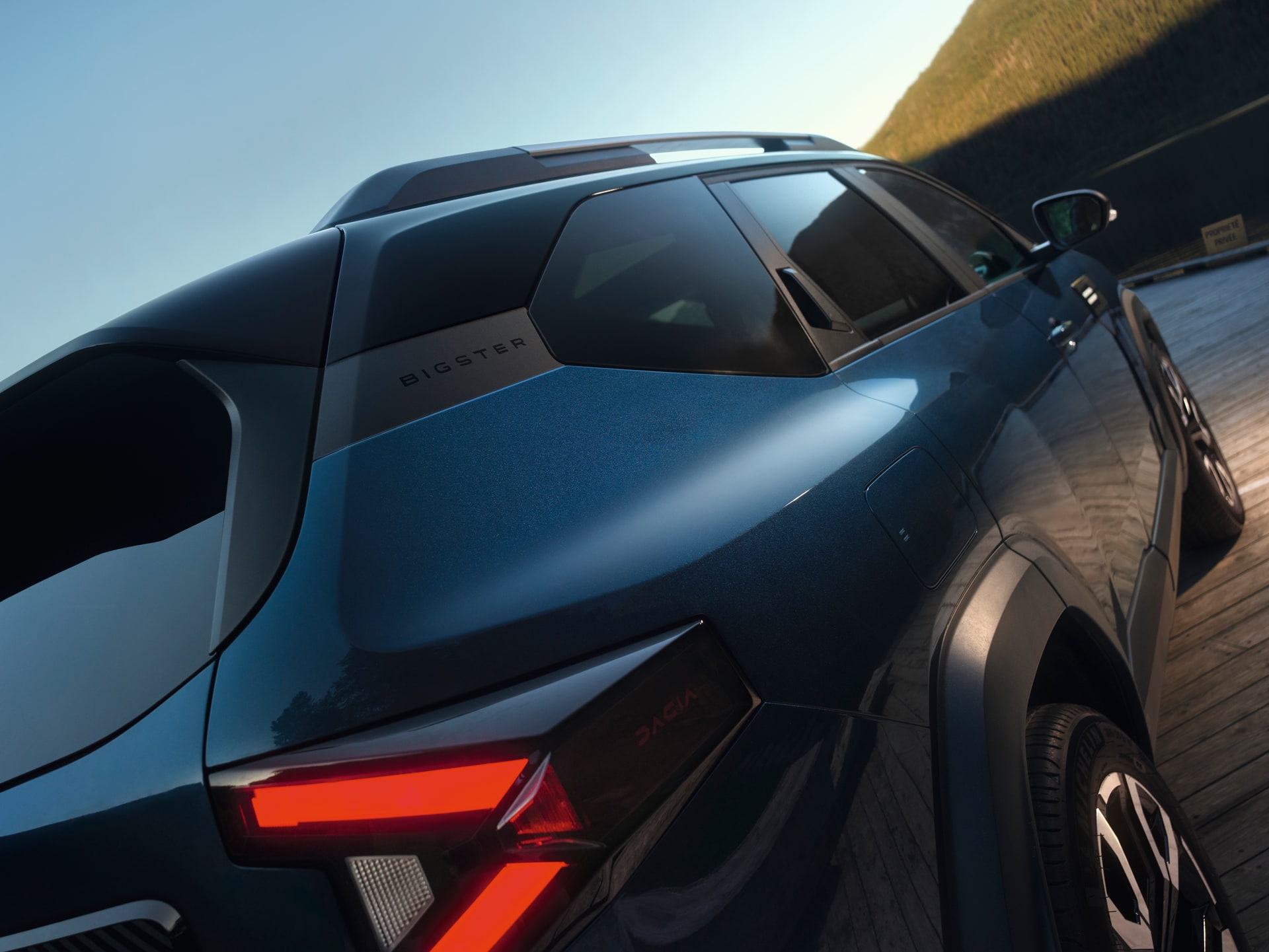
The promise of a family SUV for under €25,000 almost sounds like a trap in 2026. And to a large extent it is: you have to squeeze the trim level, accept an entry-level finish and forget about extras. But it does exist. The Dacia Bigster is, today, the only compact SUV over 4.55 metres that comes close to that barrier with a new powertrain. Opposite it, the KGM Torres plays a different game: pure electric, more car on paper, but with a recommended retail price that almost doubles that of the Dacia.
Does it make sense to compare them? Yes, because the reader with a €25,000 budget is going to look at both. One fits; the other only does if the Plan Auto+ applies and there is a good dealer discount. Let’s see what each one buys you.
The context: family SUVs under €25,000 in 2026
The family C segment has become enormously more expensive. A Tucson, a Sportage or a Qashqai now starts well above €28,000-30,000, and that is for entry-level versions with modest powertrains. The Bigster breaks that trend from Romania, with a very Dacia approach: big car, a powertrain familiar from the Renault group, functional finish and that’s it. The Torres, for its part, is KGM’s (formerly SsangYong) bet to get onto the radar of the electric buyer who doesn’t want to pay MG or BYD prices for long-range versions.
A word of warning: all the prices that follow are the manufacturer’s recommended retail price, without dealer discounts, campaigns or currently available subsidies.
Dacia Bigster Hybrid-G 1.2 TCe 140 48V Essential — from ≈€25,000
In this version, the Bigster uses the three-cylinder 1.2 TCe with 48V mild hybrid technology, which the Renault group has been using with good results in the Austral and the Symbioz. 140 CV to move 4.57 metres of car: it is no rocket, but it gets the job done. The Essential version is the entry point, with just enough equipment —climate control, central screen, ADAS required by regulation—, and it goes without leather, a panoramic roof and other luxuries.
The most interesting thing is that it accepts LPG straight from the factory (Hybrid-G), which drastically lowers the cost per kilometre if you have an autogas station nearby. For families who cover a lot of kilometres, that is a serious argument.
| Power kW | Power CV | Top speed | Consumption | Fuel |
|---|---|---|---|---|
| ≈100 kW | ≈140 CV | ≈180 km/h | ≈5.5 l/100 km | Mild hybrid petrol/LPG |
In our view, the Bigster is the most honest car in the segment: it doesn’t promise what it can’t deliver, but for the money it has no direct rival in size.
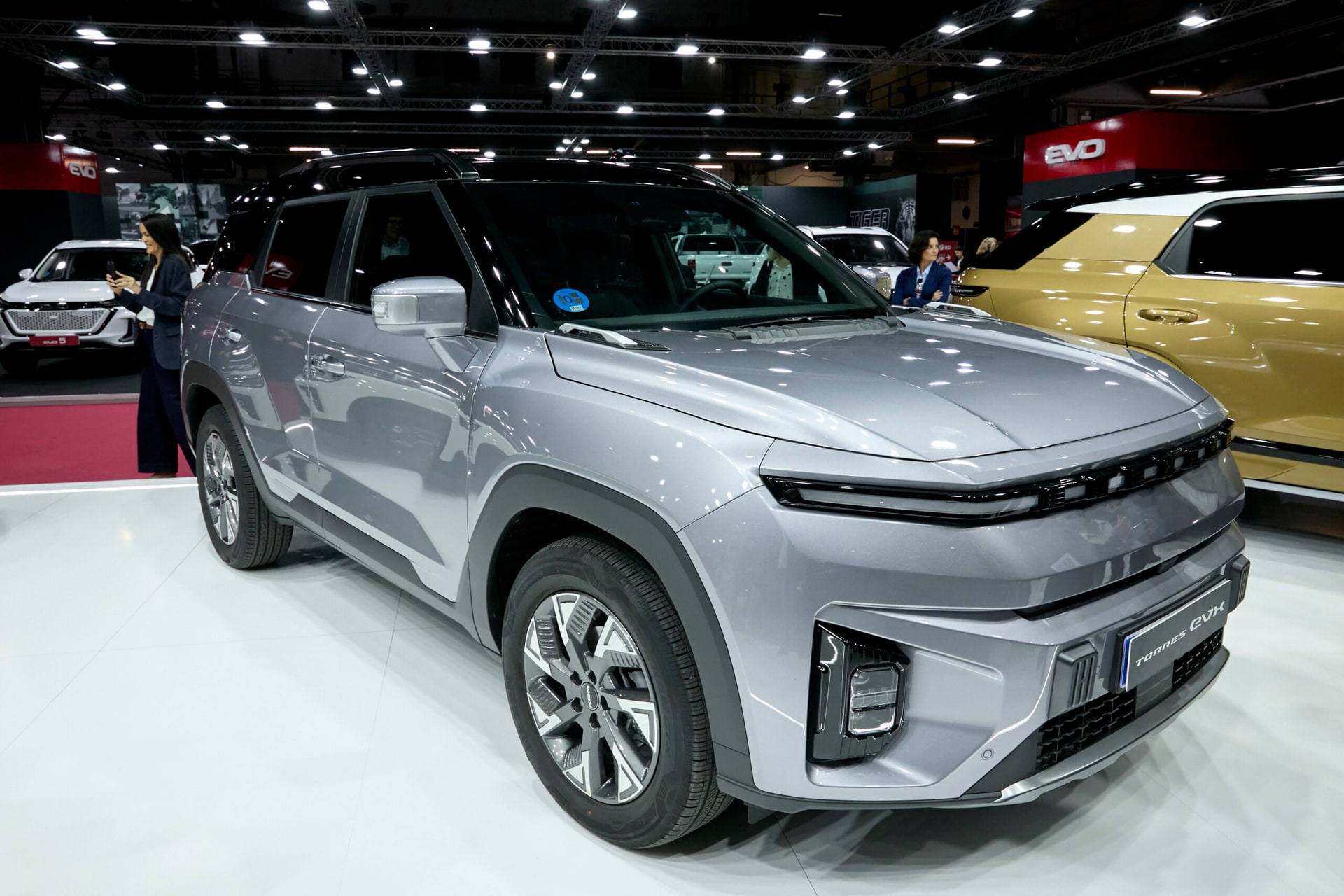
KGM Torres 207 80.6 kWh Trend — from ≈€37,500
The Torres is a 4.70-metre electric compact SUV with a generous 80.5 kWh battery and 210 CV. The Trend version, with rear-wheel drive and a mid-level finish, is homologated for around 500 km WLTP. Good on paper, although on the motorway in real-world conditions you should deduct the usual 25-30% of any electric car.
The interior is more modern than the Bigster’s —dual screens, a finish that without being premium feels like it belongs to another generation— and the standard equipment is considerably more complete. It comes with level 2 ADAS, dual-zone climate control and a three-phase charger.
| Power kW | Power CV | Top speed | Range | Battery | Fuel |
|---|---|---|---|---|---|
| ≈150 kW | ≈210 CV | ≈180 km/h | ≈500 km WLTP | ≈80.5 kWh | Electric |
The problem with the Torres, as we are going to see, is not the car. It is the starting price against the rival we are analysing.
Where each one wins, no half measures
The Bigster wins on two clear fronts:
- Entry price and financial accessibility. A €12,500 difference in recommended retail price is too big to disguise. Even if the Plan Auto+ applies to the Torres, the gap remains enormous for the real buyer.
- Flexibility of use. If you live in a village, travel 800 km a month on the motorway or don’t have a charging point at home, the Bigster puts your mind at rest. LPG lowers the running cost to levels that an electric car only matches by always charging at home on an off-peak tariff.
The Torres also wins on two fronts:
- Performance and refinement. 210 CV with electric delivery against 140 CV from a three-cylinder turbo. There is no contest in the response, the silence or the ride comfort. The Torres drives a notch above.
- Standard equipment and technology. The Trend version comes as standard with what in the Bigster Essential doesn’t exist or is an expensive option: large screens, more complete ADAS, a three-phase charger, dual-zone climate control.
Summary comparison table with scores
| Variable | Dacia Bigster Essential | KGM Torres Trend |
|---|---|---|
| Starting price | ≈€25,000 (9/10) | ≈€37,500 (5/10) |
| Power | 140 CV (6/10) | 210 CV (8/10) |
| Range / consumption | ≈5.5 l/100 km + LPG (8/10) | ≈500 km WLTP (7/10) |
| DGT label | ECO (7/10) | 0 (10/10) |
| Standard equipment | Basic (5/10) | Complete (8/10) |
| Flexibility of use | Total (9/10) | Dependent on charging (6/10) |
| Warranty | 3 years (6/10) | 5-7 years depending on component (8/10) |
| Overall score | 7.1 / 10 | 7.4 / 10 |
The difference in recommended retail price between the two is around 50%, far above the 15% threshold that usually justifies comparing cars of the same category. This conditions the verdict: we are not choosing between “two family SUVs at €25,000”, but between “the only family SUV at €25,000″ and “an electric alternative that demands almost €13,000 more”.
Verdict: what to buy depending on your case
- For a strict budget under €25,000 and mixed city-road use: Dacia Bigster Hybrid-G. It has no real rival at that price in this size. Full stop.
- For families who cover a lot of kilometres and have LPG nearby: the Bigster again. The cost per km with autogas is hard to beat, even for an electric car charged at home.
- For urban-metropolitan use with your own charging point and access to low-emission zones: KGM Torres. The 0 label, the electric refinement and the equipment justify the extra cost —as long as the Plan Auto+ comes into the equation—.
- Pure value for money in terms of performance: Bigster. The Torres offers more car, but not 50% more car.
If your real budget is €25,000 and it doesn’t budge, the debate is over before it starts: Bigster. If you can stretch to €30,000-32,000 with subsidies and discounts, the Torres comes into play as a serious alternative. To put the electric decision in context, it is also worth reading how to assess the price-range relationship in an electric SUV before signing.
FAQ
Can you buy a new family SUV for under €25,000 in 2026?
Yes, but the choice is very narrow. The Dacia Bigster in Hybrid-G Essential version is practically the only compact SUV over 4.55 metres that starts in that price bracket. The rest of the segment (Tucson, Sportage, Qashqai, 3008) already starts clearly above it.
Is the KGM Torres worth it over the Bigster if the Plan Auto+ applies?
With the subsidy applied and a reasonable dealer discount, the Torres could end up at around €30,000-32,000. It is still more expensive than the Bigster, but the gap narrows and the running cost of the electric car (if you charge at home) could balance the scales over 4-5 years.
Does the Dacia Bigster with LPG have an ECO label?
Yes, the Hybrid-G version with a bi-fuel petrol/LPG system gets the DGT’s ECO label, which makes it easier to access low-emission zones in cities that do not yet restrict ECO vehicles.
What warranty does each brand offer?
Dacia maintains its standard warranty of 3 years or 100,000 km. KGM offers broader coverage that varies by component: the vehicle warranty is several years and the Torres’s battery is covered for longer, as is usual for electric cars on the market.
