

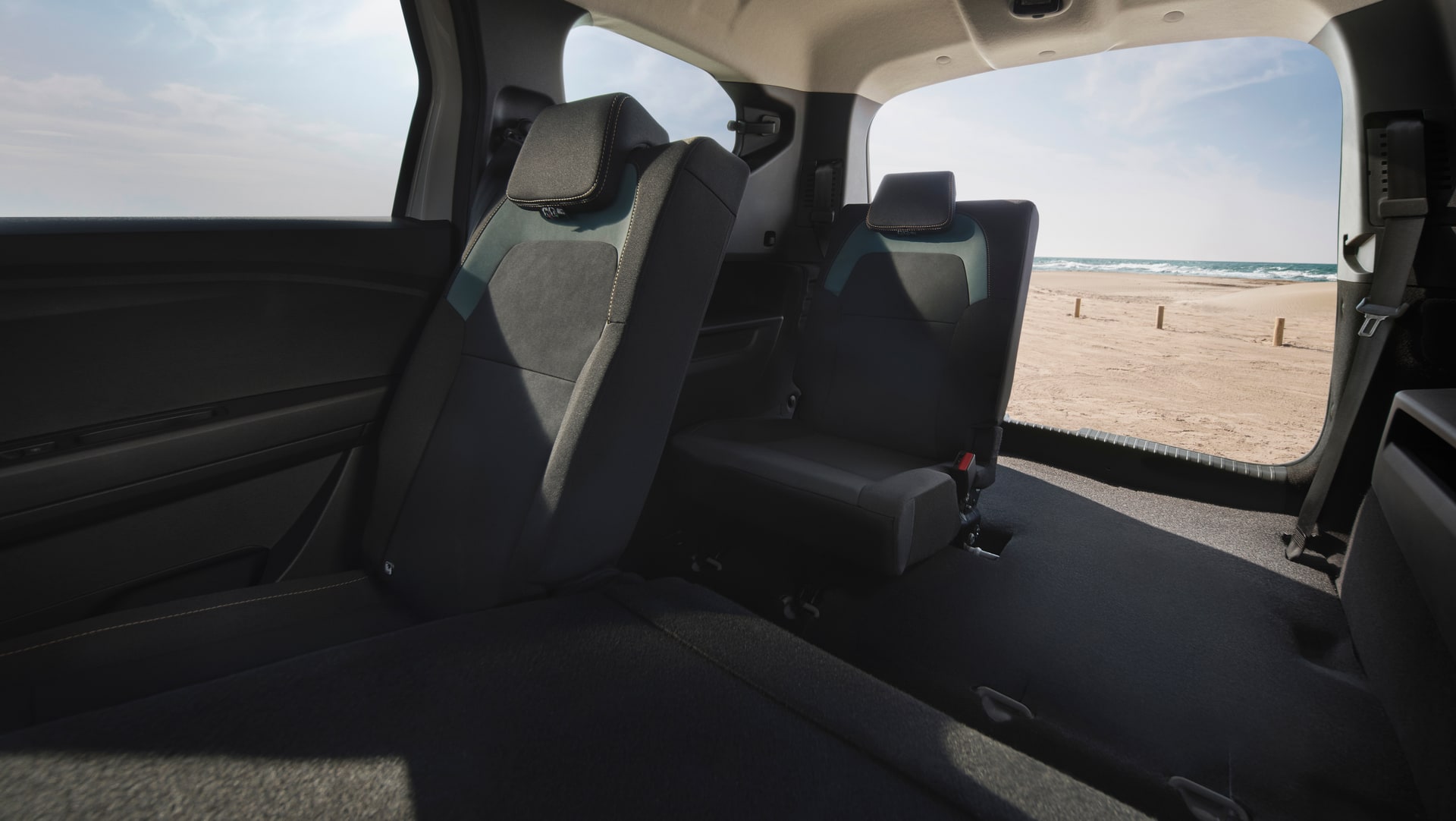
A large family, a tight budget and the real need to carry five or seven people without renting a van. That is the problem these three cars are trying to solve, and it is worth saying it upfront: only one of them moves comfortably below 30,000€. The other two exceed it with some room to spare, although they make up the difference with things the Jogger does not have.
Let’s look at them car by car, with the technical specifications in front of us and without glossing over what each one does wrong.
Dacia Jogger 7 seats, from 18,900€: the only one that truly fits the budget
The Jogger plays in a different price league. The 1.0 Eco-G 100 Essential version, with petrol and LPG engine, sits at around 18,900€ RRP and already includes the third row of seats as an affordable option. It is not a conventional MPV: it is built on the platform of a stretched Sandero, and this shows in the feel of the materials and in some hard plastic on the dashboard. But for that money, nobody else offers seven real seats.
The 100 hp engine copes well in town and on secondary roads, although it falls short when overtaking on motorways with the car loaded. The main advantage lies in consumption: with LPG, running costs drop noticeably compared with pure petrol, something a driver covering many kilometres each year will appreciate in their wallet.
| Model | Power | Top speed | Consumption | CO₂ emissions | Fuel | Price from |
|---|---|---|---|---|---|---|
| Dacia Jogger 1.0 Eco-G 100 Essential | 70 kW / 100 CV | ≈180 km/h | ≈4.5 l/100 km | ≈120 g/km | Petrol/LPG | ≈18,900 € |
Ford Tourneo Connect estate, from 34,300€: more car, but already beyond the 30,000€ limit
The Tourneo Connect in its SWB 1.5 EcoBoost 115 Trend version starts at around 34,300€, 81% more expensive than the Jogger. That difference has to be stated clearly because it changes the conversation: we are no longer talking about the same kind of purchase.
In return, the Tourneo offers a body closer to a pure MPV, with sliding doors that make access to the third row easier in narrow parking spaces, something the Jogger does not handle as well. The 120 hp engine has more real pulling power on motorways with the car full, and the sense of interior quality rises a step above the Dacia.
Its homologated consumption is around 6.5 l/100 km, well above the Jogger, and the environmental label it can achieve also penalises it somewhat under certain traffic restrictions. For someone who enters and leaves a low-emission zone every day, that nuance matters.
| Model | Power | Top speed | Consumption | CO₂ emissions | Fuel | Price from |
|---|---|---|---|---|---|---|
| Ford Tourneo Connect SWB 1.5 EcoBoost 115 Trend | 90 kW / 120 CV | ≈180 km/h | ≈6.5 l/100 km | ≈150 g/km | Petrol | ≈34,300 € |
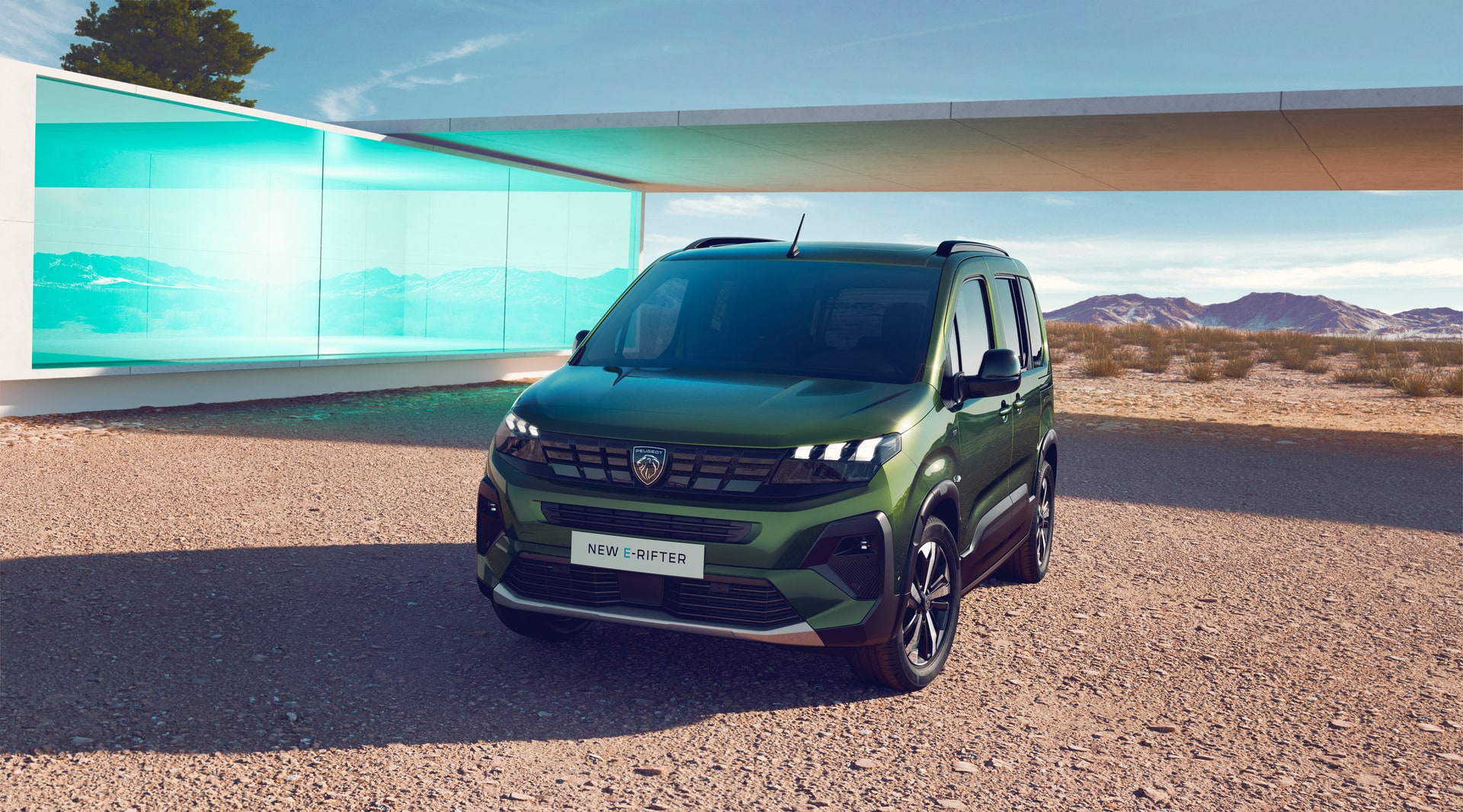
Electric Peugeot Rifter Long, from 39,700€: the most expensive, but with no petrol or diesel
The Rifter Long 136 50kWh Allure, with automatic gearbox and a 52 kWh battery, is the one that moves furthest from the initial budget: it sits at around 39,700€, more than double the Jogger. Here it is no longer simply a matter of “more expensive”, but a car designed for a different type of buyer, one who prioritises never visiting a petrol station and who can charge at home or at work without depending on passing charging stations.
Its homologated range stays around 330 km, enough for the daily routine of a family that does not make long journeys during the week, but tight for a long holiday trip if charging stops are not planned. The 140 hp output feels agile in town, with an immediate delivery that neither the Jogger nor the Tourneo can match in the first few metres.
That said, the Rifter is the only one of the three without a seven-seat version available in the Spanish catalogue with this electric configuration, so if the third row is non-negotiable, it is worth checking before signing.
| Model | Power | Top speed | Range | Battery | Fuel | Price from |
|---|---|---|---|---|---|---|
| Peugeot Rifter Long 136 50kWh Allure | 100 kW / 140 CV | ≈140 km/h | ≈330 km | ≈52 kWh | Electric | ≈39,700 € |
General comparison table
| Model | Power | Fuel | Price from | Seats | Space/price score (1-10) |
|---|---|---|---|---|---|
| Dacia Jogger | 100 CV | Petrol/LPG | ≈18,900 € | 7 | 9 |
| Ford Tourneo Connect | 120 CV | Petrol | ≈34,300 € | 7 (depending on version) | 6.5 |
| Electric Peugeot Rifter | 140 CV | Electric | ≈39,700 € | 5 (electric) | 5.5 |
These prices are indicative manufacturer RRPs, without dealer discounts, one-off campaigns or public aid such as the Plan Auto+, which can reduce the final bill in all three cases. It is advisable to check the current amount on the official website before closing the budget.
Where each one wins, no tricks
The Jogger wins on something nobody disputes: seats-to-price ratio. Nobody else fits seven real seats for less than 19,000€. It also wins on running costs thanks to LPG.
The Tourneo Connect wins on access to the third row thanks to its sliding doors, and on the overall sense of chassis robustness on motorways.
The electric Rifter wins on cost per kilometre travelled in town and on quietness at cruising speed, something a family with young children who fall asleep in the car values more than it might seem on paper.
Verdict: which MPV to choose depending on your case
For a large family on a tight budget that needs seven seats right now, the Dacia Jogger wins without question. It is the only one that solves the problem within the 30,000€ limit, and it does so with a wide margin that even allows adding extras without worry.
If the budget can stretch to 34,000€ and what is sought is a use closer to a family van with comfortable access to the third row, the Tourneo Connect makes up the price difference with real practicality in everyday use.
The electric Rifter only makes sense if the priority is not depending on fossil fuel and daily journeys do not exceed 150-160 km round trip, accepting that the third row is not available in this configuration. As we already reviewed in the analysis of MPVs with wider rear seats for three ISOFIX child seats, the space for child seats often decides the purchase as much as the final price, and on that front the Jogger and the Tourneo perform better than the Rifter.
Frequently asked questions
What is the cheapest 7-seat MPV in Spain in 2025?
The Dacia Jogger, from approximately 18,900€ RRP in its 1.0 Eco-G 100 Essential version, with petrol and LPG.
Do the Ford Tourneo Connect and the Peugeot Rifter fit within the 30,000€ budget?
No. The Tourneo Connect sits at around 34,300€ and the Rifter Long electric at 39,700€, both above the stated limit.
Which MPV has the greater range or the lower consumption?
The Jogger consumes around 4.5 l/100 km, the Tourneo Connect rises to 6.5 l/100 km, and the electric Rifter offers a homologated range of around 330 km with its 52 kWh battery.
Are there public aids to buy any of these cars?
Yes, through the Plan Auto+, whose exact amount should be checked on the official website before calculating the final price, as it varies depending on the autonomous community and vehicle type.
