

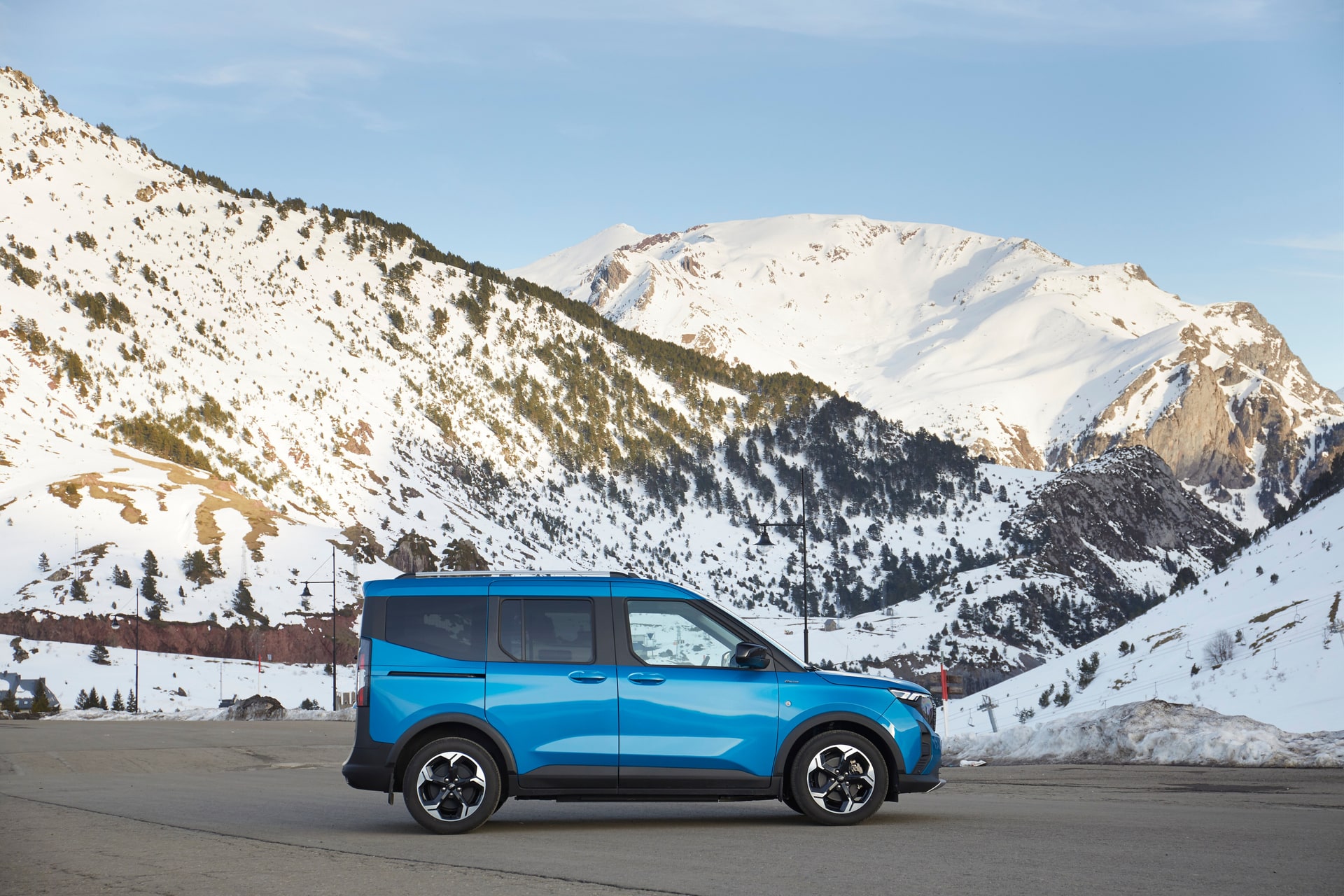
Buying a compact 7-seat MPV in 2026 is still an exercise in honesty with yourself. The family SUV is the easy route, but it offers neither the cargo volume nor the boxy geometry needed by anyone moving children, dogs, pushchairs and bags all at once. Few serious players remain in this format, and three of them account for nearly the entire conversation: the Ford Tourneo Connect, the Volkswagen Caddy and the Peugeot Rifter. Same concept of a practical cabin on a light van platform, three very different engine philosophies.
The aim of this compact 7-seat MPV comparison is not to crown an absolute winner — each one is built for a different customer — but to tell you which suits your specific case. First of all: the prices quoted are the manufacturer’s recommended RRP, without dealer discounts, campaigns or aid schemes such as the Plan Auto+.
Ford Tourneo Connect (from ≈€34,300): the all-rounder petrol
The Tourneo Connect has shared its platform with the Caddy since the latest generation, and that shows in its dynamic behaviour: it drives more like a tall car than a disguised van. The SWB 1.5 EcoBoost 115 Trend version uses a three-cylinder petrol engine that moves the vehicle with ease on open roads and without drama in town, provided it isn’t loaded to the hilt.
In our view, its ideal fit is the family that covers mixed mileage and doesn’t want the hassle of diesel or chargers. Within the Tourneo range, the Connect is the entry point; if your use leans more towards long trips with seven adults and real luggage, the Ford Tourneo Custom is the bigger sibling to look at — but we are already talking about a different price and size bracket.
| Power kW | Power CV | Top speed | Consumption | CO₂ | Fuel |
|---|---|---|---|---|---|
| ≈90 kW | ≈120 CV | ≈180 km/h | ≈6.5 l/100 | ≈150 g/km | Petrol |
Where it wins: a more car-like dynamic feel and a very widespread Ford dealer network for after-sales service across Spain.
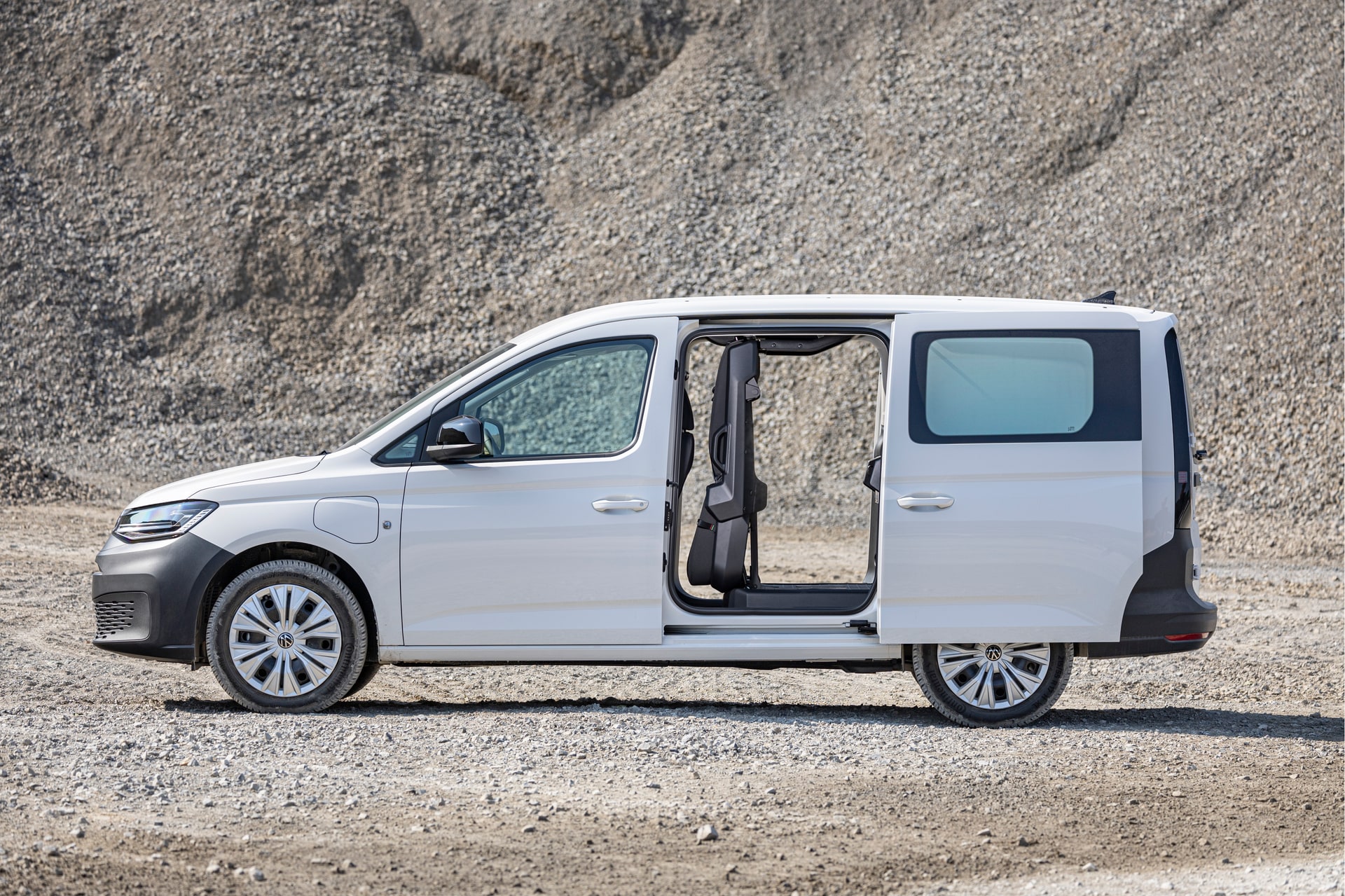
Volkswagen Caddy (from ≈€28,900): the diesel with the most aggressive price
The Volkswagen Caddy 7 seats remains the benchmark for anyone who drives many kilometres a year and isn’t prepared to pay the premium for electric. The 2.0 TDI with 102 CV is a familiar unit — it doesn’t impress in refinement, but on long journeys with a loaded car it is where it earns its keep. It really does consume little, not just on paper.
A caveat: the technical data we are using corresponds to the Cargo variant, which is the two-seat version aimed at professionals. The seven-seat passenger Caddy does exist and shares comparable engine figures, but the standard trim varies. In standard equipment, the Caddy is still somewhat sparse compared with its rivals in base trim — you have to step up a level to match what the Peugeot comes with as standard.
| Power kW | Power CV | Top speed | Consumption | CO₂ | Fuel |
|---|---|---|---|---|---|
| ≈80 kW | ≈100 CV | ≈170 km/h | ≈5.5 l/100 | ≈140 g/km | Diesel |
Where it wins: unbeatable real-world motorway consumption of the trio and a notably lower entry price. It is the only one of the three that clearly drops below €30,000.
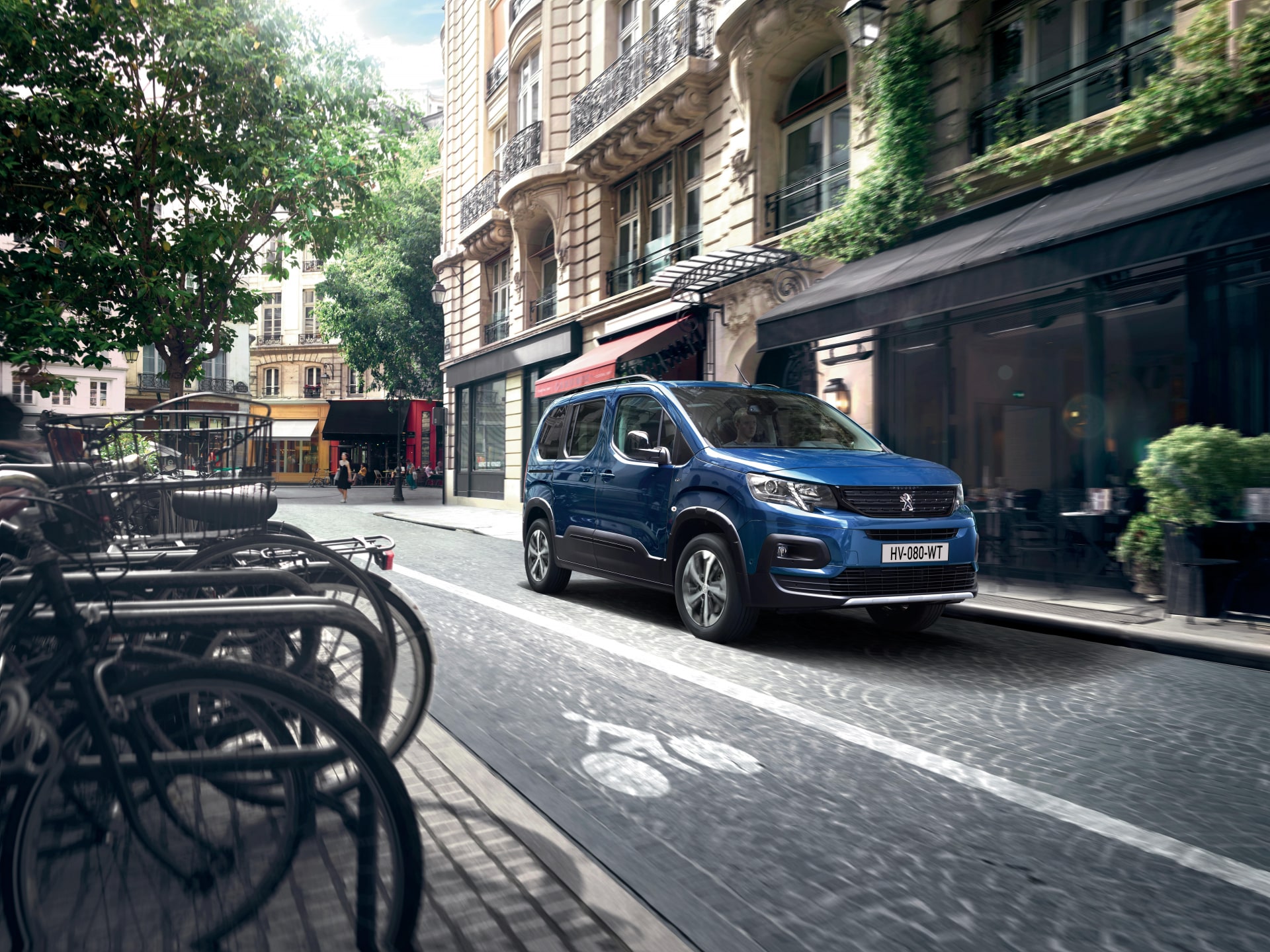
Peugeot Rifter (from ≈€39,700): the zero-emissions route
The electric Peugeot Rifter in the Long 50 kWh Allure version with 136 CV is the most coherent proposition of the trio if your use is mainly urban or metropolitan. The homologated range is around 330 km, which in practice translates to roughly 250 real-world km if you don’t abuse the motorway. For delivery routes, school runs, shopping and short trips it is more than enough; for a holiday 700 km away, it is not.
Where the Rifter stands out is in the Allure trim: air conditioning, a decent multimedia system, cameras and driver-assistance systems come as standard, something you have to fight for with the options list on the Caddy. The Long variant also adds a third row with dignity — not a punishment. That said, the premium over the diesel Caddy exceeds 15%, and that difference deserves careful thought with a calculator in hand.
| Power kW | Power CV | Top speed | Range | Battery | Fuel |
|---|---|---|---|---|---|
| ≈100 kW | ≈140 CV | ≈140 km/h | ≈330 km | ≈52 kWh | Electric |
Where it wins: Zero emissions label, unrestricted access to low-emission zones (ZBE) and notably more complete standard equipment.
Summary table and score
| Model | Powertrain | CV | Consumption/Range | Price from | Score |
|---|---|---|---|---|---|
| Ford Tourneo Connect 1.5 EcoBoost | Petrol | 120 | ≈6.5 l/100 | ≈€34,300 | 7.5/10 |
| Volkswagen Caddy 2.0 TDI | Diesel | 100 | ≈5.5 l/100 | ≈€28,900 | 8/10 |
| Peugeot Rifter Long 50 kWh | Electric | 140 | ≈330 km | ≈€39,700 | 7.5/10 |
Verdict by use case
- If you drive more than 25,000 km a year and much of it on the motorway: Volkswagen Caddy diesel. Low consumption, the most contained entry price of the trio and a well-proven engine that copes with long mileages without complaint.
- If your use is urban and metropolitan, with access to ZBE and a home wallbox: Peugeot Rifter electric. It is the best equipped as standard and the only one with the Zero label, even though you pay the premium upfront.
- If you want a versatile car without complications, for mixed family use without extreme mileage: Ford Tourneo Connect petrol. The sensible middle ground, with the best dynamic feel of the three.
The price difference between the Caddy and the Rifter exceeds 37%: it is not a minor detail. For the electric option to pay off, there needs to be a clear equation of intensive urban use or restricted city access. If not, the diesel still has strong arguments.
FAQ
Which of the three has the most usable 7 seats for adults?
The Peugeot Rifter in Long version and the Ford Tourneo Connect in its long-wheelbase body offer the most dignified third row for adults on short trips. The Caddy Maxi plays in the same league, but none of the three replaces a large MPV for long journeys with seven adults.
Does the electric Peugeot Rifter pay off against the diesel Caddy in total cost?
It depends on mileage and whether you charge at home. With a domestic wallbox and more than 15,000 urban km per year, the Rifter recovers part of the premium within 4-5 years. Without a wallbox and with mixed motorway use, the Caddy still wins on total cost.
Does the Ford Tourneo Connect come in a diesel or hybrid version?
Yes, the Tourneo Connect is also offered with a 2.0 TDI diesel engine, shared with the Caddy as they use a common platform. Conventional hybrid, no — for full electrification you have to look outside the Tourneo range or at the Rifter directly.
What about government purchase grants?
The Plan Auto+ is the current framework of aid in Spain for electrified vehicles, which would mainly affect the electric Peugeot Rifter. The exact amounts and deadlines are best checked on the official website, as they vary by autonomous community and at the time of the call.
