

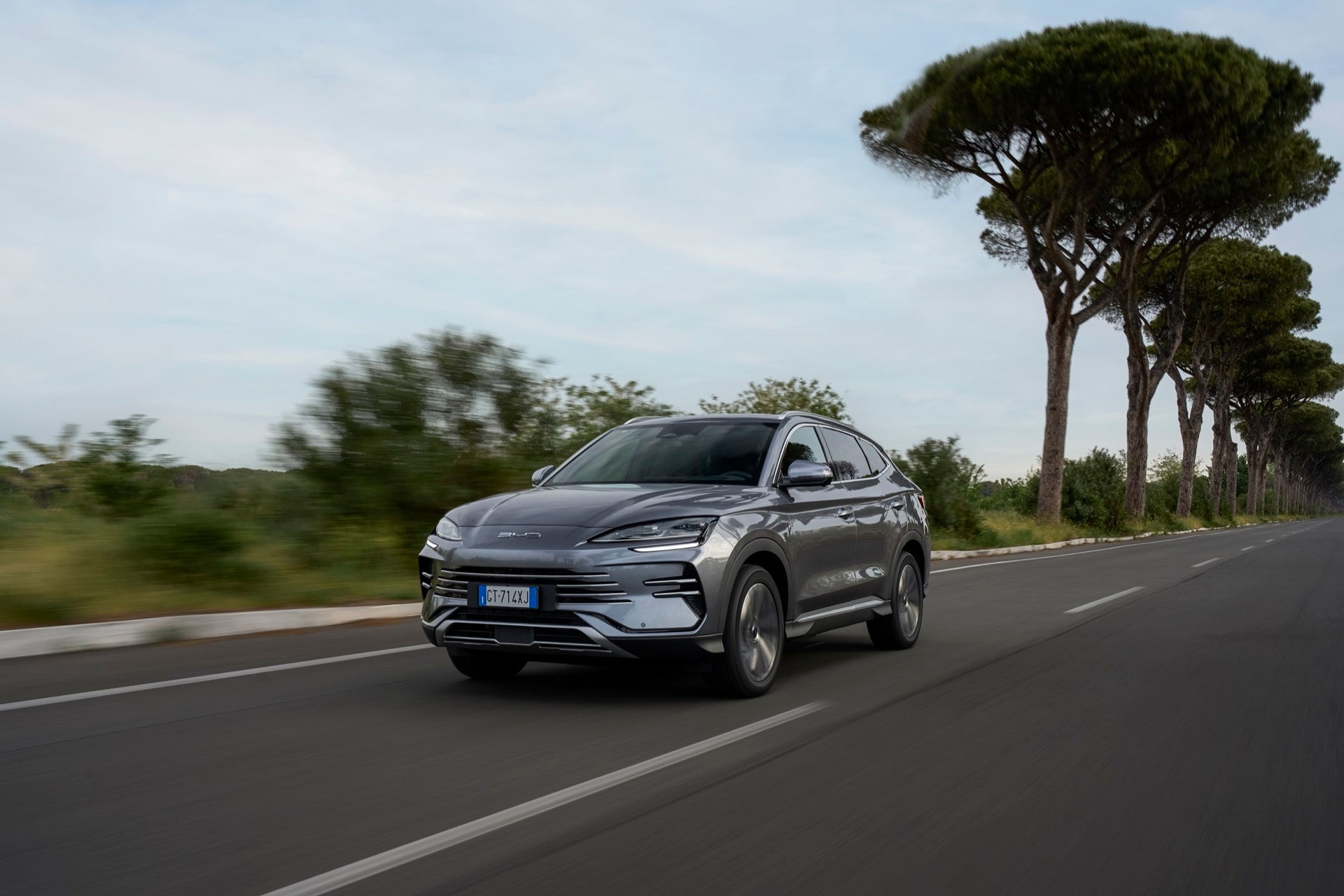
Three years ago, “Chinese SUV” was synonymous with uncertainty. In 2026 it no longer is. Chinese brands have colonised the C-segment with PHEV proposals that, on paper, outperform many of their European and Korean rivals in standard equipment and electric range. The problem is that not all of them handle what really matters day to day equally well: how much room there is in the back, what technology comes included without paying extra, and how they behave on a 400 km journey with the family on board.
We compare four models that are actually on sale in Spain right now: BYD Seal U DM-i, MG EHS PHEV, Jaecoo 7 SHS and Omoda 7 SHS. All of them share a C-SUV platform, plug-in powertrain and a very similar approach on paper. The differences appear once you get inside, switch on the screen and join the motorway.
What Makes a Chinese Plug-in Hybrid SUV Different in 2026
The recipe is almost identical across all four: a turbocharged petrol engine between 1.5 and 1.6 litres, one or two electric motors, a battery of between 16 and 27 kWh and a hybrid management system that prioritises electric mode in town. What changes is the distribution of power, the real size of the battery and, above all, how much equipment they fit as standard on the entry-level trim. This is where Chinese brands have the edge over European rivals: full ADAS, synthetic leather upholstery and wireless charging usually come even in the base version, something that in a Volkswagen Tiguan eHybrid or a Peugeot 3008 hybrid means moving up a trim level.
Interior Space: Boot, Seats and Wheelbase
BYD Seal U DM-i, from 36,490 €: the most spacious of the four
The Seal U DM-i wins this category without question. Its 552-litre boot is the largest in the group, and the rear middle seat doesn’t feel as compromised as in its rivals, thanks to a low central tunnel. That said, the large battery (26.6 kWh) slightly penalises the space under the boot floor.
| Power | Battery | EV range (WLTP) | Rated consumption | Boot | Fuel |
|---|---|---|---|---|---|
| 218 CV (160 kW) | 26.6 kWh | 126 km | 1.1 l/100 km | 552 l | PHEV |
MG EHS PHEV, from 34,995 €: balance without surprises
The EHS doesn’t stand out in any figure, but it doesn’t fail in any either. Its 449-litre boot is the tightest in the comparison, although the rear seats offer good legroom. It is the most “conventional” SUV of the four in its interior layout.
| Power | Battery | EV range (WLTP) | Rated consumption | Boot | Fuel |
|---|---|---|---|---|---|
| 258 CV (190 kW) | 16.6 kWh | 52 km | 1.5 l/100 km | 449 l | PHEV |
Jaecoo 7 SHS, from 33,900 €: electric range takes the lead
The Jaecoo 7 SHS doesn’t win on boot space (483 litres, around the average) but it does win on something more relevant for everyday plug-in hybrid use: its battery of almost 20 kWh allows 93 km in electric mode, the highest figure in the group. We’ve already discussed its behaviour as a single family car in our Jaecoo 7 SHS review, where the rear space convinces more than the boot.
| Power | Battery | EV range (WLTP) | Rated consumption | Boot | Fuel |
|---|---|---|---|---|---|
| 279 CV (205 kW) | 19.8 kWh | 93 km | 1.0 l/100 km | 483 l | PHEV |
Omoda 7 SHS, from 35,900 €: coupé styling, shorter boot
It shares its mechanics with the Jaecoo (same Chery group), but its sloping roofline takes a toll on the boot, which is left at 380 litres. In return, the Omoda 7 SHS has the most eye-catching presence of the four, something that for some buyers weighs as much as the boot litres.
| Power | Battery | EV range (WLTP) | Rated consumption | Boot | Fuel |
|---|---|---|---|---|---|
| 275 CV (202 kW) | 19.3 kWh | 90 km | 1.1 l/100 km | 380 l | PHEV |
Standard Technology: ADAS, Screens and Connectivity
Here the four play in the same league, with nuances. The Seal U DM-i and the Jaecoo 7 SHS include as standard adaptive cruise control, lane-keeping assist, 360º camera and wireless charging even on the entry trim. The MG EHS PHEV reserves part of this equipment for the top trim, which partly explains its slightly tighter price. The Omoda 7 SHS bets heavily on its curved dual-panel screen and a flashy multimedia system, although its touch response still lags a step behind the BYD in fluidity.
Comfort on Journeys: Electric Range, Ride and Noise
With a full battery, the four behave in a similar way: quiet, with acceptable pothole filtering for the segment. The difference appears when the electricity runs out and the combustion engine kicks in on the motorway. The BYD handles that transition more smoothly; the Omoda, with the least refined gearbox in the group, lets the pull of the 1.5 turbo be felt more as it engages. For anyone covering 600-800 km per trip with the battery already empty halfway through, this is noticeable, and quite a lot. If the priority is to maximise kilometres in pure electric mode before that moment, it’s also worth reviewing our guide on real electric range in PHEV SUVs, because the WLTP figure and the real motorway range in cold conditions diverge more than the spec sheets suggest.
Summary Table and Score
| Model | Price from | Boot | EV range | Warranty | Score |
|---|---|---|---|---|---|
| BYD Seal U DM-i | 36,490 € | 552 l | 126 km | 6 years/150,000 km | 8.7 |
| MG EHS PHEV | 34,995 € | 449 l | 52 km | 7 years/150,000 km | 7.6 |
| Jaecoo 7 SHS | 33,900 € | 483 l | 93 km | 7 years/150,000 km | 8.4 |
| Omoda 7 SHS | 35,900 € | 380 l | 90 km | 7 years/150,000 km | 7.8 |
Verdict: Which Chinese PHEV SUV to Choose Based on Your Use Case
If your priority is space for a family with luggage on long trips, the BYD Seal U DM-i wins on boot space and combined electric range: it is the only one that comes close to 130 km without petrol. For intensive urban use with short daily trips, where what counts is charging little and spending almost nothing, the Jaecoo 7 SHS offers the best balance between electric range and price, with 93 km WLTP from 33,900 €, the cheapest of the four.
The MG EHS PHEV takes third place for those seeking balance without focusing too much on electric kilometres: its smaller battery means recharging more often, but its road behaviour with the combustion engine running is the most polished of the group. The Omoda 7 SHS is only justified if the coupé design weighs more in the decision than the 100 litres of boot space it lacks compared with the Jaecoo, with which it shares almost the entire mechanical setup.
Between the BYD (36,490 €) and the Jaecoo (33,900 €) there is a price gap of over 7%, not enough to rule out the former if space is the real priority. The gap widens if you compare the Jaecoo with the Omoda, almost 6% more expensive for a body that offers less usable space.
Frequently Asked Questions
Which Chinese PHEV SUV has the most electric range in 2026?
The BYD Seal U DM-i, in its version with the 26.6 kWh battery, is rated at 126 km WLTP in electric mode, the highest figure of the four compared.
Is a Chinese plug-in hybrid SUV reliable for long journeys?
Yes, provided the petrol engine engages smoothly once the battery is depleted. The BYD and the Jaecoo manage that transition better than the Omoda, whose gearbox feels more abrupt on the motorway.
Can I access the Plan Auto+ by buying one of these models?
PHEV SUVs with the ECO label can apply for the Plan Auto+ if they meet the current requirements on price and minimum electric range. Always check the active call on the official website, as the amounts vary.
Which one offers the most standard equipment without moving up a trim level?
The BYD Seal U DM-i and the Jaecoo 7 SHS include full ADAS, a 360º camera and wireless charging already in their entry version, while the MG EHS PHEV reserves part of this equipment for higher trims.
