

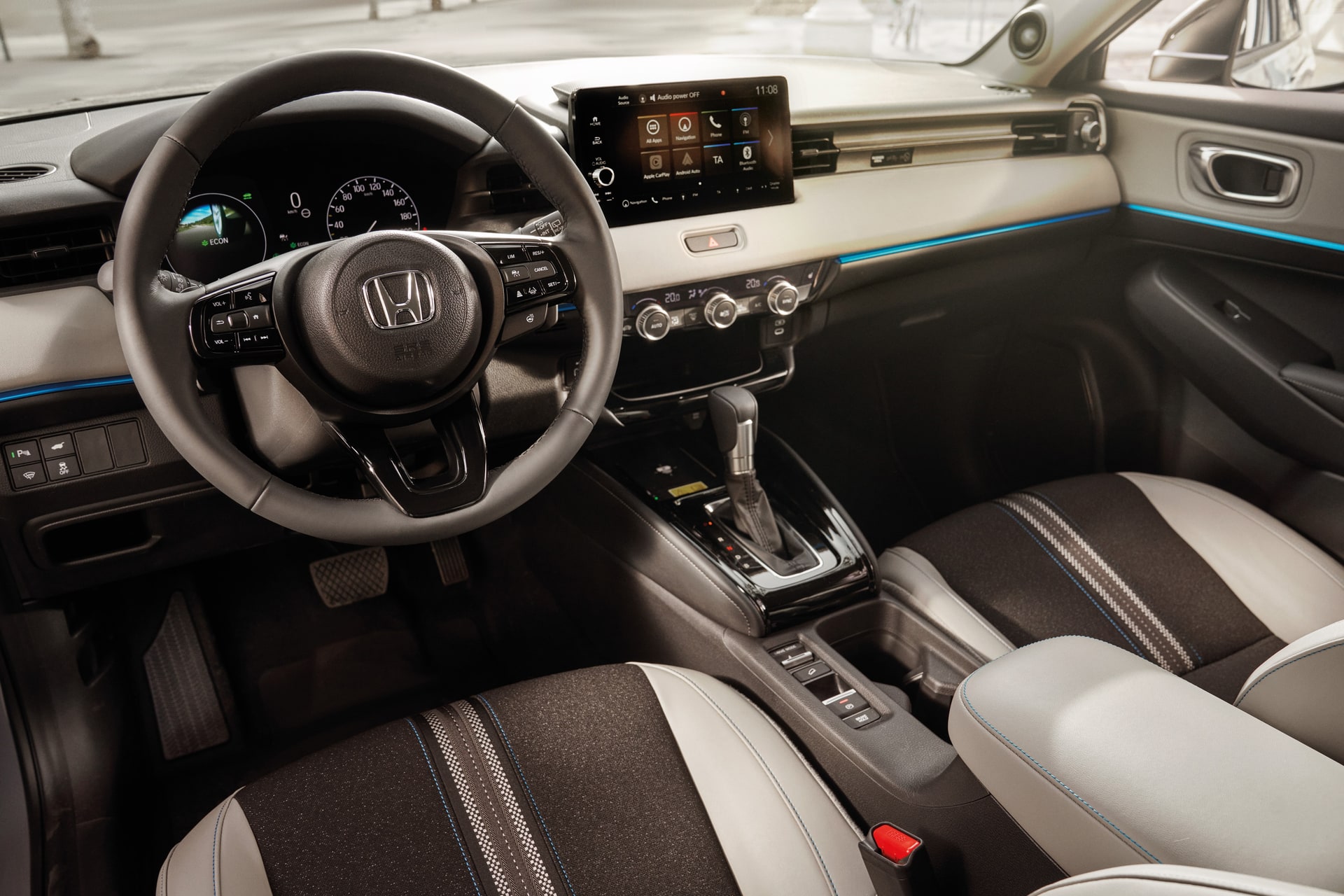
Choosing a compact hybrid SUV in 2026 is no longer just about price and design. The two variables that really separate a satisfied buyer from a regretful one are real combined consumption (not the WLTP figure on the spec sheet) and the years of warranty the brand puts on the table with no fine print. We have put six models that compete in the same segment and with comparable powertrains side by side: Toyota C-HR, Kia Niro, Hyundai Tucson, Nissan Qashqai, Honda HR-V and Renault Symbioz.
What we mean by a compact hybrid SUV in 2026
We are talking about self-charging hybrids, with no plug, where an electric motor assists the petrol engine and recovers energy when braking. There are no PHEVs in this list. The practical difference is that you never need to charge: the car takes care of itself, and that is exactly what the buyer who wants to forget about cables is looking for.
Real combined consumption: the figure that really matters
WLTP is useful for comparing laboratories, not roads. In real use, a well-driven compact hybrid SUV in the city can drop below 5 l/100 km; on a sustained motorway run at 120 km/h, that figure easily rises to 6-6.5 l/100 km, because the electric motor plays a smaller role the more constant the speed. This changes the ranking depending on where you live.
Warranty: how many years each brand covers in Spain
The differences here are bigger than they seem at first glance. Kia offers 7 years or 150,000 km of official warranty in Spain, the longest in the group analysed. Hyundai stops at 5 years with no mileage limit, with 8 specific years for the hybrid system. Toyota starts at 3 years, but can be extended to 10 years if servicing is carried out at an official network (the Toyota Relax programme). Honda, Nissan and Renault sit at 2-3 years of general warranty, with somewhat longer cover on the hybrid battery.
| Brand | General warranty | Battery/hybrid system warranty |
|---|---|---|
| Kia | 7 years / 150,000 km | 7 years / 150,000 km |
| Hyundai | 5 years with no km limit | 8 years / 160,000 km |
| Toyota | 3 years (extendable to 10 with Toyota Relax) | up to 10 years with official servicing |
| Honda | 3 years with no km limit | 5 years / 100,000 km |
| Nissan | 3 years / 100,000 km | 8 years / 160,000 km |
| Renault | 2 years unlimited | 8 years / 160,000 km |
Toyota C-HR vs Kia Niro Hybrid: the city consumption showdown
The Toyota C-HR 1.8 Hybrid 140 CV is, of the two, the one that handles traffic jams best: its hybrid system has been refined for over a decade and shows on short trips, where it averages a real 4.8-5.0 l/100 km. The Kia Niro Hybrid 141 CV falls a step behind in the city, but wins where the C-HR cannot compete: 7 years of warranty versus Toyota’s base 3. If your priority is everyday city consumption, Toyota wins; if you prefer to sleep easy without visiting an official workshop for every service to keep the extended warranty, Kia wins.
| Model | Power | Real combined consumption | Label | Fuel |
|---|---|---|---|---|
| Toyota C-HR 1.8 Hybrid | 103 kW / 140 CV | 4.8-5.2 l/100 km | ECO | Hybrid |
| Kia Niro Hybrid | 104 kW / 141 CV | 5.0-5.5 l/100 km | ECO | Hybrid |
Hyundai Tucson Hybrid vs Nissan Qashqai e-Power: extra power, at what price?
Here the picture changes in size and philosophy. The Hyundai Tucson Hybrid 215 CV is the most powerful in the group, but that power is paid for in consumption: 6.0-6.5 l/100 km real, well above the rest. The Nissan Qashqai e-Power 190 CV takes a different approach, with the electric motor always driving the wheels while the petrol engine acts as a generator, which translates into very smooth driving in the city and somewhat more restrained consumption, 5.5-6.0 l/100 km. Neither is the most economical on the list, but the Qashqai compensates with an 8-year battery warranty that the Tucson does not match in its general cover.
| Model | Power | Real combined consumption | Label | Fuel |
|---|---|---|---|---|
| Hyundai Tucson Hybrid | 158 kW / 215 CV | 6.0-6.5 l/100 km | ECO | Hybrid |
| Nissan Qashqai e-Power | 140 kW / 190 CV | 5.5-6.0 l/100 km | ECO | Hybrid |
Honda HR-V vs Renault Symbioz: equipment, warranty and the rest of the equation
The Honda HR-V e:HEV 131 CV is modest on power but very frugal in city consumption, 5.0 l/100 km real, thanks to a hybrid system that almost always prioritises the electric motor. The Renault Symbioz E-TECH full hybrid 145 CV offers a bit more punch and more generous standard equipment for its price, with a real consumption of 5.2-5.8 l/100 km. The price gap between the two (the Symbioz starts around 1,600 € below the HR-V) tips the balance towards Renault if budget is king, although Honda makes up for it with a perceived reliability that usually means fewer visits to the workshop outside warranty.
| Model | Power | Real combined consumption | Label | Fuel |
|---|---|---|---|---|
| Honda HR-V e:HEV | 96 kW / 131 CV | 5.0 l/100 km | ECO | Hybrid |
| Renault Symbioz E-TECH | 107 kW / 145 CV | 5.2-5.8 l/100 km | ECO | Hybrid |
Summary table: the six compact hybrid SUVs side by side
| Model | Price from | General warranty | Real consumption | Consumption score (1-10) | Warranty score (1-10) |
|---|---|---|---|---|---|
| Toyota C-HR 1.8 Hybrid | 29,900 € | 3 years (up to 10 with Relax) | 4.8-5.2 l/100 km | 9 | 7 |
| Kia Niro Hybrid | 28,500 € | 7 years / 150,000 km | 5.0-5.5 l/100 km | 8 | 10 |
| Hyundai Tucson Hybrid | 33,900 € | 5 years with no km limit | 6.0-6.5 l/100 km | 6 | 8 |
| Nissan Qashqai e-Power | 34,500 € | 3 years / 100,000 km | 5.5-6.0 l/100 km | 7 | 7 |
| Honda HR-V e:HEV | 29,500 € | 3 years with no km limit | 5.0 l/100 km | 8 | 6 |
| Renault Symbioz E-TECH | 27,900 € | 2 years unlimited | 5.2-5.8 l/100 km | 8 | 6 |
Verdict: which hybrid SUV to buy based on your real use
For city driving and short trips, the Toyota C-HR wins on real consumption, although its base warranty falls short if you will not always service at an official workshop. For those who put long-term peace of mind above all else, the Kia Niro Hybrid is the most sensible option: nobody here matches its 7-year warranty, and its consumption is not far from the leader. For mixed journeys with more motorway and a need for pulling power, the Nissan Qashqai e-Power holds its own better than the Tucson without pushing consumption up. And if budget is the deciding factor, the Renault Symbioz offers the tightest price-to-equipment ratio in the group, with a price gap of almost 20% compared with the Hyundai Tucson, something worth keeping in mind before being swayed by the extra power. It is also worth remembering that almost all of these models can fall within the hybrid SUV under 28,000 € analysed in another comparison, and that if your budget is a little tighter, the Kia Niro versus Hyundai Kona Hybrid poses a similar dilemma one step down. Before signing, also check whether your purchase may benefit from the current Plan Auto+, by consulting the updated conditions on the official website.
Frequently asked questions
Which brand offers the longest warranty on hybrid SUVs in Spain?
Kia, with 7 years or 150,000 km across its range, including the Niro Hybrid, without needing to service at a specific workshop to keep it.
Which compact hybrid SUV has the lowest real consumption in the city?
The Toyota C-HR 1.8 Hybrid stands out for its low real city consumption, between 4.8 and 5.2 l/100 km, thanks to a hybrid system that is highly refined in urban traffic.
Is it worth paying more for a more powerful hybrid SUV such as the Hyundai Tucson?
Only if you regularly need that power (loaded motorway driving or towing a light trailer). For normal mixed use, the extra consumption does not pay off compared with options such as the Nissan Qashqai e-Power.
Is a self-charging hybrid the same as a mild hybrid?
No. A self-charging hybrid can run in pure electric mode at low speed and recovers more energy; a mild hybrid only assists the petrol engine and never fully disconnects from it.

3 Comments
Pingback: Cómo elegir un SUV híbrido compacto en 2026 según la relación entre precio de compra y consumo real combinado – Comparativa de Coches
Pingback: Cómo elegir un SUV híbrido compacto en 2026 según el coste real a 5 años frente a su equivalente gasolina – Comparativa de Coches
Pingback: Cómo elegir un SUV híbrido por menos de 26.000€ en 2026 según los años de garantía incluidos – Comparativa de Coches