

Buying a B-segment city car in 2026 based on the power figures is the most repeated mistake at the dealership. The engine will be more than enough for 90% of your journeys. What really determines whether your 1.85 m brother-in-law will want to get back in the car, or whether the weekly shopping fits in one go on Saturday, is something else: centimetres of knee room in the rear seat and real boot litres measured in VDA, not the number that shines most in the catalogue.
We have put three petrol city cars sold in Spain right now head to head, with the same entry-level drivetrain so the comparison is fair, and we have added a ranking with four other rivals worth keeping on your radar before you sign.
Why rear space and boot capacity matter more than the spec sheet
In a segment where almost all 90 to 100 CV engines perform similarly in town, the real-world difference lies in the bodywork. Two cars with the same exterior length can differ by 4 or 5 centimetres in rear knee room depending on how the space under the front seats has been designed. And those centimetres decide whether a one-hour journey with two children in car seats is comfortable or feels endless.
Renault Clio TCe 90 Evolution (from 18,700 €)
Of the three contenders, the Clio is the one that resolves boot space best: 391 VDA litres, the highest figure in the petrol B-segment in Spain. You notice it when loading two cabin bags and a sports bag without having to play Tetris. Rear space, however, is not its strong point: the bench is comfortable but knee room becomes tight if someone over 1.80 m is seated in front.
| Engine | Power | Average consumption | Label | Fuel |
|---|---|---|---|---|
| TCe 90 | 67 kW / 90 CV | 5.3 l/100 km | C | Petrol |
Volkswagen Polo 1.0 TSI 95 Life (from 21,300 €)
Here the balance is reversed. The Polo gives up boot space (351 litres) but wins in what is hardest to achieve in a B-segment car: rear legroom. With the front seat set for a 1.78 m driver, the Polo leaves plenty of room to cross your legs in the back; in the Clio, not so much. It is the car in the group that best disguises being a small car when you carry four adults.
| Engine | Power | Average consumption | Label | Fuel |
|---|---|---|---|---|
| 1.0 TSI | 70 kW / 95 CV | 5.4 l/100 km | C | Petrol |
Hyundai i20 1.0 T-GDI 100 Tecno (from 19,600 €)
The i20 arrives with the most powerful engine of the three, 100 CV, and you feel it when recovering speed on motorways. But in the space allocation it is the weakest: a 352-litre boot, similar to the Polo, and the tightest rear knee room of the three cars analysed. It is the city car that offers the most standard equipment for the price (parking sensors, climate control and a 10-inch screen in the Tecno) and the most generous warranty: 5 years with unlimited mileage, a strong argument if you plan to keep the car for a long time.
| Engine | Power | Average consumption | Label | Fuel |
|---|---|---|---|---|
| 1.0 T-GDI | 74 kW / 100 CV | 5.4 l/100 km | C | Petrol |
Clio, Polo and i20 face to face
| Model | Rear knee room | Boot (VDA) | Price from | Warranty |
|---|---|---|---|---|
| Renault Clio TCe 90 | Tight (approx. 66 cm) | 391 l | 18,700 € | 2 years, extendable to 5 |
| Volkswagen Polo 1.0 TSI 95 | Generous (approx. 69 cm) | 351 l | 21,300 € | 2 years |
| Hyundai i20 1.0 T-GDI 100 | Limited (approx. 63 cm) | 352 l | 19,600 € | 5 years, unlimited mileage |
The Polo costs 14% more than the i20 and 13.9% more than the Clio: it does not reach the 15% threshold, but you should know that this extra rear space comes at a price, and not a small one.
Other petrol B-segment city cars to consider
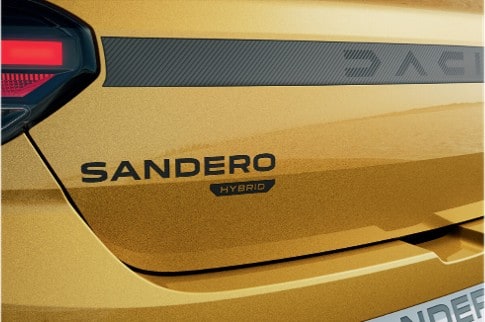
They are not the only names that deserve a place in this conversation. The SEAT Ibiza 1.0 TSI 95 CV (from 20,100 €) offers a 355-litre boot and rear habitability between the Clio and the Polo, with a firmer driving feel. The Peugeot 208 1.2 PureTech 100 (from 19,900 €) sacrifices boot space (311 litres, the smallest in this review) in exchange for a very accomplished driving position, although it is not the car to choose if boot capacity is the priority. The Dacia Sandero TCe 90 (from 14,200 €) surprises with more generous rear space than its price suggests, with a 328-litre boot, and it is the obvious option if budget is the first variable in the equation. The Citroën C3 1.2 PureTech 83 (from 17,800 €) favours suspension comfort over centimetres, with a 310-litre boot that falls short for families.
Summary table and score
| Model | Boot | Rear space | Price from | Score /10 |
|---|---|---|---|---|
| Renault Clio | 391 l | Medium | 18,700 € | 8.2 |
| Volkswagen Polo | 351 l | High | 21,300 € | 8.0 |
| Hyundai i20 | 352 l | Low | 19,600 € | 7.8 |
| SEAT Ibiza | 355 l | Medium | 20,100 € | 7.6 |
| Dacia Sandero | 328 l | Medium-high | 14,200 € | 7.9 |
| Peugeot 208 | 311 l | Medium | 19,900 € | 7.2 |
| Citroën C3 | 310 l | Medium | 17,800 € | 7.0 |
Verdict: which car to choose depending on your use case
If your priority is fitting the maximum volume in the boot, baby seats, sports bags, the big weekly shop, the Renault Clio wins with its 391 litres without question. If what really worries you is that the adults in the back are not sitting with their knees pressed against the front seatback, the Volkswagen Polo is the only one of the three that solves that problem clearly, even though it costs 14% more. And if you are looking for the best balance between equipment, warranty and price without major space sacrifices, the Hyundai i20 Tecno gives the most peace of mind in the long term, thanks to those five years of warranty. For anyone who only looks at the wallet and accepts a bit less boot space, the Dacia Sandero remains the option that delivers the most car per euro invested.
Frequently asked questions
Which petrol B-segment city car has the most legroom in the back in 2026?
Among the models analysed, the Volkswagen Polo 1.0 TSI 95 offers the greatest rear knee room, ahead of the Renault Clio and clearly ahead of the Hyundai i20.
Which petrol B-segment city car has the largest boot?
The Renault Clio, with 391 VDA litres, keeps the highest figure in the segment, ahead of rivals such as the SEAT Ibiza (355 l) or the Hyundai i20 (352 l).
Is it worth paying more for the Volkswagen Polo if I only travel with one extra person?
Not especially. If you rarely carry rear passengers, the extra cost of the Polo over the Clio or the i20 is not justified; the additional rear space is only worth paying for when it is used regularly.
Is the Dacia Sandero a real alternative to these city cars in terms of space?
Yes, within its limits. Its rear seat is more generous than expected for its price, although the boot (328 litres) and standard equipment fall short of the Clio or the i20.
