

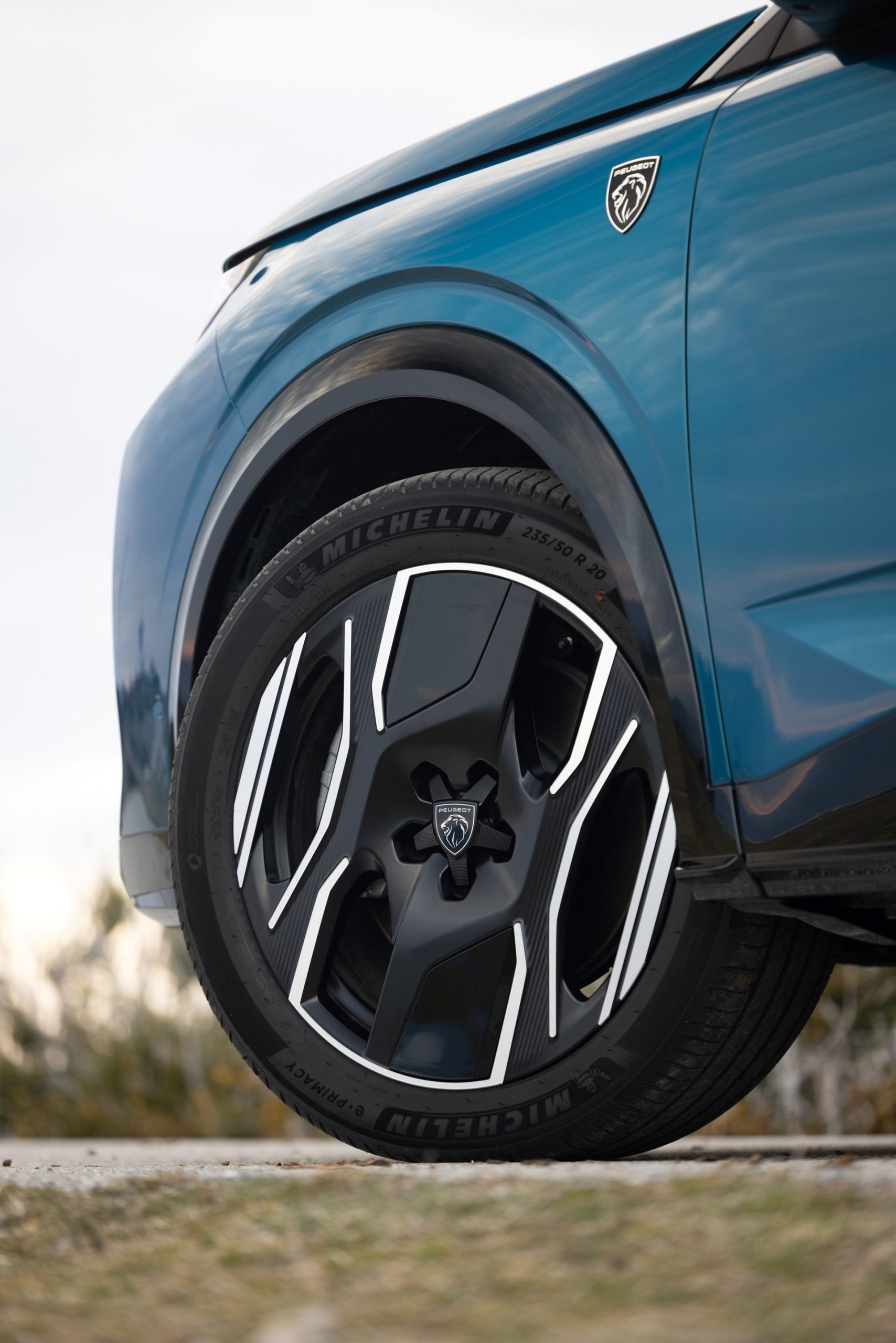
France has two serious contenders in the C-SUV hybrid segment with design aspirations, and both sit around the same budget: between 43,000 and 44,300 € recommended retail price, not counting dealer discounts or the Plan Auto+. The Peugeot 3008 plays the plug-in hybrid card with real electric range. The Renault Rafale bets on a self-charging full hybrid that needs no cable. They are two different philosophies disguised as direct rivals, and that is exactly what needs untangling before you sign anything.
Peugeot 3008 Plug-in 230 CV Allure, from 44,300 €
The 3008 we tested uses the Plug-in 1.6 225 Allure powertrain with eDCS7 automatic gearbox, a combination of combustion and electric motors that adds up to about 170 kW (230 CV) and a 21 kWh battery capable of moving the car in pure electric mode. The figure that really matters here is range: around 100 km without touching petrol, enough to cover most daily trips for an urban user with a wallbox at home or at work.
| Power (kW) | Power (CV) | Top speed | Electric range | Consumption | CO₂ emissions | Fuel |
|---|---|---|---|---|---|---|
| 170 kW | 230 CV | 220 km/h | 100 km | 2.5 l/100 km | 60 g/km | PHEV (petrol/electric) |
The homologated consumption figure of 2.5 l/100 km only makes sense if you charge the battery regularly. If you don’t, the 3008 Plug-in becomes a heavy hybrid hauling a 21 kWh battery it never uses, and real-world consumption climbs well above that laboratory figure. It is the fine print of every PHEV, and this one is no different.
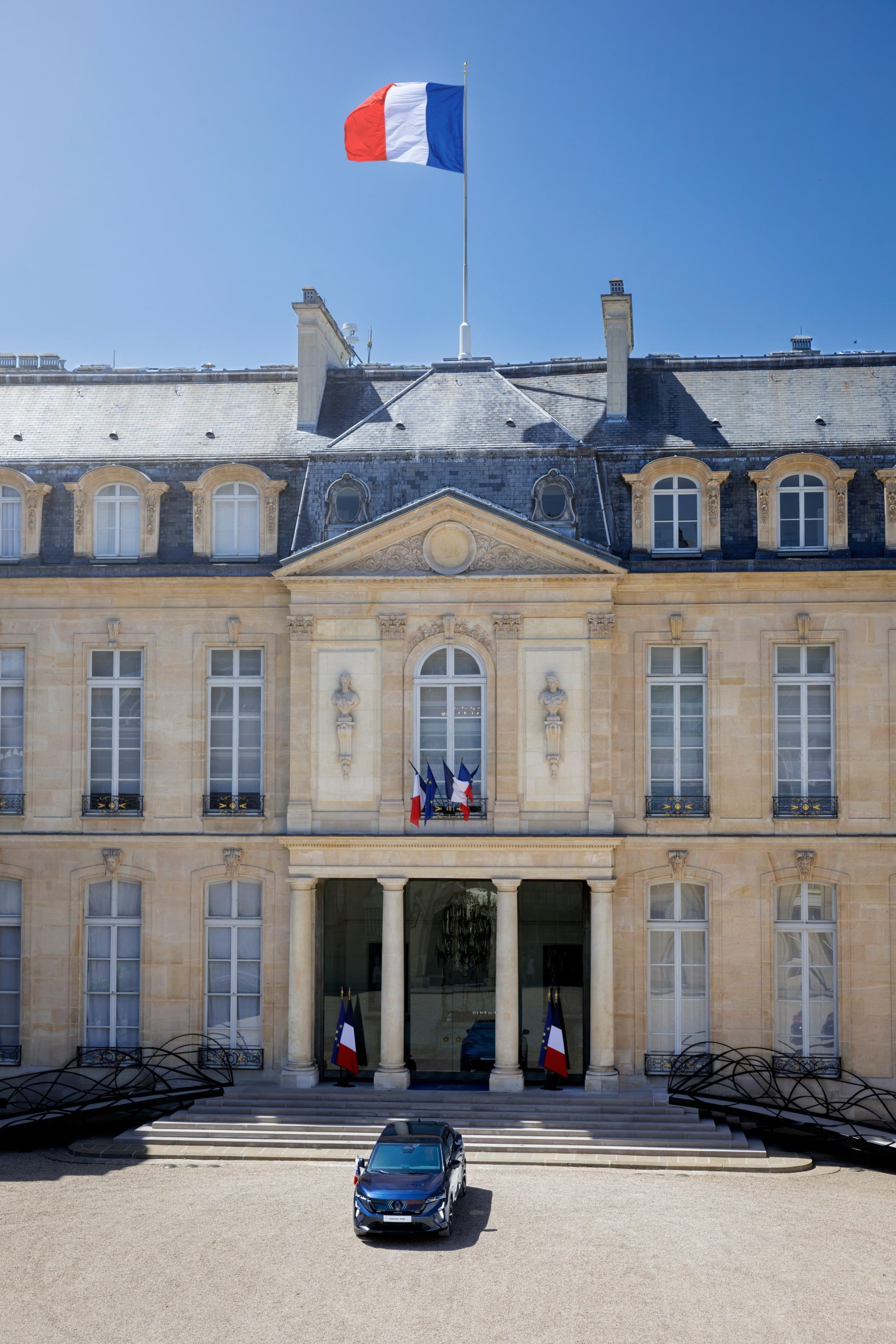
Renault Rafale E-Tech Full Hybrid 200 CV Techno, from 43,300 €
The Rafale in Techno trim with the E-Tech Full Hybrid 1.2 200 powertrain and CVT gearbox needs no plug. The system combines a 1.2 turbo three-cylinder with two electric motors and a small battery that recharges itself through braking and deceleration, delivering roughly 150 kW (200 CV) of combined power.
| Power (kW) | Power (CV) | Top speed | Consumption | CO₂ emissions | Fuel |
|---|---|---|---|---|---|
| 150 kW | 200 CV | 180 km/h | 4.5 l/100 km | 110 g/km | Hybrid (petrol/electric) |
That consumption of 4.5 l/100 km holds practically the same whether you drive in town or on the open road, regardless of whether you charged anything the night before. This is the quiet advantage of the full hybrid: no surprises and no plug management, which makes it the better choice for anyone who parks on the street or doesn’t have a wallbox handy.
Exterior design: which one convinces more?
The 3008 of this generation has taken a leap toward a more futuristic look, with a grille that barely shows any mesh, the new lion logo integrated into the front end and a roofline that drops more aggressively than any earlier 3008. It is a design that divides opinion: some find it bold and fresh, others find it forced.
The Rafale plays a different game. Its coupé-SUV bodywork, with the roof sloping gently towards the rear and a continuous-band rear light, aims for a more classic, less disruptive elegance. It wins on harmonious proportions; it loses on surprise factor. For someone who values a design that won’t look dated in three years, the Rafale has the edge. For someone who wants to stand out in the supermarket car park, the 3008 has it easier.
Interior perceived quality
Here the Peugeot keeps defending its i-Cockpit with the small steering wheel and elevated instrument panel, a layout already familiar to those who have tried the Peugeot e-308 in its electric comparison. The materials on the upper dashboard convey notable solidity, although the centre console of haptic buttons, visually striking as it is, isn’t always as intuitive to the touch as a traditional physical button.
The Rafale opts for a large vertical screen inherited from other E-Tech models of the brand, with door panels and console finishes that feel, to the touch, a notch above the 3008 in certain areas. It is not a huge difference, but it is noticeable the moment you sit down.
Hybridisation: PHEV vs Full Hybrid, real differences
The question that really decides this comparison is not aesthetic: it is propulsion. The 3008 Plug-in needs a charger, ideally a wallbox, to make the most of its 100 km of electric range and that official 2.5 l/100 km consumption. Without that daily charging discipline, it loses much of its economic and tax sense, although it keeps its 230 CV of pull.
The Rafale demands none of that. Its 200 CV and 4.5 l/100 km consumption work the same wherever you are, because it isn’t charged: it recovers energy just by driving. It is less powerful, yes, but more predictable.
| Model | Power | Fuel | Consumption | Price from | Score |
|---|---|---|---|---|---|
| Peugeot 3008 Plug-in 230 Allure | 230 CV | PHEV | 2.5 l/100 km (with charging) | 44,300 € | 7.8/10 |
| Renault Rafale E-Tech Full Hybrid 200 Techno | 200 CV | Self-charging hybrid | 4.5 l/100 km | 43,300 € | 8.2/10 |
The verdict: by use case
For short urban trips with a wallbox at home: the Peugeot 3008 wins by a mile. Its 100 km of electric range covers almost any daily journey without visiting a petrol station, and the 230 CV are noticeable on any overtake.
For those with nowhere to charge or who make unpredictable mixed trips: the Renault Rafale is the option with the least friction. It doesn’t depend on charging discipline, its real-world consumption stays stable and its design ages better for anyone who doesn’t want to change cars every three years.
On price-performance, with 1,000 € less RRP and a slightly higher perceived interior quality, the Rafale takes the point. The price gap between the two doesn’t reach 3%, so it isn’t the decisive factor: the way you are going to use the car every day is.
Frequently asked questions
Does the Peugeot 3008 Plug-in have to be charged?
It is not mandatory, but without regular charging it loses its main advantage: the 100 km of electric range and the official consumption of 2.5 l/100 km. Without a plug it behaves like a conventional, heavier hybrid because of the 21 kWh battery it carries.
Can the Renault Rafale Full Hybrid be plugged into a charger?
No. The Rafale E-Tech Full Hybrid is a self-charging system: it generates its own electrical energy through regenerative braking and the combustion engine, with no external charging port.
Which of the two is more powerful?
The Peugeot 3008 Plug-in delivers 230 CV compared with the 200 CV of the Renault Rafale Full Hybrid, a difference that is felt mainly in acceleration and overtaking.
Which offers the better price-to-equipment ratio?
The Renault Rafale Techno starts at around 43,300 €, roughly 1,000 € less than the Peugeot 3008 Plug-in Allure (44,300 €), with a slightly higher perceived interior quality at several touchpoints.

1 Comment
Pingback: Los 5 SUV-C con el interior mejor diseñado por menos de 45.000€ en 2026 – Comparativa de Coches