

A city car in 2026 is not chosen by looking at the power figures. It is chosen by looking at two things: how much it really drinks when you’ve been stuck for half an hour between traffic lights, and whether it fits into the space the SEAT León has just vacated on a street in Chamberí. The rest — screen, wheels, colour options — is decoration.
What defines a good petrol city car today
The petrol B-segment has spent years redefining itself. Mild hybridisation (48V mild-hybrid) and full hybrids have brought real-world consumption in town down to figures that were unthinkable five years ago without diesel. A Yaris now drops below 4 l/100 km in real urban use. A Polo TSI with DSG sits at 5.5–6. The difference matters a great deal if you drive 15,000 km a year, 12,000 of them in the city.
Length below 4.10 m: why it remains key
Parallel parking on a street with a blue line in Madrid, Barcelona or Valencia is a precision sport. A 4.05 m car fits where a 4.20 m one no longer does. It sounds minor. It isn’t: those 15 cm are the difference between parking first time or giving up and looking for a space. The Clio measures 4.05 m, the Polo 4.07, the Yaris 3.94. A Peugeot 208 is 4.05. A Kia Picanto is 3.60 — a different league of manoeuvrability.
48V mild-hybrid and automatic gearboxes: what they bring in traffic
The 48V system shuts the engine off sooner and restarts it more smoothly at the traffic light. On short trips with many stops, it cuts consumption by between 8% and 12% compared with the same engine without hybridisation. A well-calibrated DSG or EDC automatic gearbox adds another point: it selects the right gear without you having to think about it, and stop-start works better when there is no hesitant foot on the clutch.
360º camera and sensors: which equipment pays off in town
A 360º camera in a car under 4 metres may seem excessive. It isn’t when you’re parking between two SUVs that hide the kerb. Today it is the equipment with the best practical return in a city car, ahead of large screens, dual-zone climate control or a panoramic roof.
Toyota Yaris 125H Active Plus — from €22,100
The hybrid Yaris is the uncomfortable benchmark of the segment: it is not the most handsome, not the best finished, but in real urban consumption it outperforms everyone. The fifth generation with the 116 CV 1.5 hybrid moves between 3.8 and 4.5 l/100 km in dense city traffic without you having to drive like a grandfather. When the combustion engine switches off — and in traffic it switches off constantly — the car moves forward on electric power alone. That is the trick.
| Power | Combined consumption | Label | Fuel |
|---|---|---|---|
| 85 kW / 116 CV | 3.8 l/100 km | ECO | Petrol hybrid |
Where it wins: unbeatable real-world consumption in traffic, proven mechanical reliability and an ECO label that opens access to ZBE zones without awkward stickers. Where it loses: the interior feels a step below the Polo, and the e-CVT gearbox roars when you ask for strong acceleration — in town you don’t notice it, but when joining a motorway you do.
Renault Clio E-Tech 145 Techno — from €22,400
The sixth-generation Clio has become serious. The 145 CV E-Tech full hybrid combines two electric motors and a 1.6 naturally aspirated engine, and in town it always starts in electric mode. Real consumption of 4.2–4.8 l/100 km in urban use, slightly above the Yaris but in a car that is better finished inside. The 391-litre boot is the best in the comparison, a point that matters if you also use it for the weekly shop or weekend trips.
| Power | Combined consumption | Label | Fuel |
|---|---|---|---|
| 107 kW / 145 CV | 4.1 l/100 km | ECO | Petrol hybrid |
Where it wins: more carefully designed interior and exterior than the Yaris, and a generous boot for the segment. Where it loses: the Renault network still does not match Toyota’s long-term reliability record, and the multimode gearbox jerks during slow manoeuvres, which is initially disconcerting.
Volkswagen Polo 1.0 TSI 95 Life DSG — from €23,500
The Polo is the choice for those who don’t want a hybrid. The 95 CV three-cylinder 1.0 TSI with 7-speed DSG is smooth, refined and in town moves between 5.8 and 6.5 l/100 km in real use. More than the Japanese cars, obviously — but the Polo plays a different card: it feels like a higher-segment car. Materials, soundproofing, the way the doors close. A pocket Golf, basically.
| Power | Combined consumption | Label | Fuel |
|---|---|---|---|
| 70 kW / 95 CV | 5.3 l/100 km | C | Petrol |
Where it wins: perceived quality well above the segment, dynamic behaviour on open roads. Where it loses: a C label (not ECO) limits access to ZBE zones and makes SER parking in Madrid more expensive, and it consumes between 30% and 40% more than the Yaris in town.
Other alternatives that enter the decision
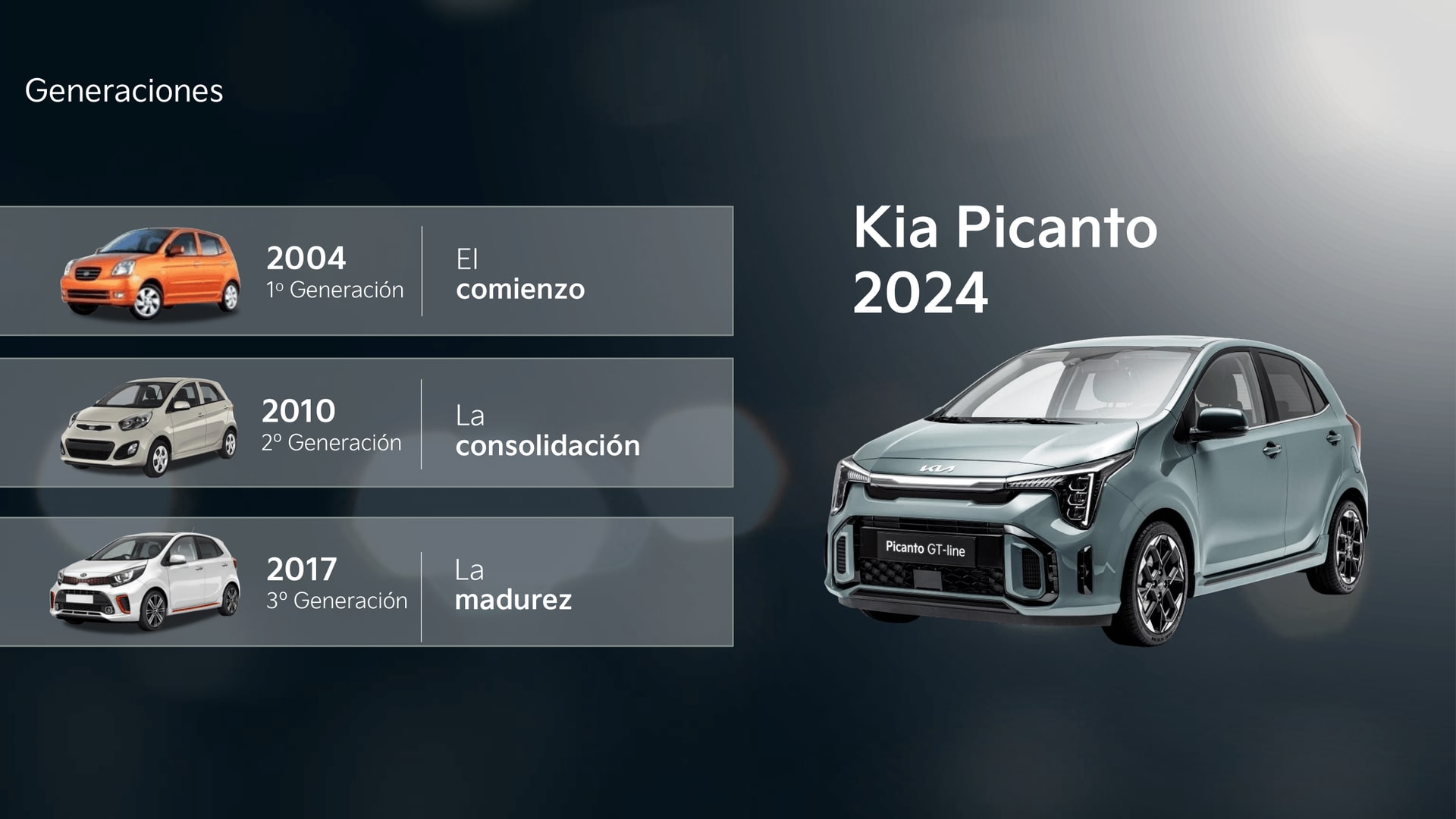
The Peugeot 208 PureTech 100 (from about €21,500) plays the design and i-Cockpit card, with the small steering wheel that either wins you over or irritates you within ten minutes. Without full hybridisation, it consumes much like the Polo. The Hyundai i20 1.0 T-GDi 100 48V (from about €19,500) is the rational option: mild-hybrid, seven years’ warranty and a competitive price, although its interior finish trails the VW. And the Kia Picanto 1.0 DPi 63 CV (from about €14,900) is a different game: A-segment, 3.60 m, the undisputed king for anyone who only needs to move two people around the city and park in any corner.
To put prices into the urban range in context, we have already seen how the B-segment compares with the small SUV in terms of standard equipment, and the conclusion is usually the same: at equal price, a well-equipped city car beats the entry-level SUV.
Summary table and score
| Model | Price from | Real urban consumption | Length | Boot | Label | Score |
|---|---|---|---|---|---|---|
| Toyota Yaris 125H | €22,100 | 4.0 l/100 km | 3.94 m | 286 l | ECO | 9/10 |
| Renault Clio E-Tech 145 | €22,400 | 4.5 l/100 km | 4.05 m | 391 l | ECO | 8.5/10 |
| Volkswagen Polo 1.0 TSI DSG | €23,500 | 6.0 l/100 km | 4.07 m | 351 l | C | 7.5/10 |
| Peugeot 208 PureTech 100 | €21,500 | 5.8 l/100 km | 4.05 m | 311 l | C | 7/10 |
| Hyundai i20 1.0 T-GDi 48V | €19,500 | 5.4 l/100 km | 4.04 m | 352 l | ECO | 8/10 |
| Kia Picanto 1.0 DPi | €14,900 | 5.2 l/100 km | 3.60 m | 255 l | C | 7.5/10 |
Verdict by use case
For dense city driving and daily traffic (Madrid, central Barcelona): Toyota Yaris 125H. Its real urban consumption has no rival, the ECO label spares you the ZBE maze, and Toyota reliability means fewer unpleasant bills. It is the rational choice, without debate.
For those who want a “serious” car and do city driving plus the occasional trip: Volkswagen Polo 1.0 TSI DSG. You pay about €1,400 more than the Yaris and around 35% more in fuel, but you get a car that feels a segment up. It makes sense if you only drive 8,000–10,000 km a year and half of it is on open roads.
Best price-performance ratio: Hyundai i20 48V. For €19,500 you get mild-hybrid, an ECO label, seven years’ warranty and a well-built car. If budget is the priority, this is the decision.
For parking on impossible streets: Kia Picanto. It does not compete in the same league — it is A-segment, not B — but if you live in a historic centre and never leave the city, 3.60 m of car for €14,900 is pure arithmetic. You can add the Plan Auto+ to the equation if you meet the requirements.
The Clio is a balanced option: if the design appeals to you and you value the larger boot, it is a defensible purchase. But against the Yaris it loses on consumption, and against the Polo on finish. A good car that is not the best at anything.
FAQ
Which petrol city car uses the least fuel in town in 2026?
The Toyota Yaris 125H hybrid, with real consumption of 3.8–4.5 l/100 km in dense urban traffic, because the combustion engine switches off constantly in traffic and the car runs in pure electric mode at low speeds.
Is it worth buying a city car with an ECO label if I live in a ZBE?
Yes. The ECO label guarantees access without time restrictions to the low-emission zones of Madrid, Barcelona or Valencia, and it often also comes with discounts on regulated parking. A Polo with a C label may face restrictions in the coming years as ZBE requirements tighten.
What is the shortest city car on the Spanish market?
The Kia Picanto, at 3.60 m, is the shortest on sale. Within the B-segment, the Toyota Yaris at 3.94 m is the most compact, followed by the Peugeot 208 and Renault Clio at 4.05 m, and the Volkswagen Polo at 4.07 m.
Is a 48V mild-hybrid or a full hybrid better for urban use?
For pure city driving, the full hybrid (Yaris, Clio E-Tech) clearly wins because it can run in 100% electric mode at low speed. The 48V mild-hybrid (i20) helps with pulling away and shuts the engine off sooner, but it cannot move the car without petrol. Typical difference: 1–1.5 l/100 km in favour of the full hybrid in town.

3 Comments
Pingback: Los 5 utilitarios urbanos gasolina con menor consumo real en ciudad por debajo de 20.000€ en 2026 – Comparativa de Coches
Pingback: Cómo elegir entre un utilitario gasolina y uno híbrido en 2026 según los kilómetros anuales que haces – Comparativa de Coches
Pingback: Cómo elegir un utilitario B gasolina en 2026 según el espacio real para pasajeros atrás y el maletero útil – Comparativa de Coches