

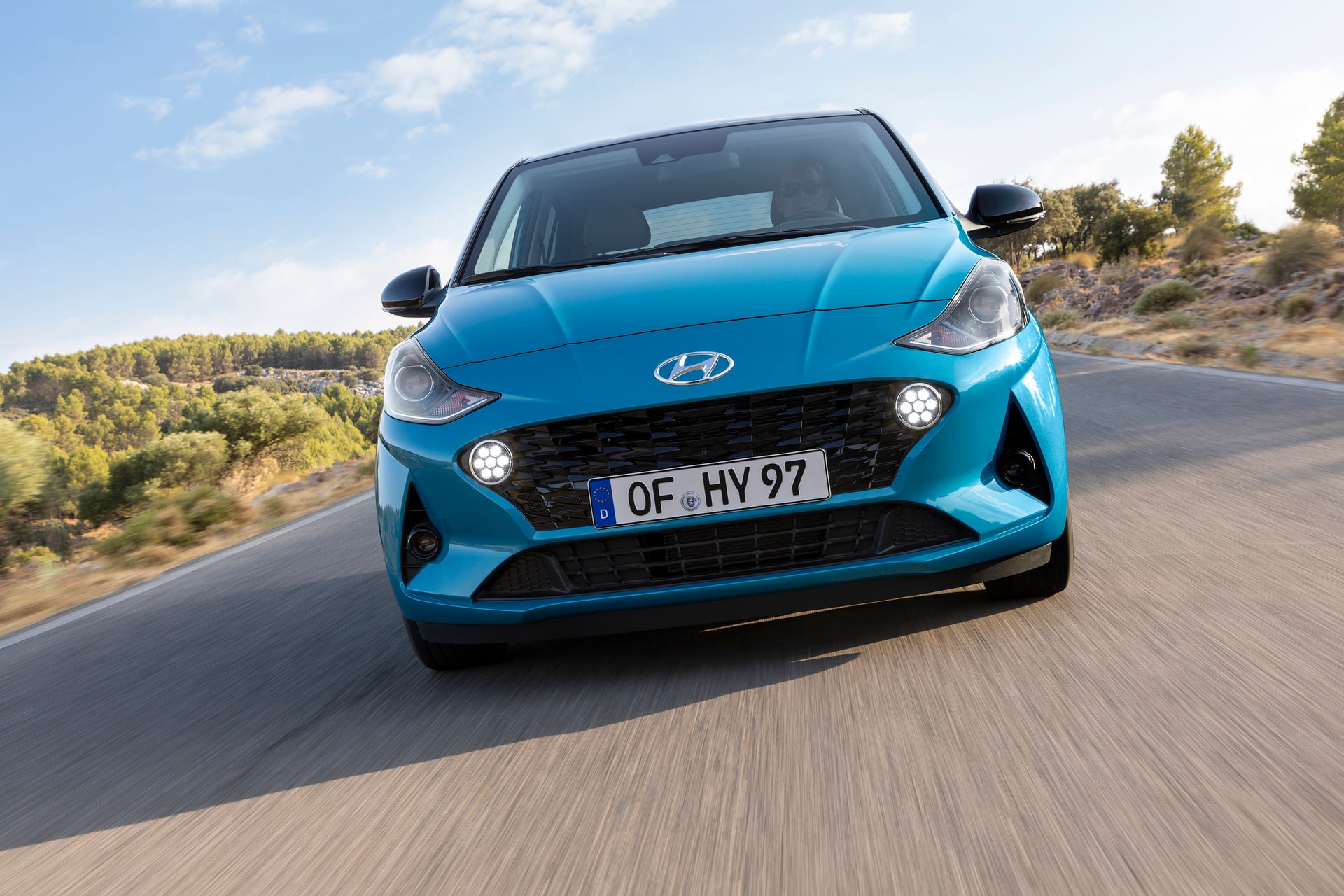
The A-segment is dying. What was a thriving showcase ten years ago today comes down to a handful of models, and two of them come from the same group: Hyundai-Kia. The Hyundai i10 and the KIA Picanto share a platform, engines and a lot of engineering, but they are not the same car. And the starting price difference — around €600 over the indicative RRP — does not by itself explain which one suits each profile.
A warning before we get into it: the prices we use are the manufacturer’s recommended RRP, without dealer discounts, campaigns or aid such as the Plan Auto+. In the real market, both can be obtained for quite a bit less.
Why compare the i10 and the Picanto in the A-segment today
Because there is almost nothing else left. The Fiat 500, the Toyota Aygo X and little more make up a category that electrification and regulatory costs have thinned out. The i10 and the Picanto are, by far, the city cars with the best value-for-money ratio still on sale in Spain with conventional petrol engines and no lifestyle pretensions.
The key fact: neither one drops below €17,000 in its entry version according to RRP. The genuinely cheap A-segment died a long time ago.
Hyundai i10 1.0 MPI 63 Essence — from ≈€17,800
The i10 in its Essence trim with the naturally aspirated 1.0-litre three-cylinder producing 60 CV is the entry point to the range. An honest car: a top speed of 140 km/h, five officially approved seats, homologated consumption of around 5 l/100 km and an interior presentation that, within what can be expected, feels more like a “small normal car” than a cheap city car.
Its real strengths lie in refinement on the move, decent soundproofing for the category and that more grown-up Hyundai character compared with other rivals. The trade-off: 60 CV is noticeable when the car is loaded or you tackle a serious slope, and the 140 km/h top speed makes clear that its habitat is urban and gentle interurban driving.
| Power kW | Power CV | Max. speed | Consumption | Label | Fuel |
|---|---|---|---|---|---|
| ≈50 kW | ≈60 CV | ≈140 km/h | ≈5 l/100 km | C | Petrol |
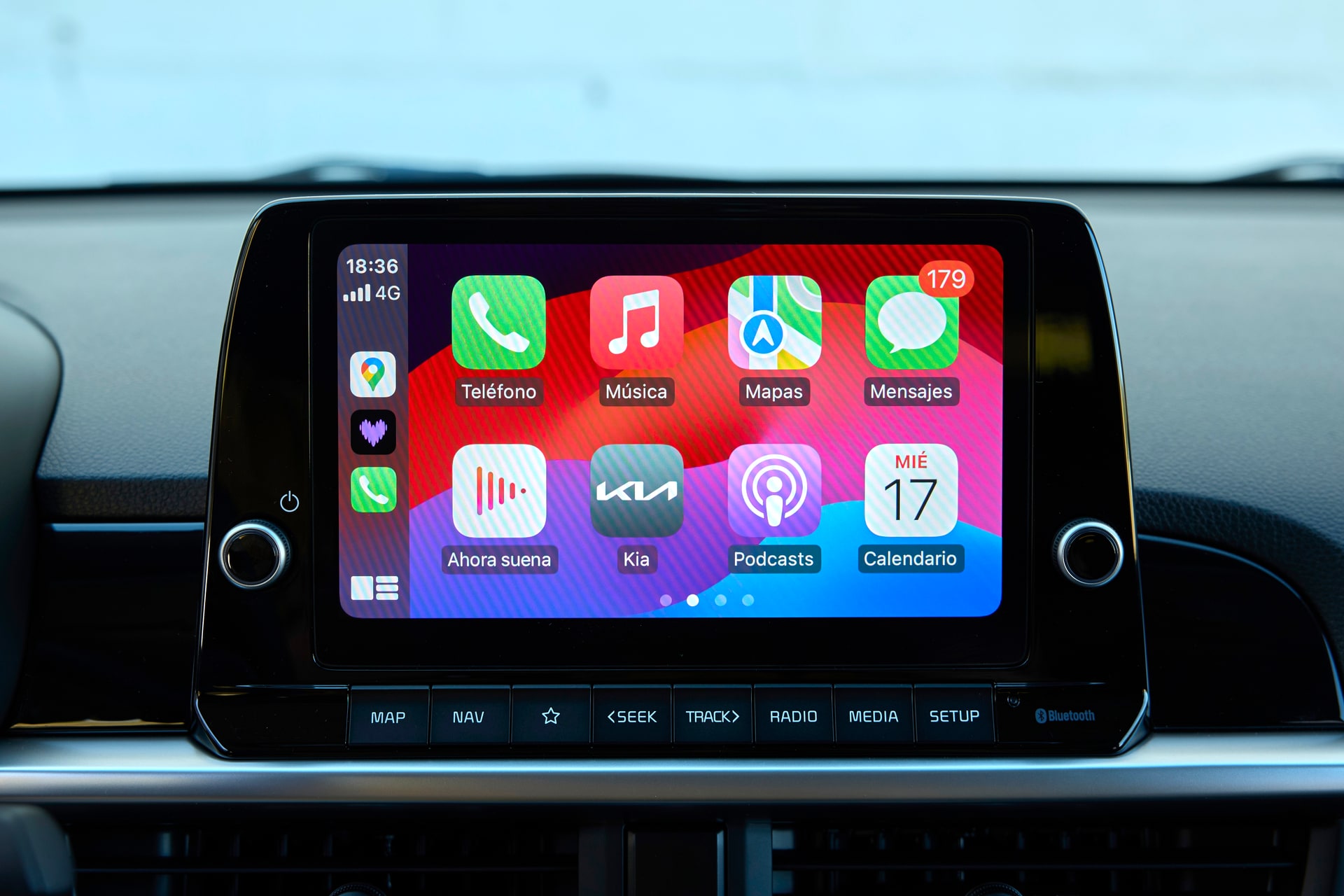
KIA Picanto 1.0 GDi 68 Concept — from ≈€18,400
The Picanto shares its technical roots with the i10, but KIA has tuned other things. The 1.0 GDi with direct injection delivers 70 CV and can reach 160 km/h — 20 more than the i10 — which on motorways translates into less strained overtaking and a car that does not always have to run at the limit of its capabilities. The Concept trim adds an ISG start-stop system and visually more refined equipment than the entry-level i10.
That said, it homologates around 120 g/km of CO₂ versus the i10’s ≈110. It is not a dramatic difference, but it exists. And the indicative price rises by around €600 compared with the Hyundai, a gap of under 5% that should not be the deciding factor.
| Power kW | Power CV | Max. speed | Consumption | Label | Fuel |
|---|---|---|---|---|---|
| ≈50 kW | ≈70 CV | ≈160 km/h | ≈5 l/100 km | C | Petrol |
Differences that matter: engine, equipment and presentation
The same displacement but not the same philosophy. The i10’s MPI is a port-injection engine, more basic and designed to last without complications. The Picanto’s GDi uses direct injection, produces 10 CV more and offers somewhat more body at mid and high revs. In pure city driving you will not notice a huge gap; once the route includes motorway, you will.
In standard equipment, the Picanto Concept comes with a more generous standard specification (air conditioning, alloy wheels, a well-sized central screen). The base-trim i10 Essence is more spartan and pushes the customer to step up a trim to match the equipment — and that is where the price difference dissolves or reverses.
Both are covered by the 7-year / 150,000 km warranty in the case of the KIA and 5 years with no mileage limit on the Hyundai. For a car you plan to keep for 10 years, the two extra years of KIA count for a lot.
Comparison table and scoring
| Criterion | Hyundai i10 1.0 MPI Essence | KIA Picanto 1.0 GDi Concept |
|---|---|---|
| Power | ≈60 CV / 6 | ≈70 CV / 7 |
| Top speed | ≈140 km/h / 6 | ≈160 km/h / 7.5 |
| Homologated consumption | ≈5 l/100 km / 8 | ≈5 l/100 km / 8 |
| CO₂ emissions | ≈110 g/km / 8 | ≈120 g/km / 7 |
| Standard equipment | 7 | 8 |
| Warranty | 5 years / 7.5 | 7 years / 9 |
| Price from (RRP) | ≈€17,800 / 8 | ≈€18,400 / 7.5 |
| Average | 7.2 | 7.7 |
Where each one wins, no half measures
The i10 wins on: lower entry price (≈€600 less) and lower homologated CO₂ emissions, which can translate into a slightly more favourable registration tax depending on region.
The Picanto wins on: 10 extra CV that make a difference outside the city, 20 km/h more top speed, more complete standard equipment in the compared trim and two extra years of warranty. These are four tangible advantages against two.
Verdict by use case
- For 100% urban use and a tight budget: Hyundai i10. If the car will hardly ever leave the city and the Picanto’s extra power would be underused, the i10 is cheaper to get into, more efficient on paper and perfectly capable.
- For mixed use, city plus motorway trips: KIA Picanto. The 70 CV and 160 km/h top speed mean the car does not feel strangled on a journey, and in everyday use the GDi engine feels looser.
- Best value for equipment and long-term warranty: KIA Picanto. The €600 difference is more than justified if you value 7 years of cover and the Concept’s standard equipment.
For anyone who is clear that their next car needs to be small and new, the logic of choosing according to your real-world use applies here too: don’t pay for what you won’t use, but don’t cut corners to save €600 either.
Frequently asked questions
Which is cheaper to maintain, the Hyundai i10 or the KIA Picanto?
Both share mechanics, consumables and the technical network within the Hyundai-Kia group, so maintenance costs are practically equivalent. The difference is set by each dealer’s specific after-sales plan.
Is it worth paying the extra €600 for the Picanto over the i10?
If you make regular motorway trips, yes: the extra 10 CV and the 20 km/h higher top speed are noticeable. If you only drive in the city, it does not make sense to pay for the engine alone, although the Concept’s more complete equipment and the two extra years of warranty tip the balance towards the KIA.
What environmental label do the i10 and the Picanto have?
Both carry the DGT C label as modern petrol cars homologated to Euro 6. They can circulate without restriction in most low-emission zones, although it is worth checking local regulations, which are evolving.
Is either of the two available in an electric or hybrid version in Spain?
No. The versions currently sold in Spain of the Hyundai i10 and the KIA Picanto are petrol only with a C label. There is no mild-hybrid, hybrid or electric variant in the national catalogue for these two models.

2 Comments
Pingback: Toyota Aygo X review: hasta dónde llega el utilitario urbano japonés como coche único en ciudad en 2026 – Comparativa de Coches
Pingback: Renault Clio vs SEAT Ibiza vs Volkswagen Polo: tres utilitarios B gasolina frente a frente por debajo de 22.000€ – Comparativa de Coches