

Buying an SUV for less than €30,000 in 2026 is still possible, but the range has narrowed. List prices have risen, pure petrol is becoming scarce in the segment, and the DGT environmental label weighs more than ever in the calculation. The question is no longer "which is the best one?", but which is the best one for you: do you want to sleep soundly with a long warranty, pay less at the petrol station every month, or fit the weekly shop and two large suitcases without playing Tetris?
We have put three SUVs that fit that budget head to head, all on sale in Spain, each strong in one of those three dimensions. No comparing an entry-level version against a top-of-the-range one: we are talking about equivalent versions at mid-level trim, the ones people actually buy.
The three real candidates under €30,000
The Spanish market for entry-level B and C-segment SUVs is currently dominated by three very different profiles:
- A Chinese contender with an aggressive mileage warranty and hybrid mechanics: the MG ZS Hybrid+.
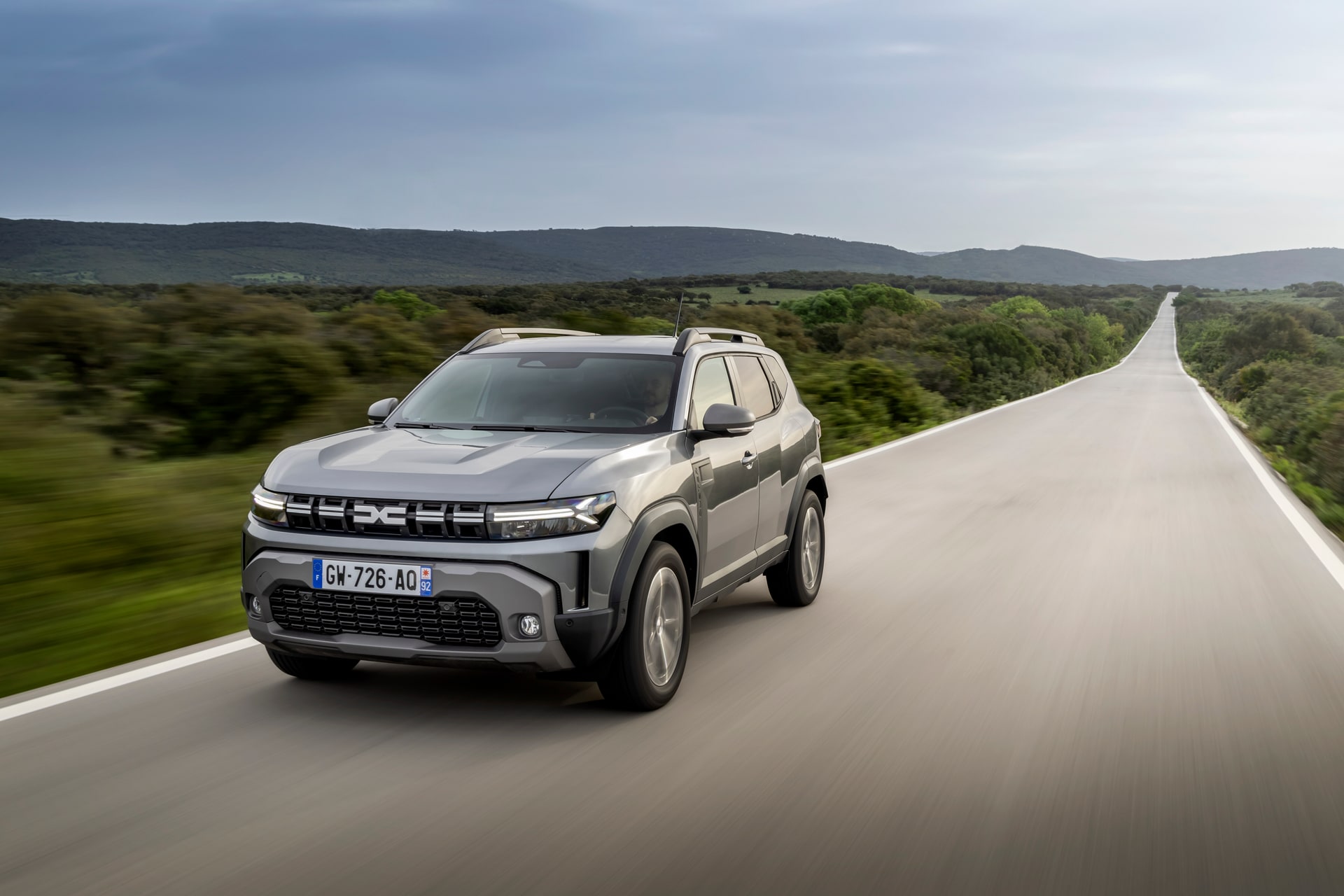
- A reformed Romanian generalist that has moved to full hybrid and remains the king of price-to-space ratio: the Dacia Duster Hybrid 140.
- A Korean model with restrained consumption and a clearly higher finish: the Hyundai Kona Hybrid.
All three carry an ECO label, all three feature hybridisation (mild or full, depending on the case) and all three can be registered for less than €30,000 in a mid-level trim. Beyond that, they have little in common.
MG ZS Hybrid+ Comfort — from €22,990
The ZS Hybrid+ is the cheapest of the three by a considerable margin. MG sells it with a 196 hp full hybrid system that performs well in town and copes on the road, although the three-speed gearbox has a peculiar feel when you accelerate hard. The best thing about it is not, in my opinion, the mechanics: it is the 7-year warranty (or 150,000 km) that MG includes as standard. On a €23,000 car, that completely changes the risk equation.
The interior does its job without shining — hard materials where you rest your elbow, a large central screen with a rather average response — and the 443-litre boot is surprisingly practical. On the motorway, however, consumption climbs more than the brochure suggests.
| Power | CV | WLTP consumption | Label | Fuel |
|---|---|---|---|---|
| 144 kW | 196 CV | 5.1 l/100 km | ECO | Hybrid |
Dacia Duster Hybrid 140 Expression — from €24,540
The third generation of the Duster has gone up in price, yes, but it still offers more car per euro than almost anyone. The Hybrid 140 uses the full hybrid system inherited from the Renault Group (the same as in the Clio E-Tech) and performs notably well in town, where it runs on electric power for much of the time. On the motorway it is no longer so brilliant: the engine runs short if you load it up.
Where the Duster excels is in presence, ground clearance and genuine off-road attitude. It is not a urban SUV in disguise: it handles a dirt track without breaking a sweat. The boot (430 litres in the hybrid version, slightly less than the petrol due to the battery) is honest. The standard warranty — 3 years or 100,000 km, extendable with the MyDacia package — falls short compared with MG.
| Power | CV | WLTP consumption | Label | Fuel |
|---|---|---|---|---|
| 105 kW | 140 CV | 4.8 l/100 km | ECO | Hybrid |
Hyundai Kona Hybrid Maxx — from €28,900
The Kona Hybrid is the most expensive of the three and also the most refined. Its 1.6 GDI hybrid unit with 141 CV is the one that behaves best in mixed use: it genuinely consumes little in town, keeps its composure on the motorway, and the six-speed DCT gearbox feels more natural than the CVT or planetary alternatives. In real consumption, it is the one that uses the least of the three in 70% road use.
The interior is clearly the best of the trio — panoramic dual screen, decent materials, well-considered ergonomics — and Hyundai keeps its 5-year warranty with no mileage limit, a serious argument. Its weak point: the 466-litre boot looks good on paper, but the space is less squared off than it seems.
| Power | CV | WLTP consumption | Label | Fuel |
|---|---|---|---|---|
| 104 kW | 141 CV | 4.6 l/100 km | ECO | Hybrid |
Where each one wins, no tricks
- MG ZS Hybrid+: wins on price and warranty. Nobody else gives you 7 years for €23,000.
- Dacia Duster: wins on genuine usable space, off-road capability and long-term running costs (cheap maintenance, affordable parts).
- Hyundai Kona Hybrid: wins on real mixed consumption and perceived interior quality. It is the one that will age best in day-to-day use.
Summary table with scores
| Model | Price from | CV | WLTP consumption | Boot | Warranty | Overall score /10 |
|---|---|---|---|---|---|---|
| MG ZS Hybrid+ Comfort | €22,990 | 196 | 5.1 l | 443 l | 7 years / 150,000 km | 7.8 |
| Dacia Duster Hybrid 140 Expression | €24,540 | 140 | 4.8 l | 430 l | 3 years / 100,000 km | 7.9 |
| Hyundai Kona Hybrid Maxx | €28,900 | 141 | 4.6 l | 466 l | 5 years no km limit | 8.2 |
There are more options in the segment worth keeping on your radar — the Omoda 5 or the Jaecoo 7 also fall within budget in their petrol versions — but here we wanted to focus on three clearly differentiated profiles.
Verdict by use case
-
If you prioritise warranty and a tight budget: MG ZS Hybrid+. The RRP difference with the Kona exceeds 25%, and those €6,000 buy a great deal of peace of mind with 7 years ahead. It is the objective winner for anyone who wants no drama and no nasty surprises.
-
If you prioritise real consumption and comfort on long trips: Hyundai Kona Hybrid. It genuinely uses less, drives better on the motorway and the interior is a step above. For mixed use 70/30 city-road and more than 15,000 km/year, the extra cost is worth it.
-
If you prioritise space, rural use and cost of ownership: Dacia Duster Hybrid 140. The most car per euro, the only one that tackles dirt tracks without complexes and the cheapest to maintain over the long term. If you live outside the city or lead a family life with a dog, it makes the most sense.
And if you don’t mind about anything and just want the "least bad" in everything? The Kona is the least risky answer, but at almost €29,000 you are already brushing the ceiling of this article and eyeing higher segments. That is where the whole conversation changes.
Frequently asked questions
Which SUV has the best warranty under €30,000 in 2026?
The MG ZS Hybrid+, with 7 years or 150,000 km as standard. The Hyundai Kona Hybrid follows with 5 years and no mileage limit, a more interesting formula for those who drive many kilometres a year.
Which hybrid SUV consumes least under €30,000?
The Hyundai Kona Hybrid is rated at 4.6 l/100 km WLTP and, in real mixed use, it is the most frugal of the three. The Dacia Duster Hybrid 140 comes close in pure city driving, but climbs more on the motorway.
Which SUV offers the largest boot under €30,000?
The Hyundai Kona Hybrid leads on paper with 466 litres, although the MG ZS Hybrid+ (443 l) has a squarer and more usable space. The Dacia Duster Hybrid loses some capacity compared with the petrol version because of the battery.
Do the Plan Auto+ incentives apply to these hybrid SUVs?
The Plan Auto+ focuses mainly on plug-in electrified vehicles and 100% electric cars. Non-plug-in hybrids (full hybrids) such as these three generally do not fall within the bulk of the aid; it is advisable to check the official website for the current conditions before closing the purchase.
