

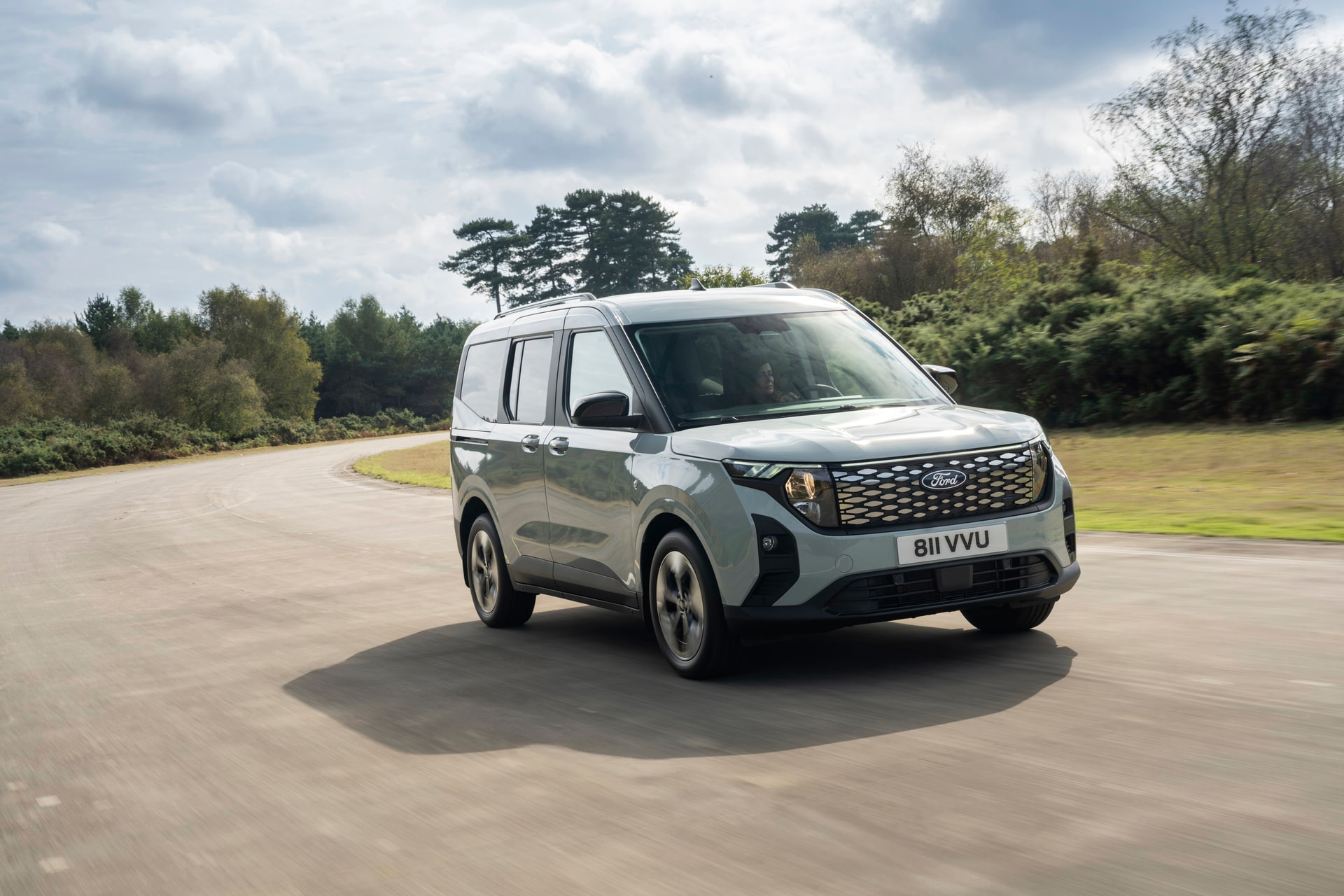
There is a fact that almost no commercial brochure tells honestly: how many litres of boot space remain when seven people are seated. The 600, 700 or 800 litres that 7-seater SUVs display in their spec sheets are almost always measured with the third row folded, that is, in five-seat mode. And for a large family or a passenger transfer, that is the wrong figure.
This ranking focuses on the opposite. Which 7, 8 or 9-seater cars on sale in Spain still swallow real luggage with all seats occupied. Spoiler: van-derived MPVs play in another league, and the Ford Tourneo Custom sets the benchmark.
A note before we begin: the prices quoted are manufacturer’s recommended RRP, without dealer discounts, campaigns or aid schemes such as the Plan Auto+. Treat them as indicative.
Why boot space “with all rows” is the metric that matters
A typical 7-seater SUV leaves between 150 and 290 litres behind the third row. That sounds reasonable until you try to fit seven weekend bags. They don’t fit. Two folded baby strollers don’t either. A van-derived MPV, by contrast, works with roof heights of 1.40 m or more and loading lengths that double those of any SUV, however large.
That is why mixing categories in this ranking makes sense: the reader looking for a “7-seater car with real boot space” needs to know where the line is between an oversized family SUV and a well-resolved passenger van.
1. Ford Tourneo Custom — from ~€52,000
The benchmark. With its usual eight seats (configurable to nine) and a usable interior length that comfortably exceeds 1.80 m behind the third row in the L1 version, the Tourneo Custom offers very useful boot space even with all seats fitted. We are talking about around 1,000 real litres with all nine seats in use in the L2 variant, figures unattainable for any SUV on the market.
Strong points: loading height that allows stacking vertically, a huge tailgate and rails to reconfigure individual seats. Honest drawbacks? It is still a van to drive — don’t expect the poise of a passenger car — and parking in town centres is a sport. For VTC, real large families or regular transport of bulky luggage, it has no rival at its price.
If you want to explore its use as a transfer vehicle, the specific Tourneo Custom analysis covers its configurations in detail.
2. Mercedes-Benz V-Class — from ~€62,000
The premium option. The V-Class shares its philosophy with the Tourneo Custom — a van-derived MPV, up to 8 seats — but raises the bar in finish, acoustic insulation and driving. The boot with all seats in use exceeds 1,000 litres in the long version, and rear access with a full tailgate or double doors is more practical than any SUV with a tiny opening.
Best feature: interior refinement, mature ADAS and prestige. Worst: the price escalates quickly when you configure the Avantgarde or Exclusive trim, and mechanically it is more conservative than the updated Tourneo. It is the car for those who want van-sized space without giving up premium SUV upholstery.
3. Volkswagen Multivan — from ~€58,000
The Multivan plays a different card: individual seats with longitudinal rails that slide, rotate and can be removed. In pure litres with seven seats it sits slightly below the Tourneo Custom and the V-Class, but its modularity makes it the most versatile for those who combine passengers and cargo daily. Usable boot space with all rows comfortably exceeds 460 litres, with a height that accepts luggage stood upright.
Points in its favour: real modularity, driving very close to a passenger car (MQB platform), eHybrid option with a CERO label. Drawbacks: the individual seats are heavy and awkward to remove; if you take them out, you have nowhere to store them at home. For families who alternate passengers and cargo without a fixed pattern, it is the smartest choice of the passenger-van trio.
4. Kia Sorento — from ~€49,000
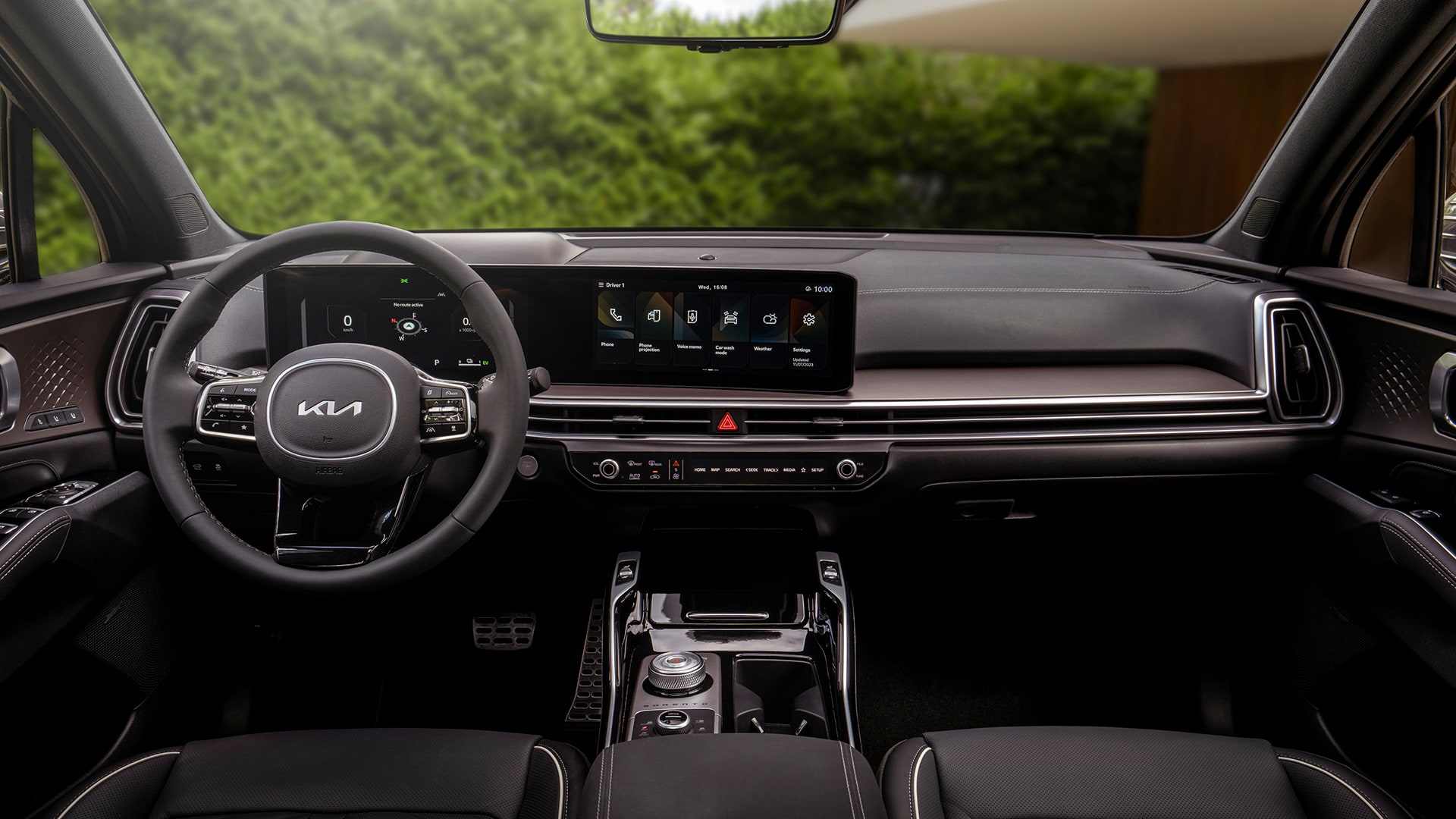
First SUV of the ranking, and the most honest in its format: the Sorento, in HEV or PHEV hybrid versions, offers around 175 litres with the third row in use. That is little compared to any van, but it is among the best you can find in a mid-size 7-seater SUV. Comfortable rear access, a third row with acceptable space for adults on short trips, and an electric tailgate as standard on mid-range trims.
A clear advantage over MPVs: it drives like a car, parks like a car and consumes like a car — the HEV runs at around 6.5 l/100 km in real mixed use. An advantage over the Santa Fe: the 6-seat configuration with centre captain’s chairs is more comfortable on long journeys.

5. Hyundai Santa Fe — from ~€50,000
Technical sibling of the Sorento, the new-generation Santa Fe offers a similar boot figure with all seven seats occupied — around 170-200 litres depending on configuration — but wins on third-row accessibility thanks to its squarer body design and a huge tailgate. The headroom in the last row is among the best in the SUV segment.
Where it beats the Sorento: a more modern interior design and third-row headroom. Where it loses: the exterior styling polarises, and the hybrid powertrain falls short on loaded motorways.
For a cross-analysis of both Korean models, this Santa Fe vs Sorento comparison goes into detail.
Summary table and rating
| Model | Seats | Real boot with all rows (approx.) | Price from | Score /10 |
|---|---|---|---|---|
| Ford Tourneo Custom | 8-9 | ~1,000 L (L2) | ~€52,000 | 9.5 |
| Mercedes-Benz V-Class | 7-8 | ~1,030 L (long) | ~€62,000 | 9.0 |
| Volkswagen Multivan | 7 | ~470 L | ~€58,000 | 8.5 |
| Kia Sorento | 7 | ~175 L | ~€49,000 | 7.5 |
| Hyundai Santa Fe | 7 | ~190 L | ~€50,000 | 7.5 |
Verdict by use case
- Real large family (5+ children) or passenger transfers with luggage: Ford Tourneo Custom. Nothing comes close in usable litres per euro, and its warranty and network are solid arguments against more niche alternatives.
- Premium VTC or executive transfers: Mercedes-Benz V-Class. The price jumps more than 15% over the Ford, but the positioning is justified when the client pays for image.
- Mixed passenger/cargo use with passenger-car driving: Volkswagen Multivan. Winning modularity, and the eHybrid option opens the door to a CERO label.
- Those who want a 7-seat SUV without giving up car handling: Kia Sorento. Best balance in the SUV segment, being honest about its boot limitation.
- Family SUV with emphasis on rear accessibility: Hyundai Santa Fe. Squared design, wide tailgate and a more liveable third row.
Frequently asked questions
Which 7-seater car has the most boot space with all seats occupied in 2026?
The Ford Tourneo Custom in the L2 version, with figures close to 1,000 usable litres behind the ninth seat. No SUV comes near: the best in the segment (Sorento, Santa Fe) hover around 170-200 litres in that same configuration.
Is a 7-seater SUV worth it if we always travel seven?
Honestly, no. A 7-seater SUV is designed to use the last two seats occasionally. If you routinely travel with seven people and luggage, a van-derived MPV — Tourneo Custom, Multivan or V-Class — is the right answer.
What is the difference between the homologated boot and the real one with the third row in use?
The catalogue capacity is almost always measured with the third row folded (5-seat mode). Real boot space with 7 occupants can be up to 70% smaller. That is why it is worth checking detailed technical sheets before buying.
Is there any electric or plug-in hybrid option among the large MPVs?
Yes. The Volkswagen Multivan eHybrid and PHEV variants of the V-Class offer a CERO or ECO label with full functionality. The Ford Tourneo Custom also has a PHEV version. It is the logical route for those who need to enter a low-emission zone with a vehicle of this size.
