

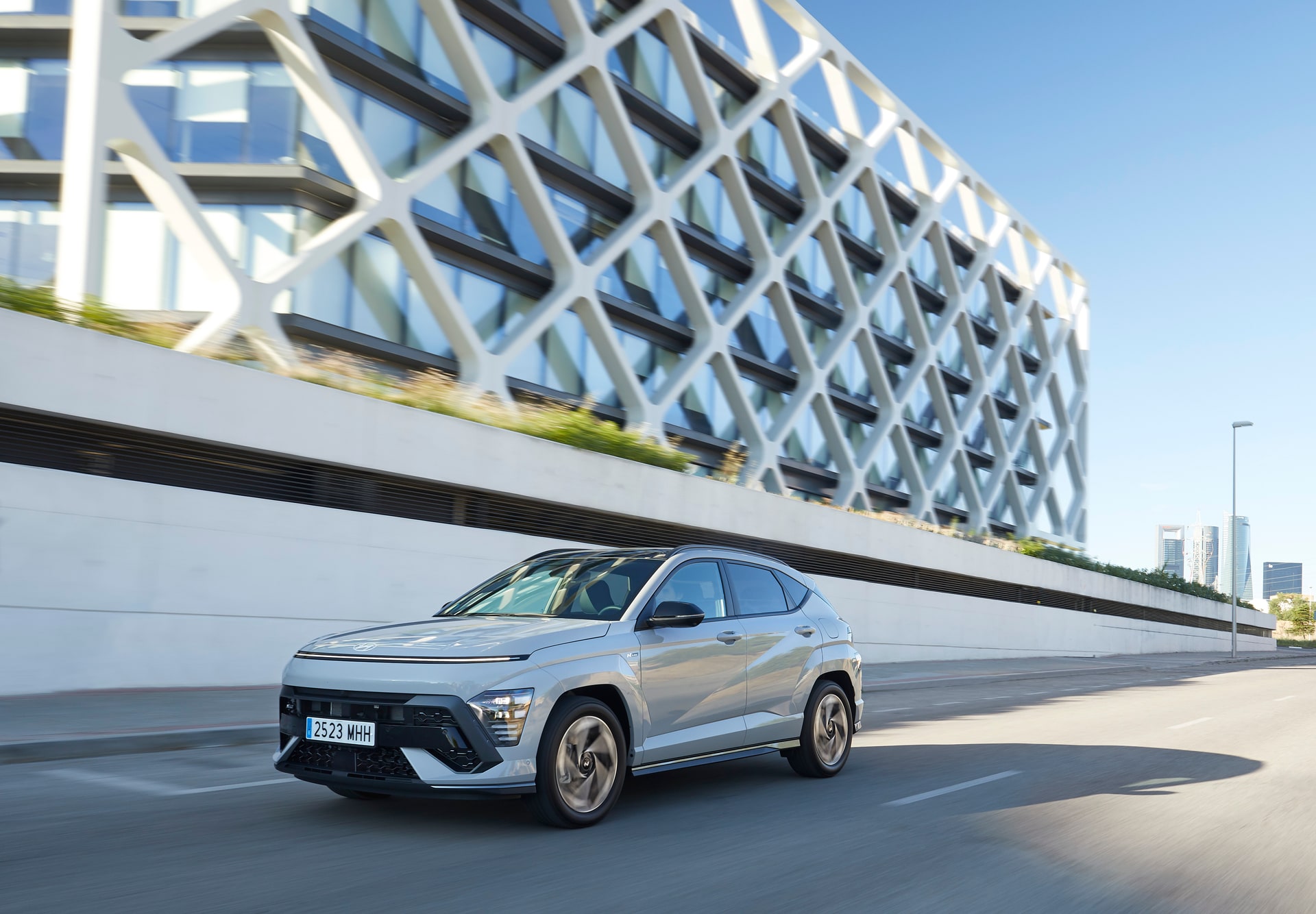
WLTP is misleading when you’re stuck on the M-30 at half past eight on a Tuesday. The 4.5 l/100 km homologated figure of a B-segment SUV hybrid becomes 5.8 when the car spends half an hour crawling along and 4.1 when the system works as it should, with the combustion engine switched off most of the time. This guide is about that: which one to choose if your life is spent between traffic lights rather than toll booths.
Why WLTP consumption doesn’t work in urban traffic
The WLTP cycle mixes urban, extra-urban and motorway driving. For a driver who spends 90% of their time in the city, that average is distorted by stretches they never drive. A full hybrid shines precisely where WLTP dilutes its advantage: stops, restarts and speeds below 50 km/h, which is when the electric motor can work alone. What matters is the percentage of time in EV mode in dense city traffic, and on that measure the three finalists in this analysis are not level.
What to look for in a city hybrid SUV
Three variables matter more than the rest: electric motor power (the higher it is, the more minutes without starting the combustion engine), battery size and management, and how aggressively the regenerative braking software operates. Add a fourth, less important but still real: weight. A B-segment SUV hybrid under 1,400 kg uses less energy on restarts than one weighing 1,550 kg, even if both use the same system.
The three finalists for urban use in 2026
We have ruled out PHEVs (a different category and price bracket) and 48 V mild hybrids, which contribute little in traffic. Three full hybrids remain genuinely competitive in Spain in 2026: the Toyota C-HR 140H, the Renault Captur E-Tech Full Hybrid 145 and the Hyundai Kona HEV.
Toyota C-HR 140H Advance — from €32,900
Toyota’s hybrid system remains the benchmark in the city for a simple reason: it has spent 25 years refining the balance between combustion and electric power. In real traffic, the C-HR 140H easily manages 4.2 to 4.6 l/100 km, and it can spend more than 60% of its time in EV mode at speeds below 40 km/h. The 140 hp 2.0 Hybrid engine is smoother than the 1.8 of the previous generation, and the step up in refinement is noticeable on pull-aways from a standstill, exactly what you repeat 200 times a day in central Madrid.
What doesn’t convince? The boot stays at 364 litres, less than the Kona, and rear access remains tight because of the sloping roofline. If you carry child seats, look elsewhere.
| Power | WLTP consumption | DGT label | Fuel |
|---|---|---|---|
| 140 CV (103 kW) | 4.8 l/100 km | ECO | Hybrid |
Renault Captur E-Tech Full Hybrid 145 Techno — from €27,800
The E-Tech system is, technically, the most ambitious of the trio: a clutchless dog-type gearbox, two electric motors and always starting in EV mode. Renault claims up to 80% of time in electric mode in the city, and our experience with the car confirms the figure is not marketing: on purely urban trips, the combustion engine stays off for whole minutes at a time. Real consumption in traffic: 4.1 – 4.5 l/100 km.
The drawback is well known. That clutchless gearbox has jerks at certain transitions, such as releasing the brake on an uphill slope, which break the premium comfort the car promises. It isn’t serious, but it is there. In return, it is the cheapest of the three by a comfortable margin (almost 15% less than the C-HR), and its ECO label is just as assured.
| Power | WLTP consumption | DGT label | Fuel |
|---|---|---|---|
| 145 CV (107 kW) | 4.7 l/100 km | ECO | Hybrid |
Hyundai Kona HEV Maxx — from €29,740
The Kona hybrid uses a 141 hp 1.6 GDI combined with an electric motor that doesn’t work as “alone” as the Renault’s: here the combustion engine engages sooner and the driving feel is more conventional, more like a traditional car with electric assistance. In traffic that costs it somewhat: 4.5 – 5.0 l/100 km real-world, above the other two.
What does it gain in return? Real-world habitability (438 litres of boot space, a rear bench usable for three adults on short trips) and a 5-year warranty with no mileage limit, which weighs in the decision for a car with a hybrid battery. If you use the SUV in the city during the week but head to the mountains with the family at weekends, the Kona is the one least likely to disappoint you outside its home territory.
| Power | WLTP consumption | DGT label | Fuel |
|---|---|---|---|
| 141 CV (104 kW) | 5.0 l/100 km | ECO | Hybrid |
Comparison table and urban use score
| Model | Power | Real traffic consumption | Boot | Length | Starting price | Warranty | Urban score (1-10) |
|---|---|---|---|---|---|---|---|
| Toyota C-HR 140H | 140 CV | 4.2 – 4.6 l/100 km | 364 L | 4.36 m | €32,900 | 3 years + up to 15 for servicing | 9 |
| Renault Captur E-Tech 145 | 145 CV | 4.1 – 4.5 l/100 km | 326 L | 4.23 m | €27,800 | 3 years no mileage limit | 8.5 |
| Hyundai Kona HEV | 141 CV | 4.5 – 5.0 l/100 km | 438 L | 4.35 m | €29,740 | 5 years no mileage limit | 7.5 |
Where each one clearly wins
- Toyota C-HR: the most refined in transitions between combustion and electric, and the one that performs best without a charger in chronic congestion. It also retains the best resale value.
- Renault Captur: the most efficient in pure city driving and the cheapest; the price gap with the C-HR exceeds 15%, a figure that matters if you finance.
- Hyundai Kona: the only one that also works as a complete family car, with 438 litres and a 5-year warranty.
Plan Auto+ and DGT label
All three carry the ECO label, which gives them access to Madrid Central, Barcelona’s ZBE low-emission zones and regulated parking on favourable terms in most capital cities. The Plan Auto+ only applies to plug-in electrified vehicles and pure electric cars, so none of these three benefits from it. This is an important reminder if you were counting on public aid in your calculations. For the buyer who doesn’t want to deal with chargers, that absence of subsidy is the price to pay for the convenience of a self-charging hybrid. If your priority is something else, this comparison of Chinese plug-in hybrids in the D segment may interest you more.
Verdict by use case
- Pure daily traffic, a single driver or a couple without children: Renault Captur E-Tech 145. Lowest consumption, most contained price, and the 80% time in EV mode that Renault promises is met.
- Intensive urban use with occasional weekend trips, priority on refinement and resale: Toyota C-HR 140H. It costs more upfront but pays you back within four years.
- A single SUV for a family that does city driving during the week and trips with children and a full boot: Hyundai Kona HEV. It uses a little more in traffic, but it doesn’t force you to own two cars.
If your annual mileage exceeds 20,000 km with a significant share on motorways, none of the three is the optimal answer: look instead at a compact electric car with proven real-world range or a C-segment diesel.
FAQ
Which hybrid SUV uses the least fuel in the city in 2026?
The Renault Captur E-Tech Full Hybrid 145 is the most efficient in pure urban traffic, with real consumption between 4.1 and 4.5 l/100 km thanks to its always-electric start and a system that keeps the combustion engine off up to 80% of the time in dense traffic.
Is it worth paying more for the Toyota C-HR than the Renault Captur?
It depends on your time horizon. If you plan to change car in 3-4 years, the Toyota’s higher residual value offsets much of the €5,000 initial difference. If you keep it for 8 years or more, the Captur comes out better in total cost.
Do self-charging hybrid SUVs have access to the Madrid and Barcelona ZBE zones?
Yes. All three models analysed carry the ECO label, which allows them to drive through the low-emission zones of every Spanish capital with an active ZBE, including Madrid ZBEDEP and the Barcelona ring road.
Why are plug-in hybrids (PHEVs) not included in this comparison?
Because they are a different price category (typically €8,000-12,000 more expensive) and a different usage profile: a PHEV only makes sense if you charge at home every day. For urban use without the option of plugging in, the self-charging hybrid is the most efficient and cheapest solution in 2026.

1 Comment
Pingback: Cómo elegir un SUV híbrido familiar en 2026 según el reparto real entre kilómetros urbanos y de autovía – Comparativa de Coches