

The SUV-C is the most contested segment in Spain and the one that changes most once you take it onto the asphalt of central Madrid or Barcelona. There are genuine hybrid versions, mild hybrids you barely notice, and pure electric models dressed up as compact SUVs. Here we put three candidates with different philosophies head to head, with one clear criterion: which one moves best when most of your kilometres are urban.
Prior note on prices: the prices shown are the manufacturer’s recommended retail prices, without dealer discounts, one-off campaigns or public aid such as the Plan Auto+. At the dealership, after negotiation, the real ticket price usually comes down.
The urban SUV-C dilemma in 2026
In the city, consumption depends less on the engine than on how far you can drive without burning petrol. A 48 V mild hybrid recovers some energy under braking and switches the engine off at stops, but it is still a petrol engine with assistance. A pure electric car produces zero local emissions, carries the 0 label and gets easy access to ZBE zones. The difference in traffic jams is huge; the difference in garage needs and purchase price is too.
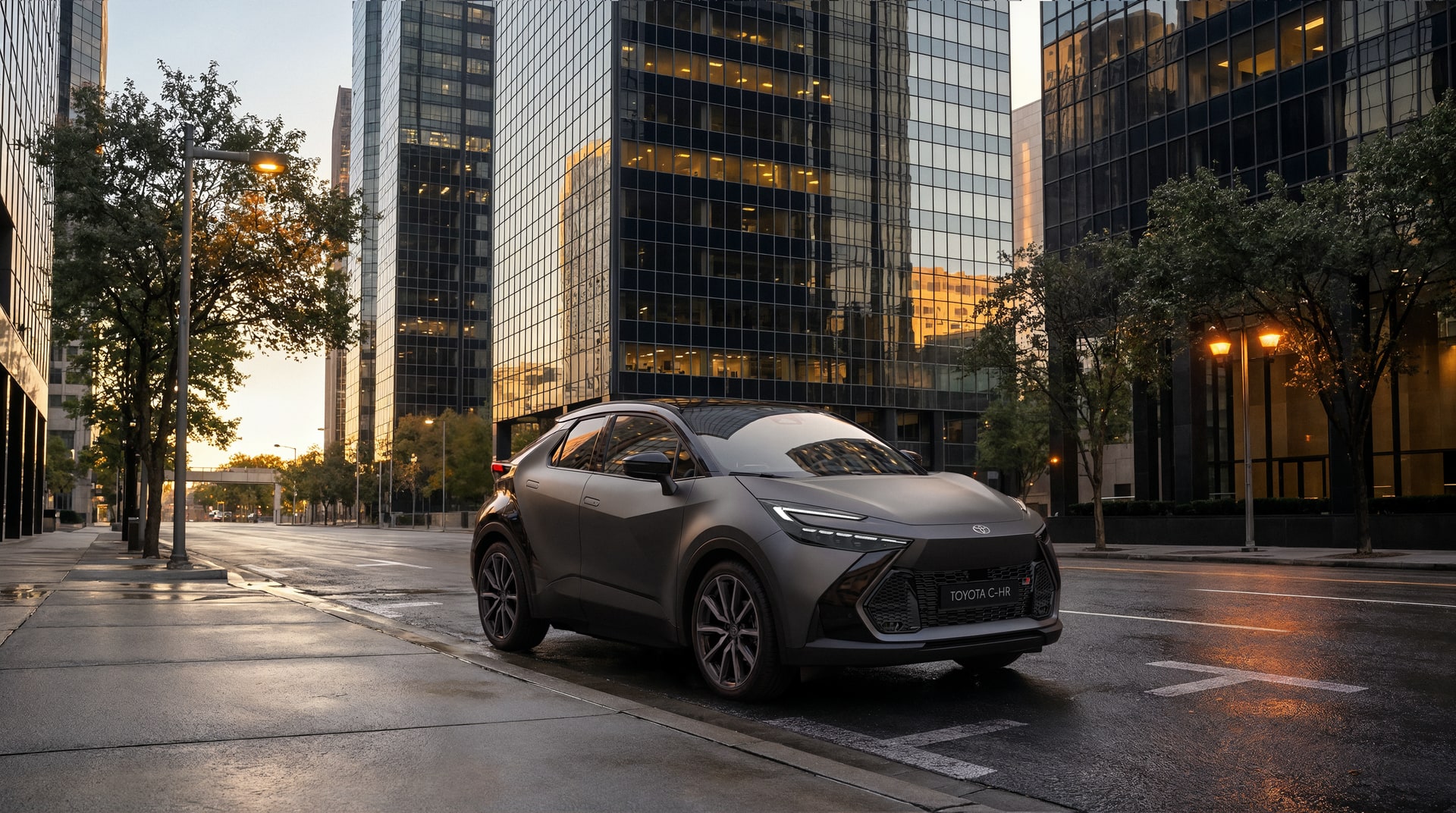
Toyota C-HR Electric 230 Advance — from ≈€40,000
The electric C-HR is the most radical bet of the trio. It has no combustion engine, carries the 0 label and a 77 kWh battery that delivers an official range of around 600 km. In the city that figure stretches even further: regenerative braking recovers energy at every traffic light and the noise disappears.
Clear pros: 0 label (free entry into any Spanish ZBE), total silence and instant throttle response — the 220 electric hp feel like a different league compared with 140 hp petrol.
Honest drawback: the premium over the mild hybrids is around €8,000–9,000. If you have nowhere to plug in at home or at work, the fuel saving evaporates when you rely on public charging.
| Power kW | Power CV | Top speed | Range | Battery | Label | Fuel |
|---|---|---|---|---|---|---|
| ≈170 kW | ≈220 CV | ≈160 km/h | ≈600 km | ≈77 kWh | 0 | Electric |
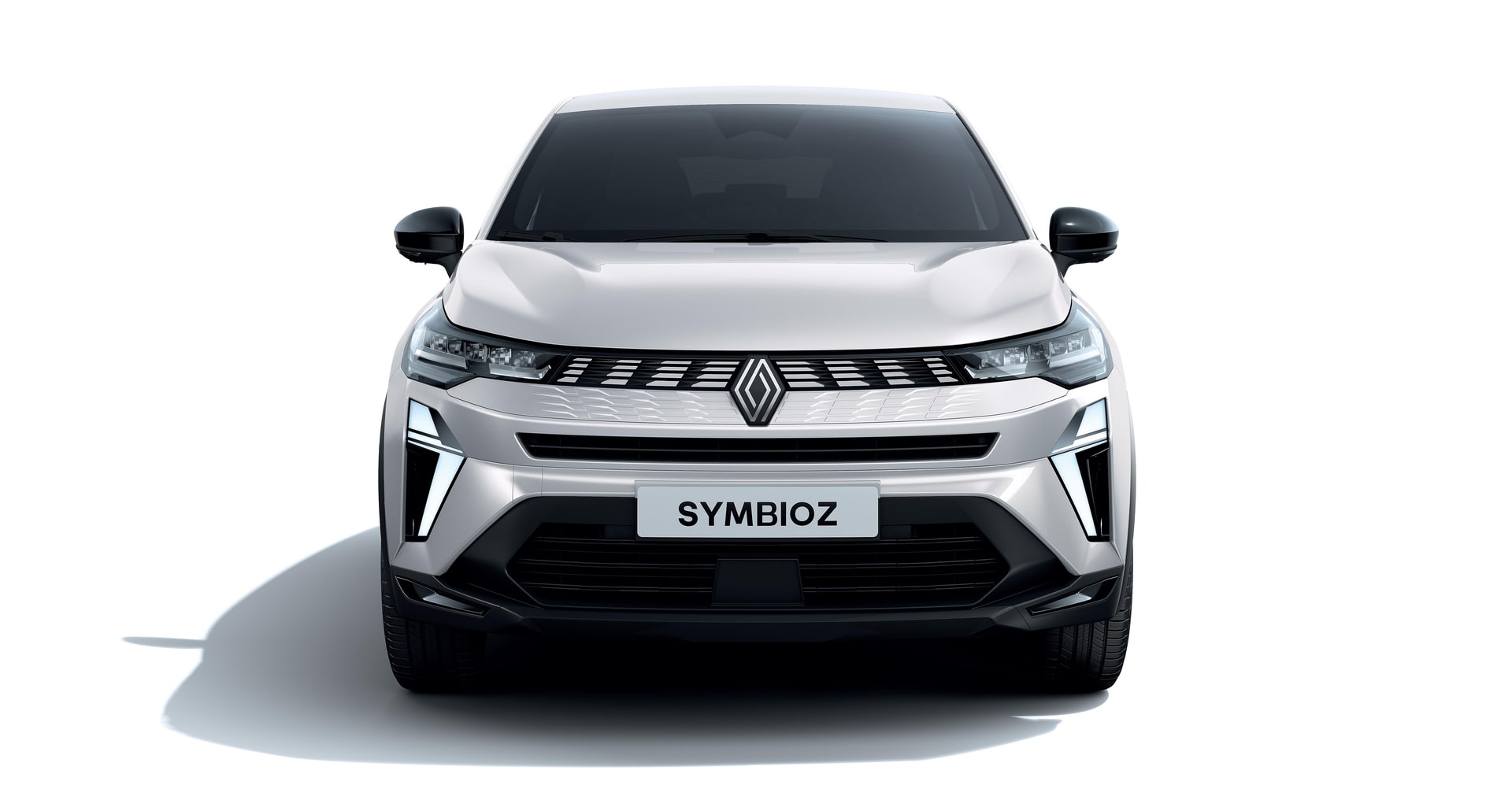
Renault Symbioz Mild Hybrid 1.3 TCe 140 Techno — from ≈€31,300
The Symbioz is Renault’s newcomer to the segment. Under the bonnet sits the familiar 1.3 TCe with 140 CV and 12V mild hybridisation, an automatic gearbox and an official consumption of around 6 l/100 km. ECO label. In the city it holds its own competently, although the stop-start and electric assistance work no miracles: there is still a petrol engine doing the work.
The Symbioz’s best points: a very complete equipment list in the Techno trim (10.4" OpenR screen, built-in Google, 360 camera) and surprisingly generous rear space for its 4.41 m length. It is the cheapest of the trio.
The catch: 140 CV with an automatic gearbox makes the car move without much sparkle. And the ECO label no longer opens every door in the most restrictive ZBE zones — Madrid, for example, tolerates it; other capitals are tightening their criteria.
| Power kW | Power CV | Top speed | Consumption | CO₂ | Label | Fuel |
|---|---|---|---|---|---|---|
| ≈100 kW | ≈140 CV | ≈180 km/h | ≈6 l/100 | ≈130 g/km | ECO | Petrol mild hybrid |
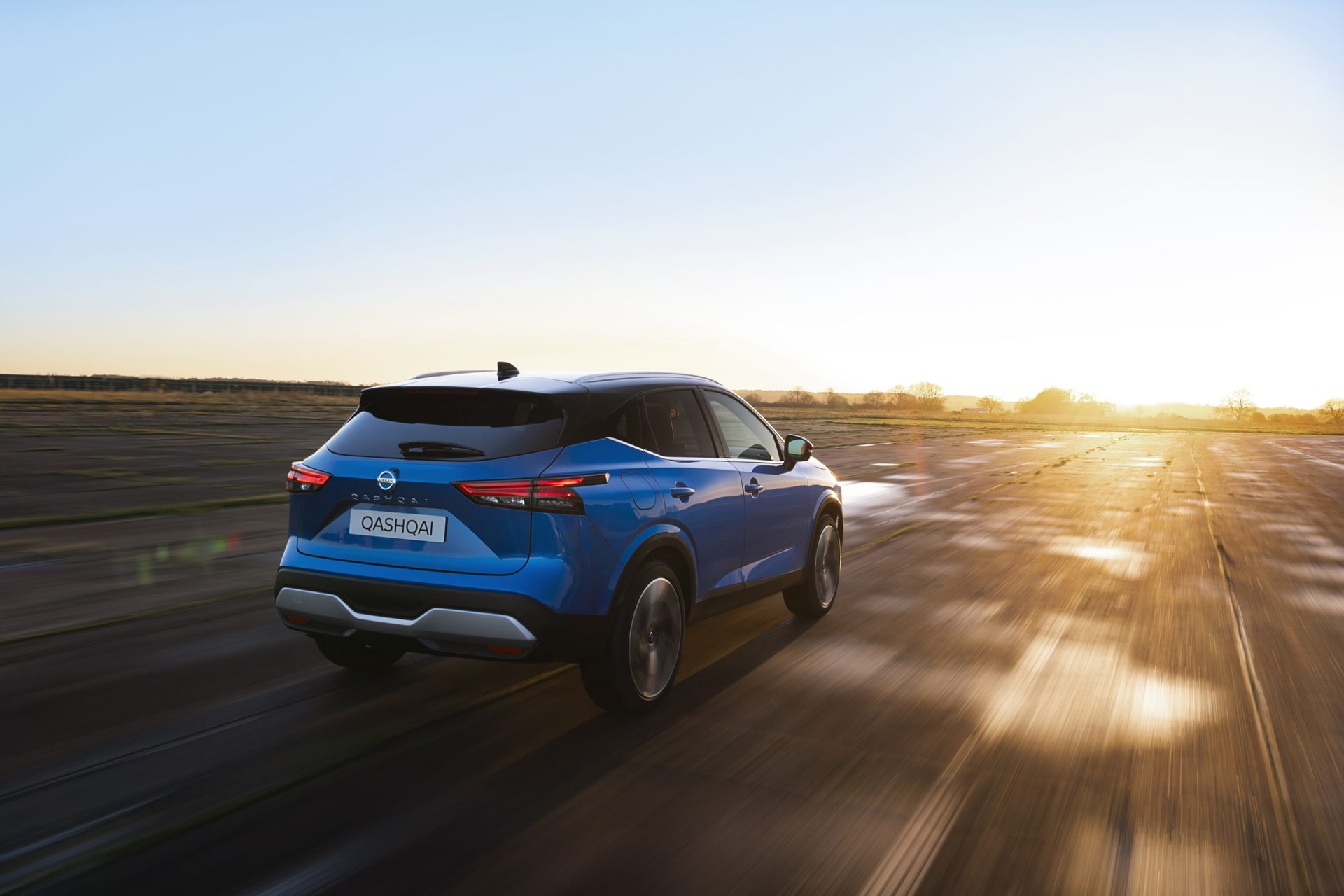
Nissan Qashqai mHEV 1.3 DIG-T 140 Acenta — from ≈€32,200
The Qashqai is a veteran that knows what it is doing. On paper it shares the Symbioz’s mechanical layout — 1.3 with 140 CV and 12V mild hybrid — but with a tuning more oriented to the open road and a chassis that inspires more confidence at motorway speeds. In the city, honestly, it does not stand out from the Renault: it shares the ECO label limitations and an urban consumption that easily climbs to a real 7 l/100.
Where it shines: finish and perceived quality a step above the Symbioz, and a very well-established after-sales network in Spain. Note: for the same urban use there is the e-Power version, a series hybrid far more efficient in traffic jams, although it raises the ticket price. Here we compare the mHEV because it is the one that competes on price directly with the Renault.
| Power kW | Power CV | Top speed | Consumption | CO₂ | Label | Fuel |
|---|---|---|---|---|---|---|
| ≈100 kW | ≈140 CV | ≈200 km/h | ≈6.5 l/100 | ≈140 g/km | ECO | Petrol mild hybrid |
Summary table and urban score
Score from 1 to 10 focused on everyday urban use (label, real consumption, manoeuvrability, silence, price).
| Model | Power | Label | Consumption/Range | Price from | Urban score |
|---|---|---|---|---|---|
| Toyota C-HR Electric 230 Advance | 220 CV | 0 | ≈600 km | ≈€40,000 | 9/10 |
| Renault Symbioz TCe 140 Techno | 140 CV | ECO | ≈6 l/100 | ≈€31,300 | 7/10 |
| Nissan Qashqai DIG-T 140 Acenta | 140 CV | ECO | ≈6.5 l/100 | ≈€32,200 | 6.5/10 |
Where each one wins, no half measures
- C-HR Electric: wins in pure city driving. 0 label, silence, zero petrol. The only one with guaranteed access to all current and future ZBE zones.
- Symbioz: wins on price and on equipment per euro. The Techno trim brings as standard what other rivals charge extra for.
- Qashqai mHEV: wins on road versatility and product maturity. If your urban use is only 50%, it is the most balanced of the trio.
If you are weighing up three child seats, before deciding it is worth checking the real width of each one’s rear bench — all three are SUV-Cs, but not all of them accept three ISOFIX seats side by side.
Verdict by use case
- 100% urban use with your own garage: Toyota C-HR Electric 230 Advance. It has no rival on label, silence and cost per kilometre if you charge at home. The premium of roughly €8,000 over the mild hybrids pays off in 4–5 years of daily use.
- Best value for money in urban/mixed use: Renault Symbioz Techno. It costs clearly less (a recommended price difference above 20% compared with the C-HR, beyond the relevant threshold), is well equipped and copes in the city without fuss.
- Mixed use, city plus frequent trips: Nissan Qashqai mHEV Acenta. Better composure on the motorway and a wide after-sales network. If you will be doing many road kilometres, check the e-Power version too before signing.
If your city already restricts access for ECO-label cars, or will do so soon, the discussion is over: electric C-HR or nothing.
FAQ
What is the best urban SUV-C hybrid in 2026?
If pure urban use is your priority and you can charge, the Toyota C-HR Electric 230 Advance wins on its 0 label and cost per kilometre. Among the mild hybrids with an ECO label, the Renault Symbioz is the most rational option on price.
What is the difference between the Symbioz/Qashqai mild hybrid and a full hybrid?
The 12V–48V mild hybrid system assists the petrol engine but cannot move the car electrically on its own. A full hybrid (such as the Toyota C-HR Hybrid or the Nissan Qashqai e-Power) can cover short stretches at zero emissions and is more efficient in the city.
Is it worth paying €8,000 more for the electric C-HR than for the Symbioz?
It depends on two factors: whether you charge at home at domestic rates and whether you drive more than 15,000 km a year in the city. With both conditions met, the extra cost is recovered in 4–5 years through fuel and taxes. Without your own charging point, the calculation changes.
Can all three models enter the Madrid Central or Barcelona ZBE zones?
The Toyota C-HR Electric (0 label) enters without restriction. The Renault Symbioz and the Nissan Qashqai mHEV (ECO label) are currently allowed in most Spanish ZBE zones, although with local nuances and with regulations that tend to tighten in the coming years.

4 Comments
Pingback: Renault Symbioz vs Hyundai Tucson Hybrid vs Nissan Qashqai e-Power: qué SUV-C híbrido ofrece más coche por menos de 35.000€ – Comparativa de Coches
Pingback: Los 5 SUV híbridos con mejor relación calidad-precio por debajo de 35.000€ en 2026 – Comparativa de Coches
Pingback: Cómo elegir un SUV híbrido en 2026 según lo que incluye de serie el acabado de acceso y no tienes que pagar aparte – Comparativa de Coches
Pingback: Suzuki Swift vs Toyota Yaris: qué utilitario híbrido japonés convence más en ciudad por su precio – Comparativa de Coches