

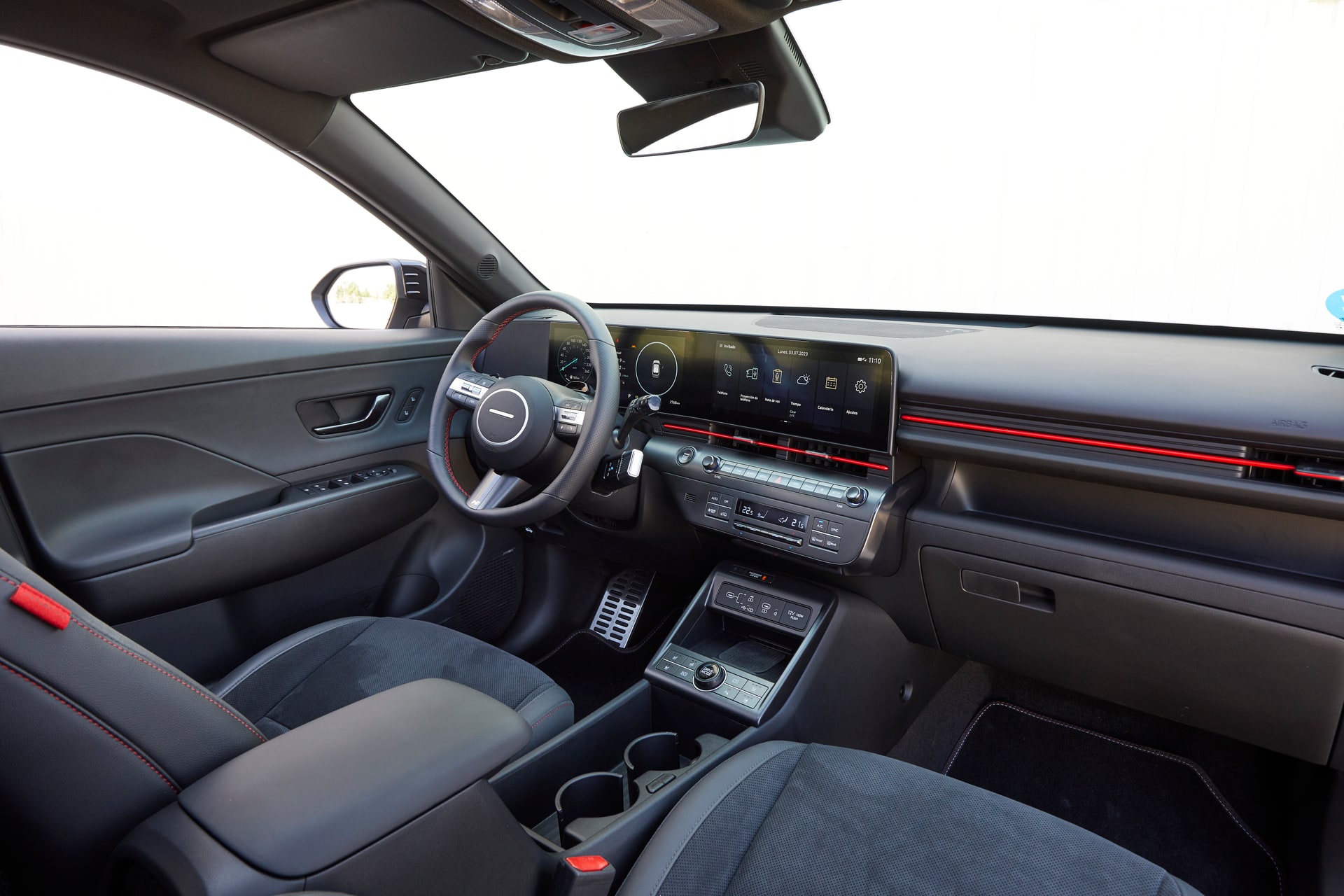
Buying an electric B-SUV in Spain in 2024 almost always means choosing between paying more for range or saving on the entry price and learning to live with a charger close to home. The Hyundai Kona Electric and the Peugeot e-2008 are the two clearest examples of that dilemma within the compact segment. One boasts almost 510 km homologated. The other enters the market almost 2,500 euros cheaper. We will see whether that price difference compensates for the range gap, or the other way around.
Hyundai Kona Electric from €42,400: the most powerful and with the most range of the trio
The Kona Electric does not hide its ambition: it is the electric B-SUV with the most horsepower and the most kilometres per charge currently sold in Spain. It features a 150 kW (about 200 CV) motor and a 65.5 kWh battery that allows it to homologate 510 km of range, with a consumption of 14.5 kWh/100 km. For mixed city and road use, that translates into a real-world margin of roughly 400-430 km without heavy use of the right pedal.
| Power (kW) | Power (CV) | Torque | 0-100 km/h | Top speed | Range | Consumption | Battery | Fuel |
|---|---|---|---|---|---|---|---|---|
| 150 kW | ≈200 CV | ≈260 Nm | ≈8 s | ≈170 km/h | ≈510 km | ≈14.5 kWh/100 km | ≈65.5 kWh | Electric |
At 4,360 mm long and 1,770 kg, the Kona Electric feels more robust behind the wheel than a conventional B-SUV, and that same solidity shows in the price: it starts from about €42,400 RRP, the highest figure in this comparison.
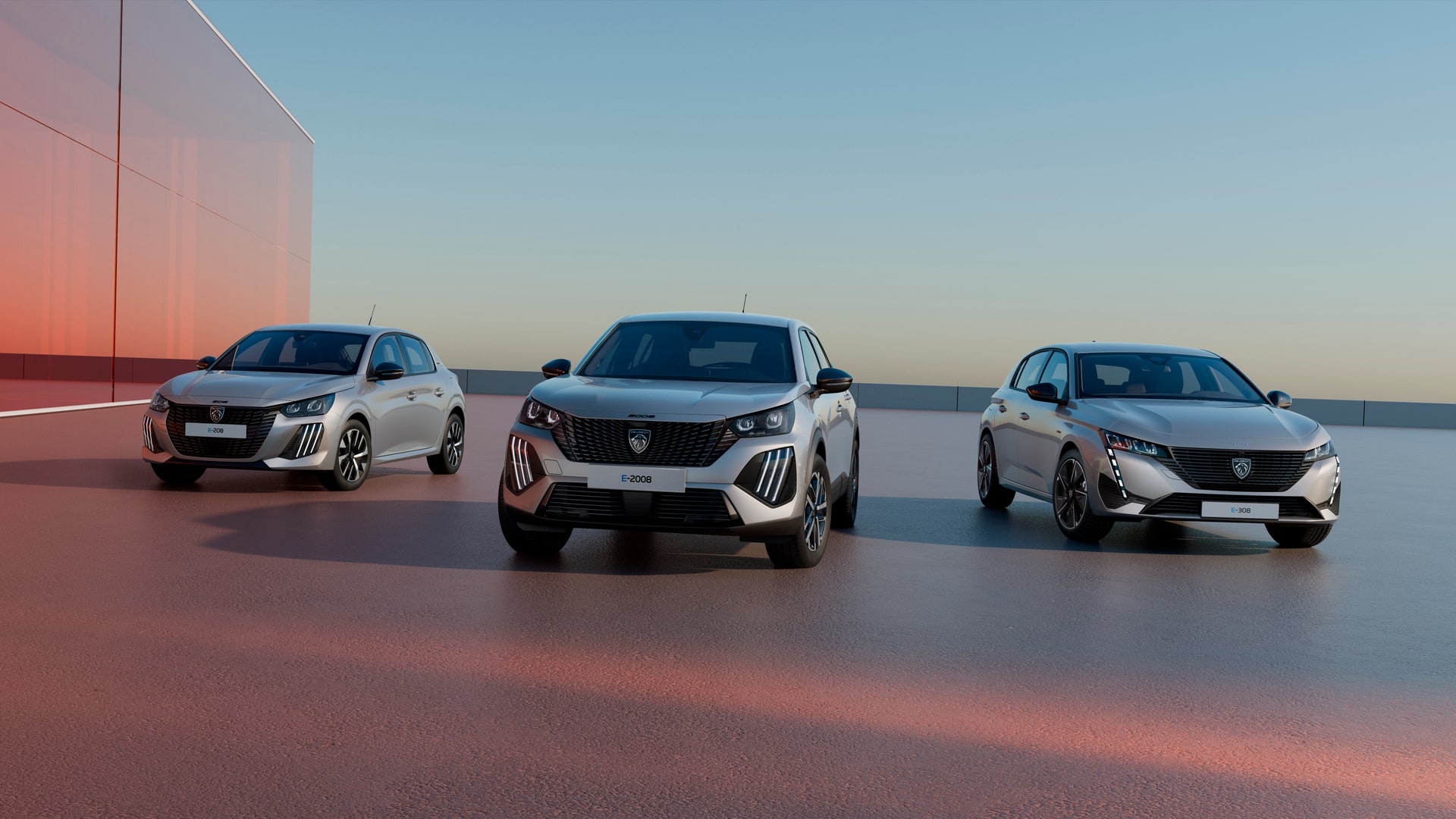
Peugeot e-2008 from €39,900: the lowest entry price
The e-2008, in its 156 54kWh Style version with automatic gearbox, poses the opposite equation. Its 120 kW (160 CV) motor and 54 kWh battery deliver 410 km of homologated range, less than the Kona, but enough for the daily needs of someone who does not drive the motorway every week.
| Power (kW) | Power (CV) | Top speed | Range | Battery | Fuel |
|---|---|---|---|---|---|
| 120 kW | ≈160 CV | ≈150 km/h | ≈410 km | ≈54 kWh | Electric |
The appeal of the e-2008 lies in its price: from about €39,900, almost 6% less than the Kona. It is not the 15% gap that would by itself force a rethink of the verdict, but added to the 100 km less range, it starts to weigh on the decision.
And the Kia Niro? Why it does not appear in the figures table
The Niro is sold in Spain with several powertrains, and it is best not to mix them: the conventional hybrid version (HEV 1.6, 139 CV, DCT gearbox, homologated consumption of about 4.5 l/100 km) is a different car from the pure electric Niro EV, with a different battery, range and price. As we do not have a verified specification sheet for the 100% electric version for this article, we leave it out of the numerical comparison: better to omit the data than to offer a figure that does not correspond to the car you are actually interested in. If your priority is a pure electric, the real contest in this segment is between the Kona and the e-2008.
Real-world range per euro: the calculation that matters
Dividing price by homologated range, the Kona Electric works out at about €83 per kilometre of range; the e-2008, at about €97. In other words: you pay more for the Hyundai, yes, but each extra euro buys more kilometres. For those who make frequent intercity trips or have no wallbox at home, that margin is the difference between charging once a week or three times.
Power and behaviour: 40 CV of difference
The Kona Electric packs 200 CV against the e-2008’s 160 CV, a difference that is noticeable mainly during overtaking and motorway slip-road entries. The Peugeot is not slow, but its 0-100 time sits a step lower, and fully loaded (five occupants and luggage) the motor’s effort is felt a little more.
Summary comparison table
| Model | Power | Range | Price from | Score |
|---|---|---|---|---|
| Hyundai Kona Electric | 200 CV | 510 km | €42,400 | 8.7/10 |
| Peugeot e-2008 | 160 CV | 410 km | €39,900 | 7.9/10 |
Prices are the manufacturer’s recommended RRP, indicative and without dealer discounts, one-off campaigns or aid such as the Plan Auto+, whose current amount should be checked on the official website before closing the budget.
Where each one wins
The Kona Electric wins outright on range and power: 100 km more and a 40 CV advantage are objective data, not matters of driving feel. The e-2008, for its part, wins on entry price, which matters to those who do not need 510 km and prioritise stretching the budget towards trim or equipment.
Verdict: which electric B-SUV to choose depending on your use
For those who make long or intercity trips with some frequency and do not want to depend on fast chargers every two days, the Hyundai Kona Electric is the most sensible option, despite the almost €2,500 difference. For predominantly urban use, with a wallbox at home and short trips, the Peugeot e-2008 more than meets the need and leaves budget room for the rest of the equipment. If what you are looking for is the tightest range-to-price ratio in the segment, the Kona wins again: it works out cheaper per kilometre of range even though its RRP is higher. If your priority is getting into an electric car with the most contained initial outlay, the e-2008 is your car.
Those who have already looked at alternatives from other segments may find it useful to review how to choose a compact electric car in 2026 according to the real kilometres you drive between charges, or to compare with rivals of a larger size in MG4 vs Renault Megane E-TECH vs Peugeot e-308.
Frequently asked questions
Which has more real-world range, the Hyundai Kona Electric or the Peugeot e-2008?
The Kona Electric homologates about 510 km compared with the e-2008’s 410 km, a 100 km advantage that holds, with nuances depending on driving style, in real mixed use.
Is it worth paying more for the Kona Electric?
If you make long trips or do not charge daily, yes: its cost per kilometre of range works out lower despite its higher RRP, about €42,400 compared with the e-2008’s €39,900.
Why are there no Kia Niro EV figures in this comparison?
Because the available specification sheet corresponds to the hybrid version of the Niro, not the pure electric one, and mixing data from different powertrains would be misleading.
Do the prices include public aid such as the Plan Auto+?
No. They are the manufacturer’s recommended RRP, without dealer discounts or purchase aid; the current amount of the Plan Auto+ should be checked on the official website.

4 Comments
Pingback: Hyundai Kona Eléctrico review: hasta dónde llega el SUV-B eléctrico coreano como coche único de familia urbana en 2026 – Comparativa de Coches
Pingback: Cupra Born vs Volkswagen ID.3: qué compacto eléctrico del grupo VW ofrece más coche por su precio en 2026 – Comparativa de Coches
Pingback: Hyundai IONIQ 5 vs Tesla Model Y vs Skoda Enyaq iV: qué SUV-C eléctrico aguanta más kilómetros reales en autovía en 2026 – Comparativa de Coches
Pingback: Renault Megane E-TECH vs Peugeot e-308: qué compacto eléctrico europeo convence más en confort de viaje largo – Comparativa de Coches