

Looking for an urban B-SUV hybrid for under 30,000 euros seems simple until you start reading technical sheets carefully. The market is full of names that sound alike but, in practice, play in very different price leagues. Let us be clear from the first paragraph: of the three models that usually appear together in any search, only two genuinely fit that budget.
Why the Toyota C-HR falls outside this price comparison
The Toyota C-HR sold in Spain today is not a conventional entry-level hybrid. The available variant is the Electric 230 77kWh Advance, a pure electric car with about 170 kW (220 CV) and a 77 kWh battery, with a list price of around 40,000 euros. It is an excellent car in its own territory, but comparing it with a 28,000-euro urban hybrid would be misleading to the reader. We mention it because it constantly appears in B-SUV hybrid searches, and it is worth clarifying that its real positioning sits one step (and quite a lot of money) higher.
So the real comparison, the one that answers the question of which B-SUV hybrid to buy for under 30,000 euros, comes down to the Hyundai Kona Hybrid and the Renault Captur E-TECH.
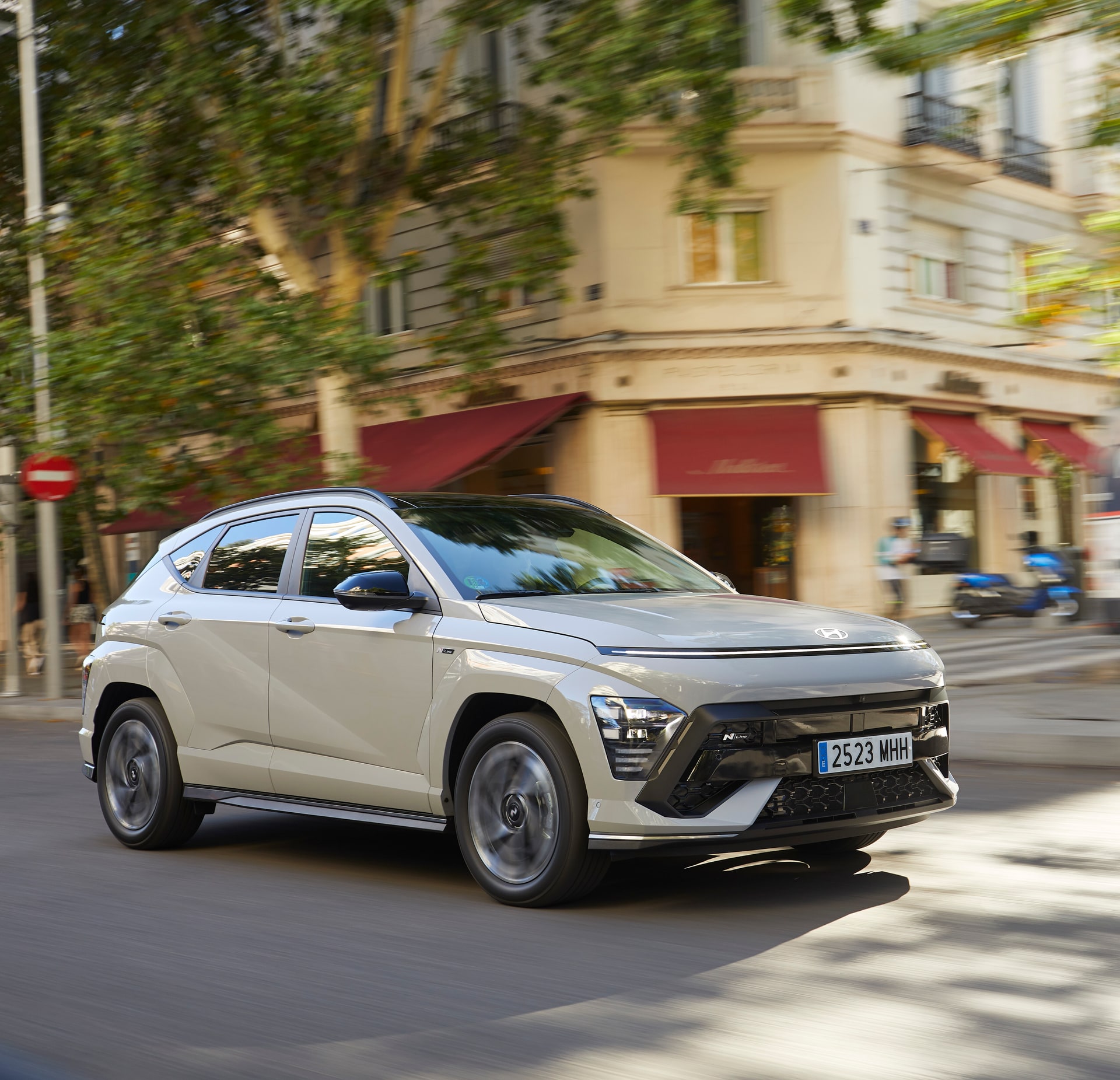
Hyundai Kona Hybrid: the trim that feels more refined
The Kona Hybrid uses the well-known 1.6 GDi with a hybrid system, delivering about 90 kW (130 CV) and 270 Nm of torque. It is not a fast car: the 0-100 takes around 12 seconds and the top speed is 160 km/h. But it is not designed for that. It shines in real-world city consumption, with about 4.5 l/100 km homologated and 100 g/km of CO2 emissions, and in the perceived quality of the cabin, a point where Hyundai has been improving generation after generation.
| Power (kW) | Power (CV) | Torque | 0-100 km/h | Top speed | Consumption | CO2 | Fuel | Price from |
|---|---|---|---|---|---|---|---|---|
| 90 kW | 130 CV | 270 Nm | ≈12 s | 160 km/h | 4.5 l/100 km | 100 g/km | Hybrid | 33,500 € |
Mind that price: it is around 33,500 euros, above the 30,000-euro ceiling stated in the title. To fit that budget you would need to look at entry trims or dealer discounts, something to confirm with the dealership before signing anything.
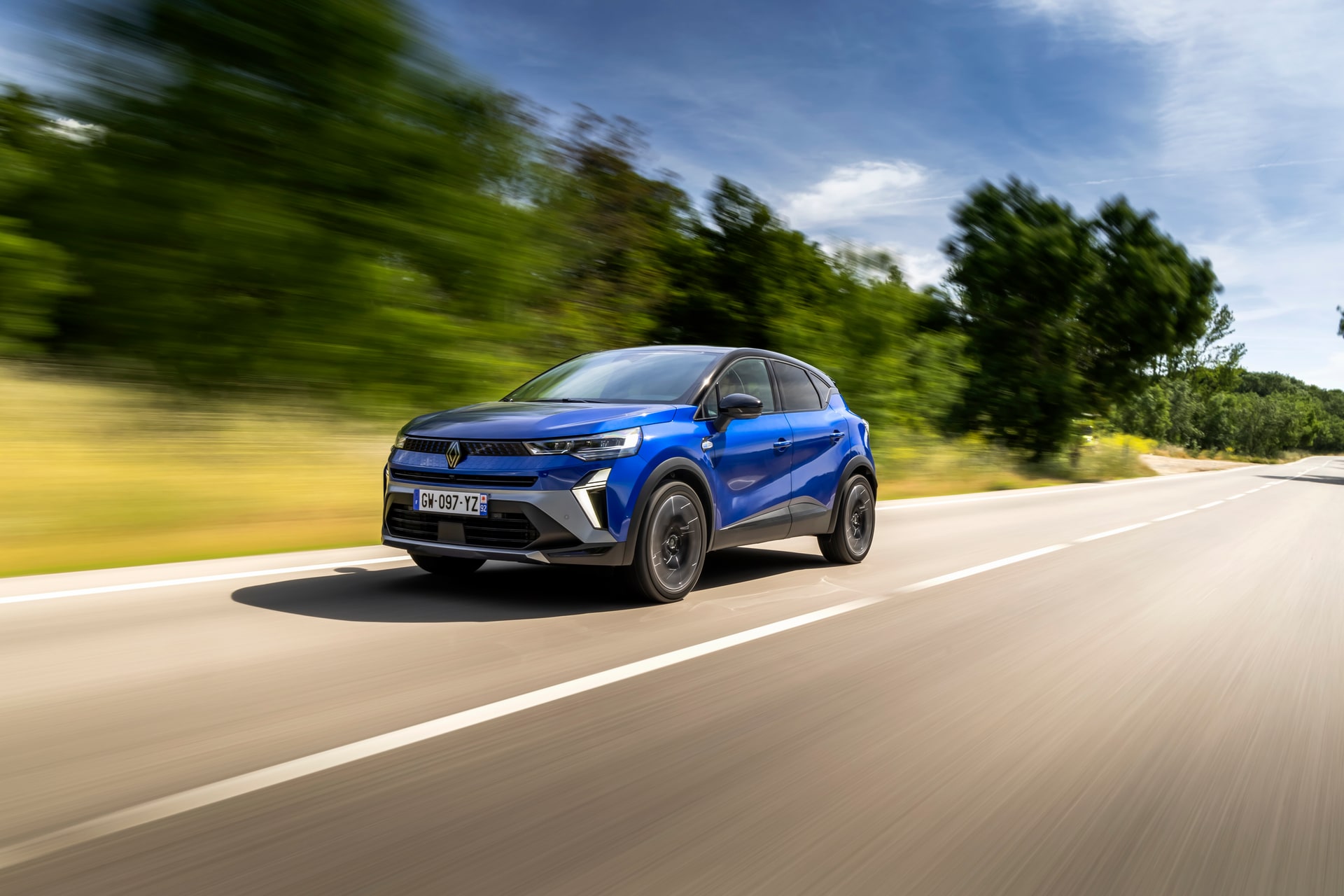
Renault Captur E-TECH: more power and a lower entry price
The Captur E-TECH, in its 1.6 145 Evolution version, starts at around 27,900 euros, well below the Kona Hybrid. The petrol/electric hybrid powertrain delivers 110 kW (150 CV), twenty horsepower more than the Korean rival, with very similar consumption: 4.5 l/100 km and 110 g/km of CO2. The price gap between the two exceeds 15%, so it is worth stressing: the Captur comes within budget with room to spare, while the Kona Hybrid just exceeds it.
| Power (kW) | Power (CV) | Top speed | Consumption | CO2 | Fuel | Price from |
|---|---|---|---|---|---|---|
| 110 kW | 150 CV | 170 km/h | 4.5 l/100 km | 110 g/km | Hybrid | 27,900 € |
Renault’s E-TECH system does not need a conventional clutch, which is noticeable in town: gear changes are smoother than in many rival hybrids. On the motorway, however, it becomes somewhat noisier when it demands high revs, a nuance worth testing before deciding whether your daily use is more urban or mixed.
Comparison table: Hyundai Kona Hybrid vs Renault Captur E-TECH
| Model | Power | Consumption | CO2 | Price from | Score |
|---|---|---|---|---|---|
| Hyundai Kona Hybrid | 130 CV | 4.5 l/100 km | 100 g/km | 33,500 € | 8/10 |
| Renault Captur E-TECH | 150 CV | 4.5 l/100 km | 110 g/km | 27,900 € | 7.5/10 |
All prices are manufacturer’s recommended retail prices (PVP), indicative and excluding dealer discounts, one-off campaigns and aid such as the Plan Auto+, which should always be checked on the official website for the current amount.
Where each model clearly wins
The Hyundai Kona Hybrid stands out in two specific areas: warranty (Hyundai maintains its extended coverage policy, a strong argument against any rival in the segment) and emissions, with 10 g/km less than the Captur. The Renault Captur E-TECH wins on power, with 20 CV more, and above all on entry price, falling squarely within the 30,000-euro budget without any need to negotiate.
Verdict: which urban B-SUV hybrid to buy depending on your case
If your priority is to stay strictly under 30,000 euros and you don’t mind giving up some warranty benefits compared with the Kona, the Renault Captur E-TECH is the most sensible buy: lower entry price and more available power. If, on the other hand, you can stretch the budget by about 3,000 euros and value long-term peace of mind and an interior that feels a step above, the Hyundai Kona Hybrid makes up that difference many times over. For those looking directly for an urban electric car with more range who don’t mind doubling the budget, that is where the Toyota C-HR Electric comes into play, though that belongs to a different price conversation.
Anyone who wants to dig into real city consumption before deciding can review the B-SUV hybrids with the best real-world city consumption under 30,000 euros, and if the question is which variable to prioritise in the buying process, it is worth reviewing how to choose an urban SUV hybrid based on real consumption in traffic jams.
Frequently asked questions
What is the best urban B-SUV hybrid for under 30,000 euros?
Among the models analysed, the Renault Captur E-TECH is the one that genuinely fits that budget, at around 27,900 euros. The Hyundai Kona Hybrid slightly exceeds it, sitting close to 33,500 euros.
Is the Toyota C-HR a hybrid under 30,000 euros?
No. The Toyota C-HR on sale in Spain is the Electric 230 77kWh version, a pure electric car from around 40,000 euros, well above this price range.
What is the consumption difference between the Hyundai Kona Hybrid and the Renault Captur E-TECH?
Practically none: both are homologated at around 4.5 l/100 km, although the Kona Hybrid emits 100 g/km of CO2 compared with the Captur’s 110 g/km.
Is it worth paying more for the Hyundai Kona Hybrid over the Captur E-TECH?
It depends on your use: if you value extended warranty and interior finish, the extra cost is justified. If your priority is to keep the budget as tight as possible, the Captur E-TECH delivers without giving up much ground.

5 Comments
Pingback: Hyundai Kona Hybrid vs Kia Niro Hybrid: qué SUV-B híbrido coreano ofrece más coche por su precio – Comparativa de Coches
Pingback: Peugeot 3008 vs Renault Rafale: qué SUV-C híbrido francés convence más por diseño y calidad percibida – Comparativa de Coches
Pingback: Renault Captur E-TECH vs Nissan Juke Hybrid: qué SUV-B híbrido se defiende mejor en ciudad y en viaje corto por menos de 30.000€ – Comparativa de Coches
Pingback: Cómo elegir un SUV-B híbrido urbano en 2026 según el equipamiento de serie que entra dentro de 30.000€ – Comparativa de Coches
Pingback: Renault Captur E-TECH review: hasta dónde llega el SUV-B híbrido francés como coche único para ciudad y viajes de fin de semana en 2026 – Comparativa de Coches