

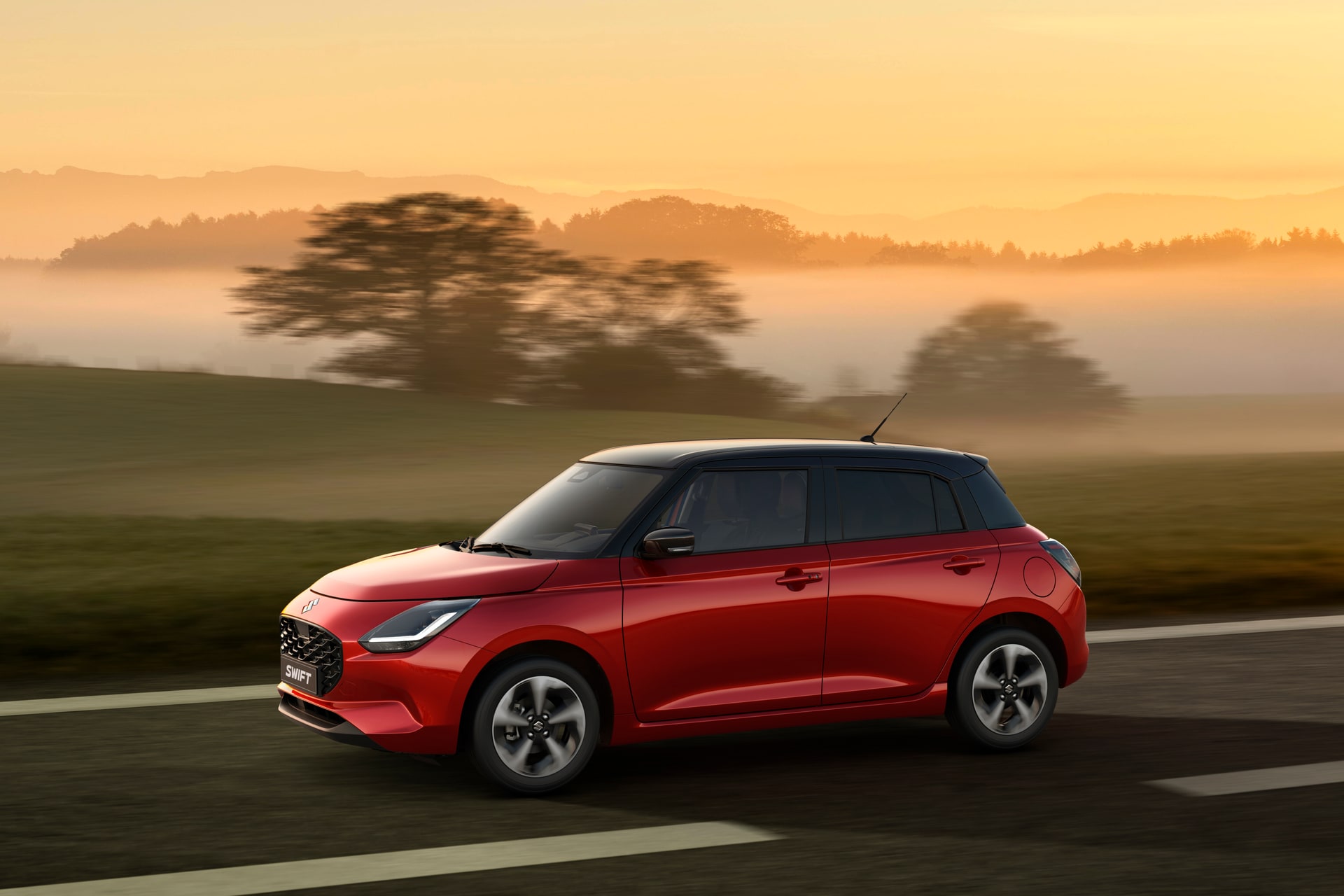
Two Japanese cars, two different ways of understanding the word "hybrid" and almost €10,000 of difference between one and the other. That is the quick summary of this duel, but the matter has more nuances than it seems at first glance. The Suzuki Swift Mild Hybrid and the Toyota Yaris 130h compete in the same segment B, target the same urban buyer and, yet, solve the problem of saving fuel with technologies that have nothing to do with each other.
Suzuki Swift Mild Hybrid: from €20,900
The Swift sold in Spain today comes in the Mild Hybrid 1.2L 82 S1 5-door version with Start/Stop system, a 48-volt mild hybrid that does not aim to move in pure electric mode at any moment. The combustion engine receives assistance from a small motor-generator that helps during starts and gentle accelerations, nothing more. It delivers about 60 kW (82 CV), enough for day-to-day city driving, although it feels short on breath during motorway overtaking.
| Power (kW) | Power (CV) | Top speed | Consumption | CO₂ emissions | Technology | Price from |
|---|---|---|---|---|---|---|
| 60 kW | 82 CV | 170 km/h | 4.5 l/100 km | 100 g/km | Petrol/electric mild hybrid | €20,900 |
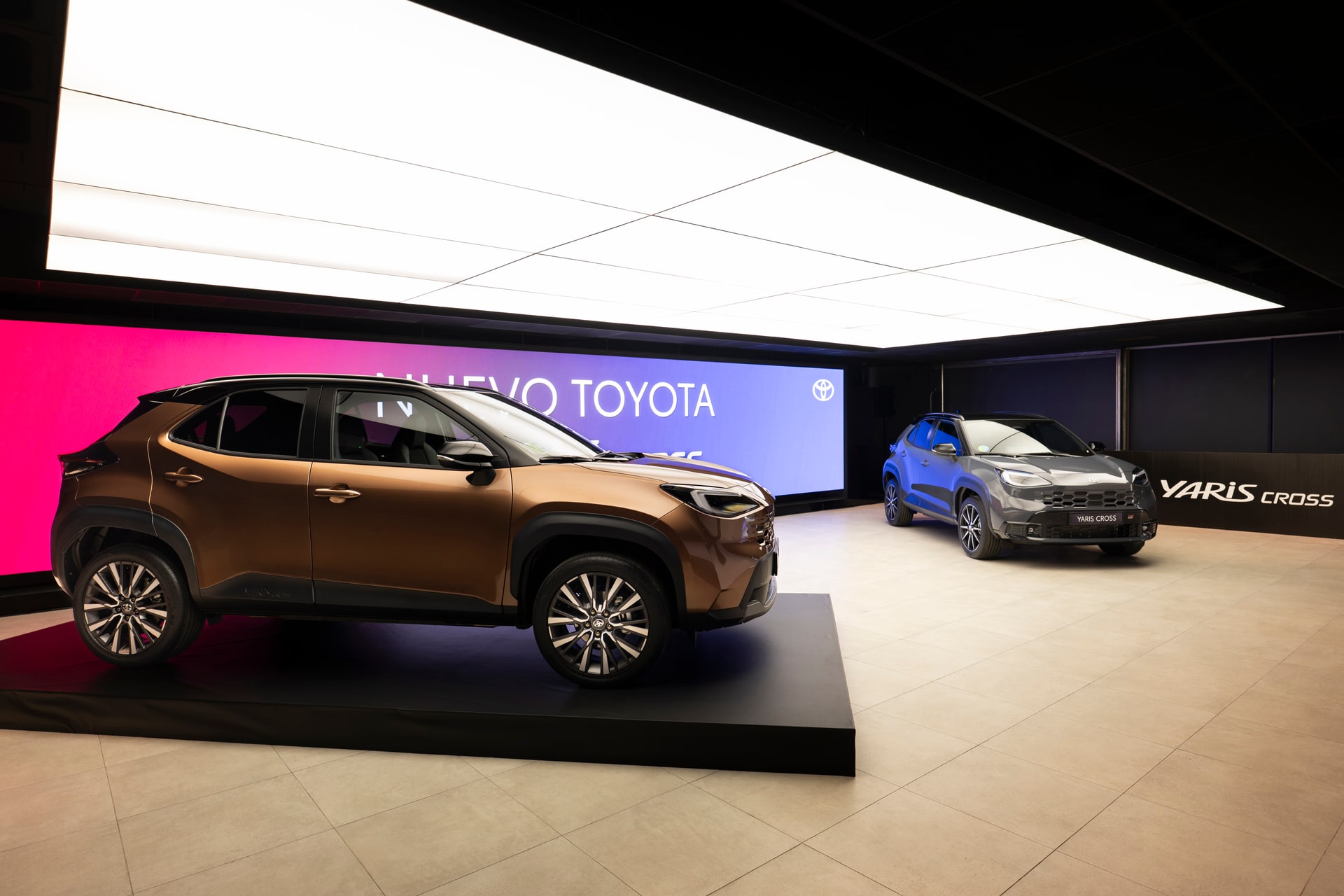
Toyota Yaris 130h: from €30,800
The Yaris, in its 130 Active Plus trim with e-CVT gearbox and Start/Stop, is a truly full hybrid: it can run in pure electric mode for several kilometres in urban traffic, something the Swift never does. The combination of thermal and electric motors delivers about 100 kW (130 CV), considerably more than the Swift, and translates into a more relaxed drive when you need to get through a roundabout in a hurry.
| Power (kW) | Power (CV) | Top speed | Consumption | CO₂ emissions | Technology | Price from |
|---|---|---|---|---|---|---|
| 100 kW | 130 CV | 170 km/h | 4.5 l/100 km | 100 g/km | Petrol/electric hybrid | €30,800 |
Mild hybrid versus full hybrid: the difference that really matters
Here lies the key to this whole comparison. The Swift’s system does not disconnect the petrol engine while moving: the electric motor only lends a hand. The Yaris’s does, and in dense traffic with traffic lights it can spend a good part of the journey moving without burning a single drop of fuel. Curiously, both declare the same homologated consumption (4.5 l/100 km) and the same emissions (100 g/km), but that laboratory figure does not tell the whole story: in real city driving, with traffic jams and constant stop-start, the Yaris tends to make better use of its electric motor than the Swift does of its own, which has very little room to manoeuvre.
Does that mean the Swift is a worse car? Not necessarily. For those who make short, predictable journeys, the real-world consumption gap between the two may amount to just over half a litre every 100 km, a figure that would take years to justify an extra cost of almost €10,000.
Price and equipment: where the gap shows
The Swift’s €20,900 against the Yaris’s €30,800 are RRP prices recommended by the manufacturer, without dealer discounts or one-off campaigns, so they are best taken as an indicative reference rather than a closed figure. That difference, the Toyota being 47% more expensive, is not a minor detail: it is the factor that should weigh most in the decision of any buyer on a tight budget.
For that price, the Yaris offers more power, more refined acceleration and the feeling of driving a car with a technological generation’s advantage. The Swift, by contrast, plays the card of simplicity: fewer things that can go wrong, a much more accessible entry cost and an even more manageable size for parking on narrow city-centre streets. If what you are looking for is a cheap-to-run petrol city car, the Swift’s approach matches that profile better, although here we are talking about its mild hybrid version.
Summary table and score
| Model | Power | Consumption | Price from | Technology | Score |
|---|---|---|---|---|---|
| Suzuki Swift Mild Hybrid | 82 CV | 4.5 l/100 km | €20,900 | Mild hybrid | 7.5/10 |
| Toyota Yaris 130h | 130 CV | 4.5 l/100 km | €30,800 | Full hybrid | 8.3/10 |
The Yaris’s score weighs more heavily on technology and power; the Swift’s rises if value is assessed exclusively on price-performance ratio, where its advantage is considerable.
Verdict: which to choose according to your case
For pure urban use, with short journeys and a tight budget, the Suzuki Swift Mild Hybrid is the option that makes most sense: it costs almost 47% less and in real city driving the consumption difference against the Yaris does not justify the extra cost. For those who combine city driving with the occasional motorway trip and value a smoother drive thanks to the pure electric mode sections, the Toyota Yaris 130h justifies its price with more power and a more complete driving experience. In terms of value for money for the average Spanish buyer, the Swift wins hands down; in technology and performance, the Yaris has no rival in this comparison.
Frequently asked questions
Which uses less fuel in the city, the Suzuki Swift or the Toyota Yaris?
Both homologate 4.5 l/100 km, but the Yaris, being able to run in pure electric mode in slow traffic, tends to get closer to that figure in real urban use than the Swift, whose mild hybrid system only assists the petrol engine.
Why does the Toyota Yaris cost almost €10,000 more than the Suzuki Swift?
The difference comes down to the hybrid technology: the Yaris fits a complete full hybrid system with an electric motor capable of moving the car on its own, while the Swift uses a 48V mild hybrid that only assists, without an independent electric drive.
Is it worth paying more for the Toyota Yaris 130h?
It depends on your use. If you make mixed journeys including motorway driving and value the 130 CV against the Swift’s 82 CV, then yes. If your car spends almost all its time in the city on short trips, the Swift’s lower initial cost is hard to recover through fuel savings.
Are there public grants to buy either of these two hybrids?
Non-plug-in hybrids such as the Swift or the Yaris are usually excluded from the most generous grants under the Plan Auto+, which are aimed mainly at electric and PHEV vehicles. It is advisable to check the official plan website for the conditions in force at the time of purchase.

2 Comments
Pingback: Cómo elegir un utilitario urbano en 2026 según si vives en ZBE y haces trayectos cortos cada día – Comparativa de Coches
Pingback: Toyota Yaris Cross vs Suzuki Vitara Hybrid: qué SUV-B híbrido japonés convence más como coche único para ciudad y carretera – Comparativa de Coches