

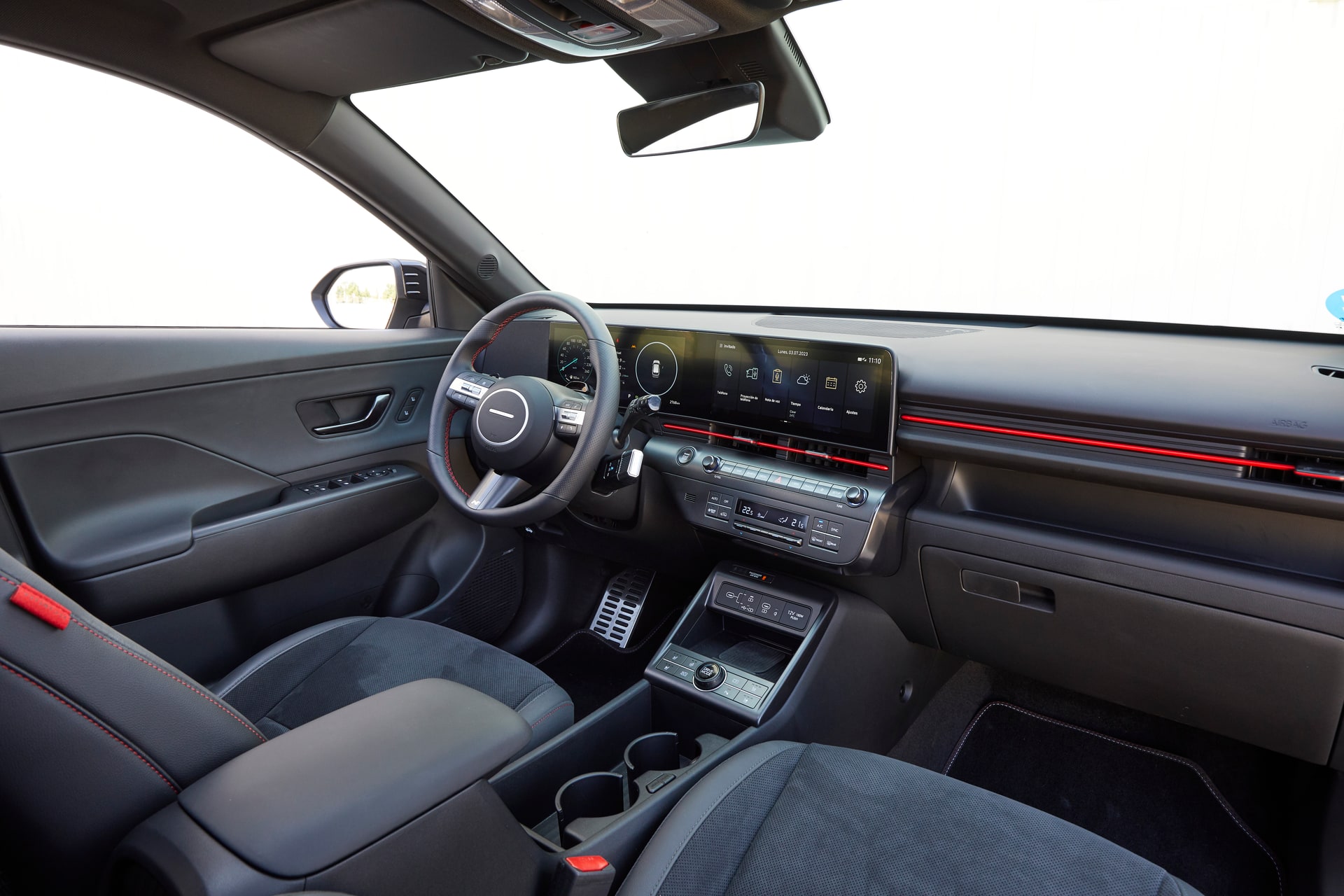
Two Korean cars, two different propulsion philosophies under the same body size. Before getting into the figures, a necessary clarification: the commercial name "Niro EV" is used in Spain for the 100% electric variant of the model, but the homologated data sheet we are working with here corresponds to the KIA Niro Hybrid HEV 1.6 139 Concept 5p S/S DCT, a conventional non-plug-in hybrid. It is not the same type of car as the Hyundai Kona Electric, so the "range per euro" comparison must be read with nuance: one measures kilometres on battery, the other on fuel tank plus electric assistance.
Hyundai Kona Electric: specifications and price from 42,400 €
The Hyundai Kona Electric is, of the two, the only pure electric. It features a 150 kW (200 CV) motor and 260 Nm of torque, with a 65 kWh battery that homologates 510 km of range and a consumption of 14.5 kWh/100 km. The 0-100 km/h sprint takes about 8 seconds and the top speed is 170 km/h, enough for motorway driving without strain.
| Power (kW) | Power (CV) | Torque | 0-100 km/h | Top speed | Range | Consumption | Battery | Fuel | Price from |
|---|---|---|---|---|---|---|---|---|---|
| 150 | 200 | 260 Nm | 8 s | 170 km/h | 510 km | 14.5 kWh/100 km | 65 kWh | Electric | 42,400 € |
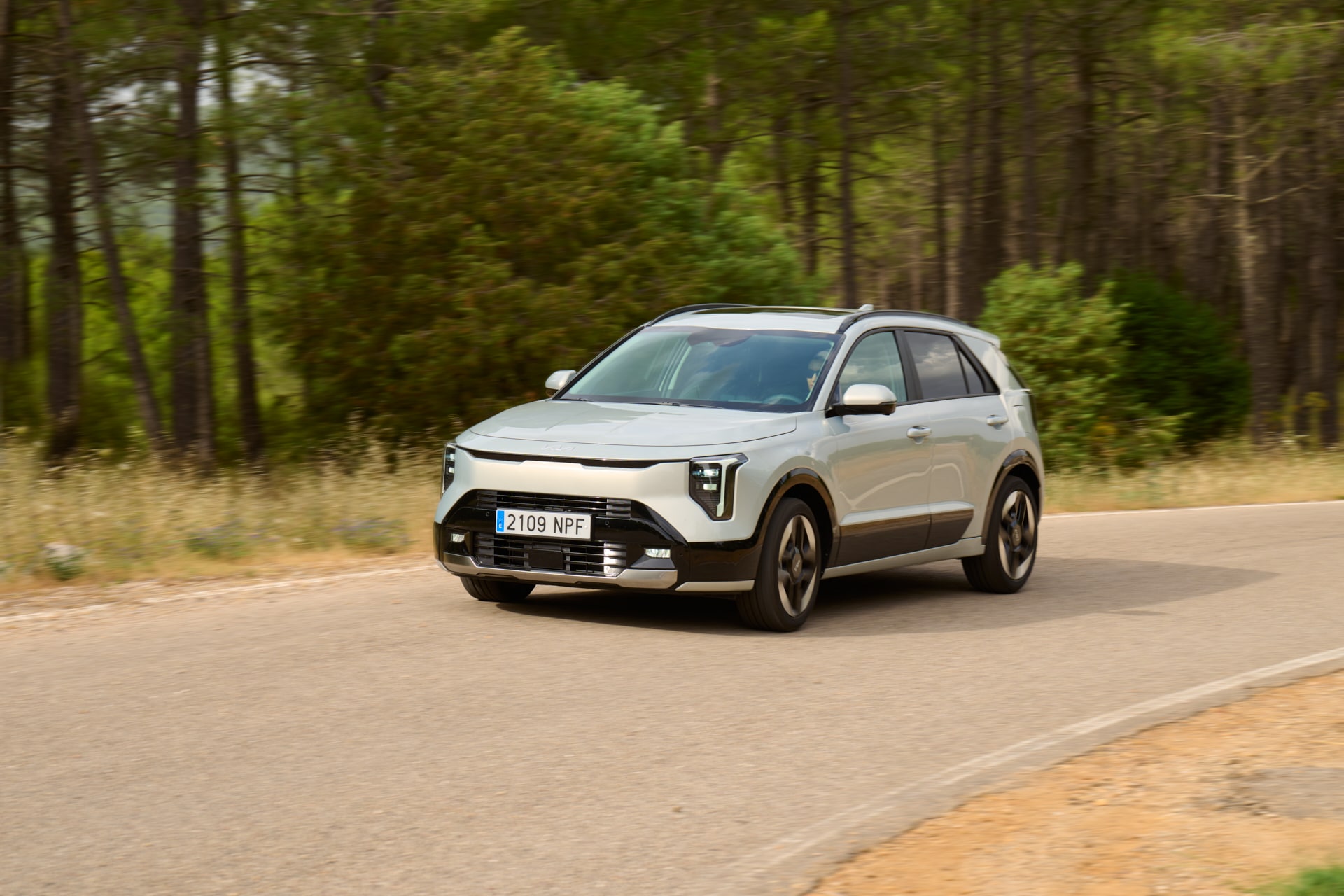
KIA Niro: specifications and price from 34,200 €
The variant we can cite with verified data is the KIA Niro Hybrid HEV 1.6 139 Concept 5p S/S DCT: a 1.6 petrol engine assisted by a non-plug-in electric system, with 100 kW (140 CV) combined, a top speed of 170 km/h and a homologated consumption of 4.5 l/100 km, with 100 g/km of CO₂. It has no electric range to homologate as such, because it is not recharged from a plug: it refuels at any petrol station and recovers energy during braking.
| Power (kW) | Power (CV) | Top speed | Consumption | CO₂ emissions | Fuel | Price from |
|---|---|---|---|---|---|---|
| 100 | 140 | 170 km/h | 4.5 l/100 km | 100 g/km | Hybrid (petrol/electric) | 34,200 € |
Range per euro: the metric that matters, with nuances
If we divide homologated kilometres by RRP, the Hyundai Kona Electric delivers 510 km for 42,400 €, that is, about 12 km for every 100 € invested in pure electric range. The KIA Niro HEV does not play that game: its real range depends on the fuel tank (not listed in the data sheet) and its advantage is not kilometres per battery euro, but litres per euro of daily use. Comparing both in the same "range per euro" table would force an equivalence that does not exist between a battery electric and a fuel-tank hybrid.
That said, there is one data point that can be compared without trickery: the price. The RRP difference between the two exceeds 23%, with the Kona above 42,000 € and the Niro HEV below 35,000 €. That gap conditions almost everything else.
Where each one wins
What the Hyundai Kona Electric does better
The Kona wins in power (200 CV versus 140 CV) and in the electric driving experience: instant acceleration, zero local emissions and a cost per kilometre on domestic electricity well below the petrol equivalent. For anyone with a wallbox or accessible charging, the Hyundai Kona is also quieter in the city, which is especially noticeable on short trips with many stops.
What the KIA Niro does better
The Niro HEV wins without question on entry cost, with almost 8,100 € less RRP, and on refuelling freedom: it does not depend on the charging network, which is still the pending subject in much of the country. If the user drives many intercity kilometres and has no easy way to charge at home, the Niro removes that friction at its root.
Price, Plan Auto+ and real RRP
The prices cited are the manufacturer’s recommended RRP, without dealer discounts, one-off campaigns or applied aid. The Hyundai Kona Electric, being 100% electric, may benefit from the aid of the current Plan Auto+, which narrows the RRP gap with the Niro; it is advisable to check the updated amount on the plan’s official website, because it varies and figures from memory should not be trusted.
Summary table
| Model | Power | Range/Consumption | Fuel | Price from | Score |
|---|---|---|---|---|---|
| Hyundai Kona Electric | 200 CV | 510 km | Electric | 42,400 € | 8/10 |
| KIA Niro HEV | 140 CV | 4.5 l/100 km | Hybrid | 34,200 € | 7.5/10 |
Verdict: which car to choose depending on your case
For urban use with charging at home or at work, the Hyundai Kona Electric is the option that makes the most sense: lowest cost per kilometre, silence and a jump in power that is felt at every traffic light. For those who make frequent long trips without a guarantee of nearby fast charging, the KIA Niro HEV solves range anxiety and requires a noticeably smaller initial outlay. On price-performance, the Niro wins due to the RRP difference above 20%; on electric range per euro invested, the Kona has no possible rival because it is the only one of the two that plays that game. Whoever can plug in at home should look at the Kona. Whoever cannot shouldn’t complicate things with the Niro.
To keep comparing electric cars of similar size, it is worth taking a look at our analysis of MG4 vs Renault Megane E-TECH vs Peugeot e-308, where the range-per-euro metric is applied to purely electric compacts without the hybrid nuance. And if your interest is purely in a Korean brand in another segment, the Hyundai i10 vs KIA Picanto comparison follows the same logic of honesty between rivals from the same house.
Frequently asked questions
Is the KIA Niro sold in Spain electric or hybrid?
KIA sells the Niro in several powertrains, including a 100% electric version. The homologated data sheet we work with in this comparison corresponds to the Hybrid HEV 1.6 139 Concept variant, non-plug-in, with 140 CV and a consumption of 4.5 l/100 km.
How much homologated range does the Hyundai Kona Electric have?
510 km with its 65 kWh battery and a consumption of 14.5 kWh/100 km, according to the official data sheet.
Which car is cheaper to enter, the Kona or the Niro?
The KIA Niro HEV, from about 34,200 € indicative RRP, compared with the 42,400 € of the Hyundai Kona Electric. The difference is around 24%.
Does the Plan Auto+ apply to these two models?
The Plan Auto+ is designed for electrified vehicles and its amount varies according to the type of propulsion. The Hyundai Kona Electric, being 100% electric, usually has access to larger aid than a conventional hybrid version such as the Niro HEV. It is advisable to review the current conditions on the plan’s official website before deciding.

3 Comments
Pingback: Hyundai Kona Electric vs Kia Niro EV vs Peugeot e-2008: qué SUV-B eléctrico ofrece más autonomía real por su precio – Comparativa de Coches
Pingback: Skoda Elroq vs Hyundai Kona Eléctrico vs Jeep Avenger: qué SUV-B eléctrico ofrece mejor equipamiento por su precio – Comparativa de Coches
Pingback: Hyundai Kona Electric vs MG ZS EV vs BYD Atto 2: qué SUV-B eléctrico ofrece mejor relación autonomía-precio en 2026 – Comparativa de Coches