

Choosing an electric passenger van for a fleet in Spain today comes down to very few serious candidates. The Mercedes-Benz EQV and the Volkswagen ID. Buzz are the two names that appear on any sensible fleet manager’s shortlist. One comes from the Vito-Class V world, with a pedigree in executive transfers. The other was built from scratch on the MEB platform. And between them there is a chasm, not only in price but also in philosophy.
Let’s put them side by side on what really decides a fleet purchase: real-world range, cost per kilometre and operational fit.
Why compare these two models for a passenger fleet
The EQV and the ID. Buzz share potential customers: transfer companies, premium VTC services, hotels with shuttles, corporate services. Both are 100% electric, both are homologated as M1 (important for taxation and urban itineraries) and both promise a CERO environmental label without small print. So far, the parallels. From the first charge onwards, the differences surface.
It is worth remembering something about the M1 versus N1 homologation of passenger vans: it affects taxes, professional use and even access. Both models play in the same regulatory league, so the comparison is clean.
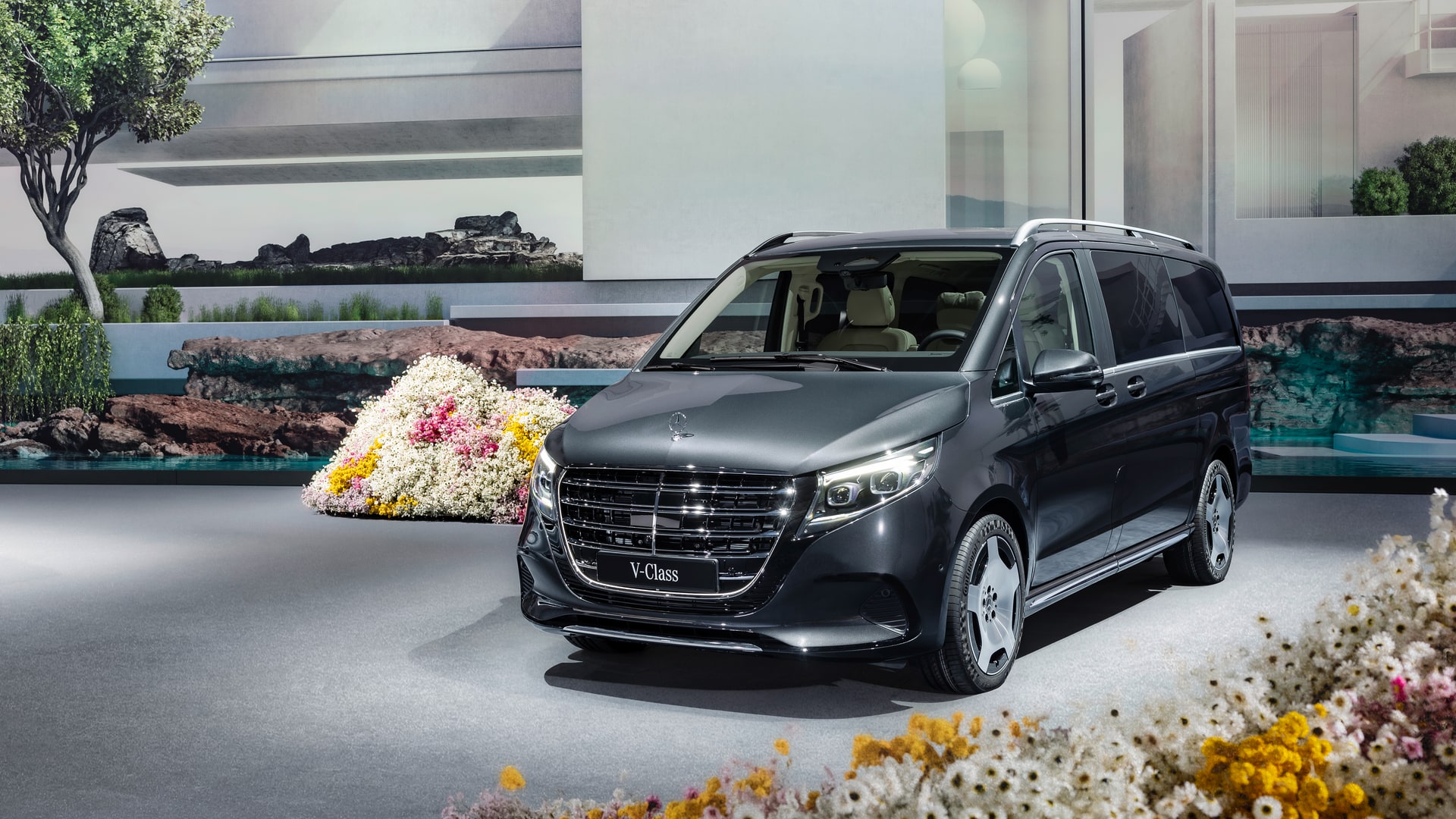
Mercedes-Benz EQV 250 Largo (from ≈90,300 €)
The EQV is the electric version of the Class V, same body, same executive fit. The 250 Largo variant features a 66 kWh battery and 204 CV. Mercedes positions it as a premium van for transfers for VIPs, not as a high-mileage workhorse: the homologated range falls below what an intensive fleet demands today.
Inside, it remains a benchmark in the segment. Serious materials, carefully worked soundproofing, optional captain’s seats that turn the second row into something resembling a small lounge. For airport-hotel transfers with a corporate client behind them, few things convey the same impression.
| Power kW | Power CV | Top speed | Range | Battery | Fuel |
|---|---|---|---|---|---|
| ≈150 kW | ≈200 CV | ≈140 km/h | ≈70 km | ≈66 kWh | Electric |
The range figure listed in the spec sheet (70 km) corresponds to a specific cycle of the listed variant and should be cross-checked against the dealer’s combined WLTP before signing. In real use, with 66 kWh usable and such a voluminous body, do not expect miracles: operator references point to real-world motorway ranges that penalise the car considerably compared with its rival here.
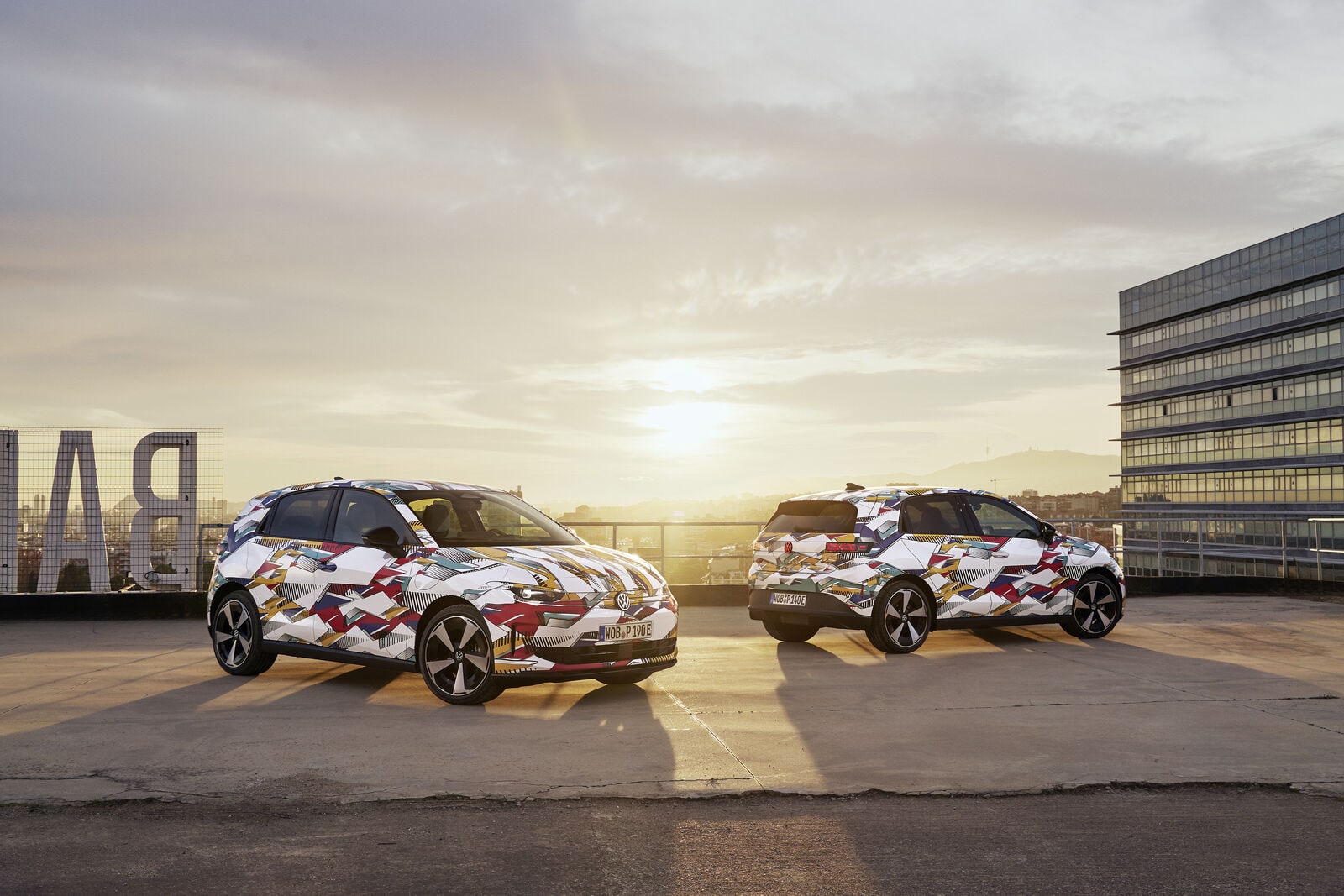
Volkswagen ID. Buzz Batalla Corta 79 kWh Origin (from ≈55,700 €)
The ID. Buzz was born as a pure electric. MEB platform, 79 kWh battery, 286 CV and an architecture designed to perform with a large battery without sacrificing space. In the short-wheelbase Origin variant, five seats, a generous boot and that retro design which, like it or not, is a commercial tool in premium VTC services.
The 460 km of homologated range are the figure that truly changes the fleet equation. In mixed real use (city + motorway), operators report sustainable real ranges of around 320-370 km depending on temperature and cruising speed. Enough for two or three services without visiting a charger.
| Power kW | Power CV | Top speed | Range | Battery | Fuel |
|---|---|---|---|---|---|
| ≈210 kW | ≈290 CV | ≈160 km/h | ≈460 km | ≈79 kWh | Electric |
Where it falls short: perceived finish compared with the Mercedes. It is not a bad interior — it is a well-resolved Volkswagen interior, with hard plastics in areas the EQV dresses in leather or aluminium. For an end customer paying 90 € for an airport transfer, it does not matter. For a corporate VIP paying 250 €, it may matter.
Head to head: real-world range and operating cost
This is where the comparison stops being polite. The ID. Buzz delivers more than double the homologated range with a battery only 20% larger. In practice, its energy efficiency (kWh/100 km) is substantially better than the EQV’s, which is no coincidence — the MEB platform is designed for electric, while the EQV adapts a combustion-based architecture.
For a fleet covering 150-200 km daily per vehicle, the ID. Buzz completes the working day with a single overnight charge at 11 kW at base. The EQV 250, with that homologated range, requires an intermediate recharge or limits the car to short urban routes. That is not a nuance: it is a radical change in operating cost.
On cost per kilometre, the RRP gap is brutal: roughly 34,600 € in favour of the Volkswagen, 38% less. That difference, amortised over a 200,000 km service life, equates to about 17 cents per kilometre from the initial investment alone. To that must be added the lower charging cost per kWh/km travelled thanks to its efficiency.
Comparative summary table
| Model | Power | Homologated range | Battery | Top speed | Price from | Fleet score |
|---|---|---|---|---|---|---|
| Mercedes-Benz EQV 250 Largo | ≈200 CV | ≈70 km | ≈66 kWh | ≈140 km/h | ≈90,300 € | 5.5/10 |
| Volkswagen ID. Buzz 79 kWh Origin | ≈290 CV | ≈460 km | ≈79 kWh | ≈160 km/h | ≈55,700 € | 8.5/10 |
The score weighs range, price, fleet suitability and efficiency; it does not measure perceived luxury or brand image — on those points the EQV would recover several points.
Where each one wins, no half measures
The EQV wins on: perceived cabin quality and brand prestige for corporate VIP transfers. A five-star hotel fleet or a premium executive service justifies it as a commercial tool.
The ID. Buzz wins on: range, price and efficiency. For any fleet operation measured in cost per kilometre, there is no contest.
The prices quoted are manufacturer’s recommended RRP, without dealer discounts, one-off campaigns or Plan Auto+ aid, which the reader should check up to date.
Verdict by use case
- For VTC or medium/high-turnover transfer fleets: Volkswagen ID. Buzz. Real-world range sufficient for a full working day, much lower acquisition cost and energy efficiency that clearly tilts the TCO in its favour.
- For an exclusive VIP service with premium corporate clients: Mercedes-Benz EQV, provided operations allow short routes and intermediate recharges. The value here is not in the kilometre: it is in the onboard experience.
- Price-performance ratio: Volkswagen ID. Buzz, no question. The RRP difference far exceeds 15% — it is around 38% — and the ID. Buzz delivers more range, more power and more efficiency for much less money.
If a fleet has to choose a single model to cover daily operations without considering an intermediate recharge, the ID. Buzz is the reasonable answer in Spain today. The EQV is a very good car trapped in a product equation that does not support intensive use.
Frequently asked questions
What real-world range can be expected from the Volkswagen ID. Buzz 79 kWh in fleet use?
In mixed use at mild temperatures, operators report sustainable real ranges between 320 and 370 km, compared with the ≈460 km homologated. On the motorway at 120 km/h with winter heating, the figure drops to around 280-300 km.
Why does the Mercedes EQV 250 homologate so little range with a 66 kWh battery?
Because the EQV platform adapts a base originally designed for combustion, with weight and aerodynamics less optimised for electric use than the ID. Buzz’s MEB platform. For the same battery, its efficiency is lower.
Do both models homologate as M1 for passenger transfers?
Yes. Both compared versions (EQV 250 Largo 5-door and ID. Buzz Batalla Corta Origin 5-door) are registered as M1 passenger cars in Spain, with the corresponding tax and access implications.
Can both qualify for Plan Auto+ when purchasing for a fleet?
Plan Auto+ is the current framework of public aid for purchasing electrified vehicles in Spain. The specific application to fleets, amounts and conditions in force must be checked on the official website, as they vary depending on the applicant type and scrapping requirements.
