

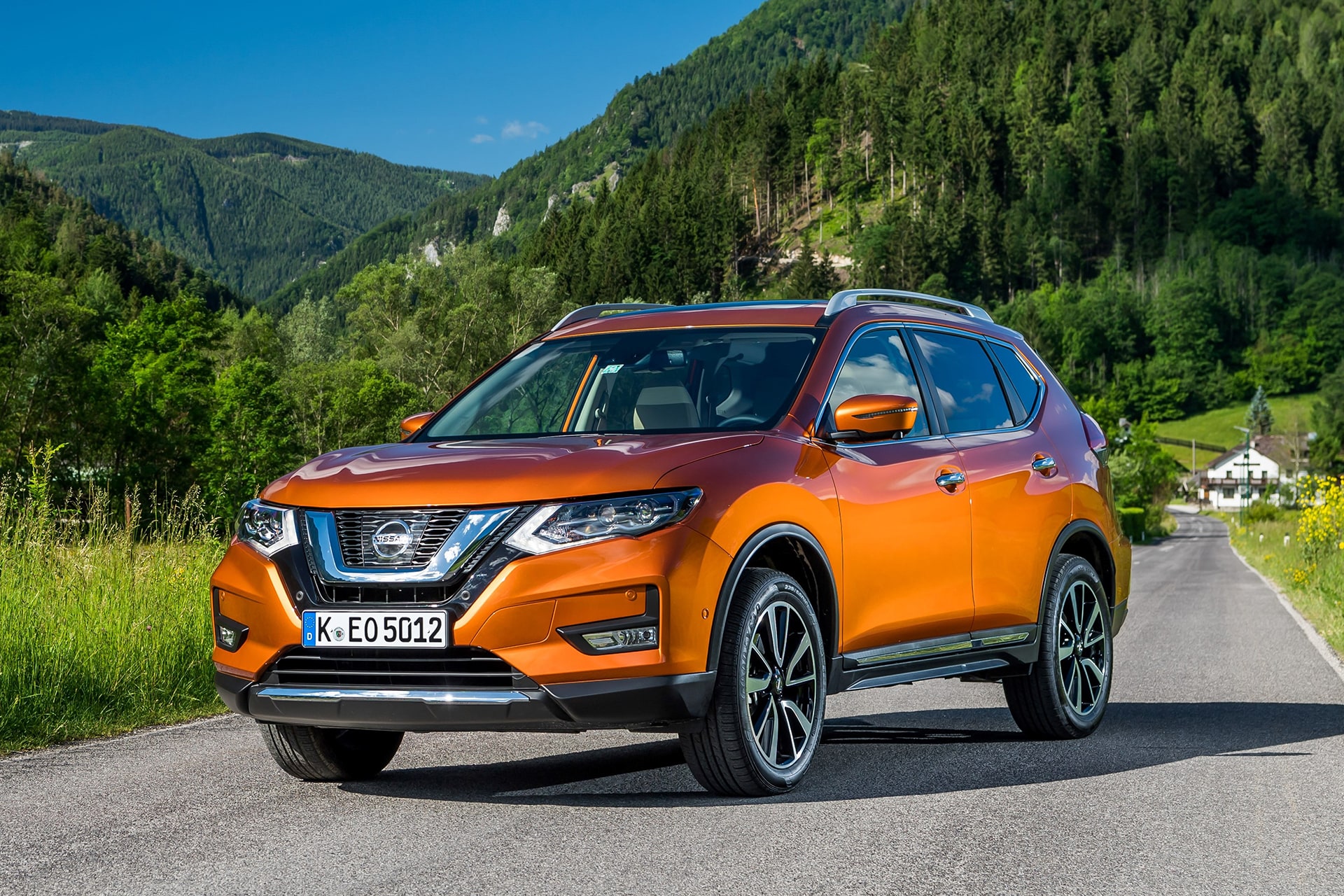
The Nissan X-Trail e-Power is one of those cars that is hard to pigeonhole. It is not a conventional hybrid, nor is it an electric car, and yet it drives as if it were one. The brand has spent years refining this architecture and, in its 2026 version, the Japanese C-SUV arrives with a clear proposition: offering the smoothness of an electric car without the range anxiety of plugging it in. Is that enough to compete with the Toyota RAV4 or the Honda CR-V in the family segment? Let’s take it step by step.
What the Nissan X-Trail e-Power is and why it differs from a normal hybrid
The key is understanding that the X-Trail’s wheels are always driven by an electric motor. The 1.5 turbocharged petrol engine under the bonnet is not connected to the transmission: it works as a generator, supplying the battery and the electric motor. This is technically called a series hybrid, and it sets it apart both from a Toyota RAV4 (parallel hybrid) and from a conventional PHEV.
What does this mean in practice? You drive an electric car that you never have to plug in. Throttle response is immediate and linear, with no gearshift jolts or waiting for the combustion engine to rev up to push. The petrol engine switches on when the battery needs charging, and it does so at an optimised engine speed, not matched to the car’s road speed.
| Power kW | Power CV | Top speed | Consumption | DGT label | Fuel |
|---|---|---|---|---|---|
| ≈150 kW | ≈200 CV | ≈170 km/h | ≈5.5 l/100 km | ECO | Petrol/electric hybrid |
How the e-Power system behaves day to day
In town is where it shines most. Silent starts, instant electric response, well-calibrated regenerative braking: the e-Pedal mode lets you drive almost with one foot once you get the hang of it. In my view, it is more pleasant than a Toyota RAV4 in dense traffic: there is none of the characteristic CVT drone when you ask for more.
On the motorway the story changes. At sustained speeds of 120 km/h, the petrol engine has to work for longer as a generator, and there the system loses part of its magic. The homologated consumption of ≈5.5 l/100 km holds up well in mixed use, but on long journeys at a good pace it is realistic to expect 6.5-7 l/100 km in practice. That is not bad for a 1,800 kg SUV, although Toyota’s RAV4 holds its own somewhat better on the motorway.
What does convince is the acoustic insulation and the smoothness. It is a pleasant car for travelling, without being sporty, and it does not set out to be.
Space and boot: the family argument
This is where the X-Trail stands out. At 4.68 metres long, it offers generous second-row space for three adults or three child seats without any contortions. The rear seats slide and recline, which is appreciated when you combine young children with long trips.
The boot with five seats in use is around 575 litres, a competitive figure in the segment. There is a seven-seat version, although the last two seats are strictly for emergencies or for children on short journeys. If you really need three rows, it is better to look at an MPV or a mid-size SUV.
Equipment and trim: the Acenta trim as the entry point
The Acenta trim, from which the e-Power range starts, is well equipped: dual-zone climate control, an 8″ central screen, 360º camera, 18″ alloy wheels, LED headlights and the ProPILOT package with adaptive driver assistance. For many families, there would be no need to step up.
The higher trims (N-Connecta, Tekna, Tekna+) add a bigger screen, leather, a panoramic roof and Bose audio, but they raise the price quickly. In our opinion, the Acenta is the sweet spot of the range in terms of cost versus features.
Price and market position
The Nissan X-Trail e-Power Acenta starts from approximately €42,000 manufacturer’s recommended retail price, excluding dealer discounts, occasional campaigns or Plan Auto+ aid. It is in line with a Toyota RAV4 Hybrid Advance and below an equivalent Honda CR-V e:HEV.
If budget is the critical factor, there are cheaper options in the segment. But within the Japanese hybrid trio, the X-Trail is well positioned.
Strengths and weaknesses against its direct rivals
In its favour:
- Single-speed smoothness that is unmatched in its segment thanks to the e-Power. It drives like an electric car.
- Space and boot capacity above the C-SUV average.
- Generous standard equipment from the Acenta trim upwards.
Against it:
- On the motorway at high speeds, consumption rises more than the system promises on paper.
- The interior is adequate but not dazzling: there are rivals with better perceived quality.
- The 7-seat version is not a true 7-seater.
Summary table and score
| Model | Power | Consumption | Boot | Price from | Score |
|---|---|---|---|---|---|
| Nissan X-Trail e-Power Acenta | ≈200 CV | ≈5.5 l/100 km | ≈575 l | ≈€42,000 | 8/10 |
Verdict: which family is the X-Trail e-Power for?
- For urban and suburban use: the X-Trail e-Power is an almost unbeatable choice. The electric smoothness without plugging in is a daily luxury, and consumption in town stays low.
- For frequent long journeys at 120 km/h: it starts to make sense to look at a Toyota RAV4 Hybrid, which squeezes the petrol engine a little harder on the motorway. Anyone covering more than 25,000 km a year, mainly on the motorway, should do the sums.
- Family value for money: if you want a spacious, well-equipped C-SUV with an ECO label and without the complication of a PHEV, the X-Trail e-Power Acenta is a sensible purchase. It is not the cheapest, but what it offers in return justifies the outlay.
Anyone coming from the electric world who does not want to deal with the logistics of charging will find the most comfortable bridge here. Anyone looking for the purest, most efficient hybrid will probably look at Toyota first. Both options are defensible, but the X-Trail has a character of its own that no Japanese rival replicates.
Frequently asked questions
Is the Nissan X-Trail e-Power a good family car?
Yes. It offers a large boot (≈575 l), a comfortable second row for three child seats and a complete safety specification from the Acenta trim upwards. Its smoothness makes it especially suitable for families with young children.
How much does the Nissan X-Trail e-Power really consume in mixed use?
The homologated figure is ≈5.5 l/100 km. In real mixed urban-road use, it is realistic to keep figures between 6 and 6.5 l/100 km. On sustained motorway driving at 120 km/h it rises to 6.5-7 l/100 km.
Does the Nissan X-Trail e-Power need to be plugged in?
No. Despite having 100% electric traction, the petrol engine acts as a generator and charges the battery while driving. It never needs a mains connection.
How much does the Nissan X-Trail e-Power cost in Spain in 2026?
The Acenta version starts from approximately €42,000 RRP. The price is indicative and does not include dealer discounts or any Plan Auto+ aid in force at the time of purchase.
