

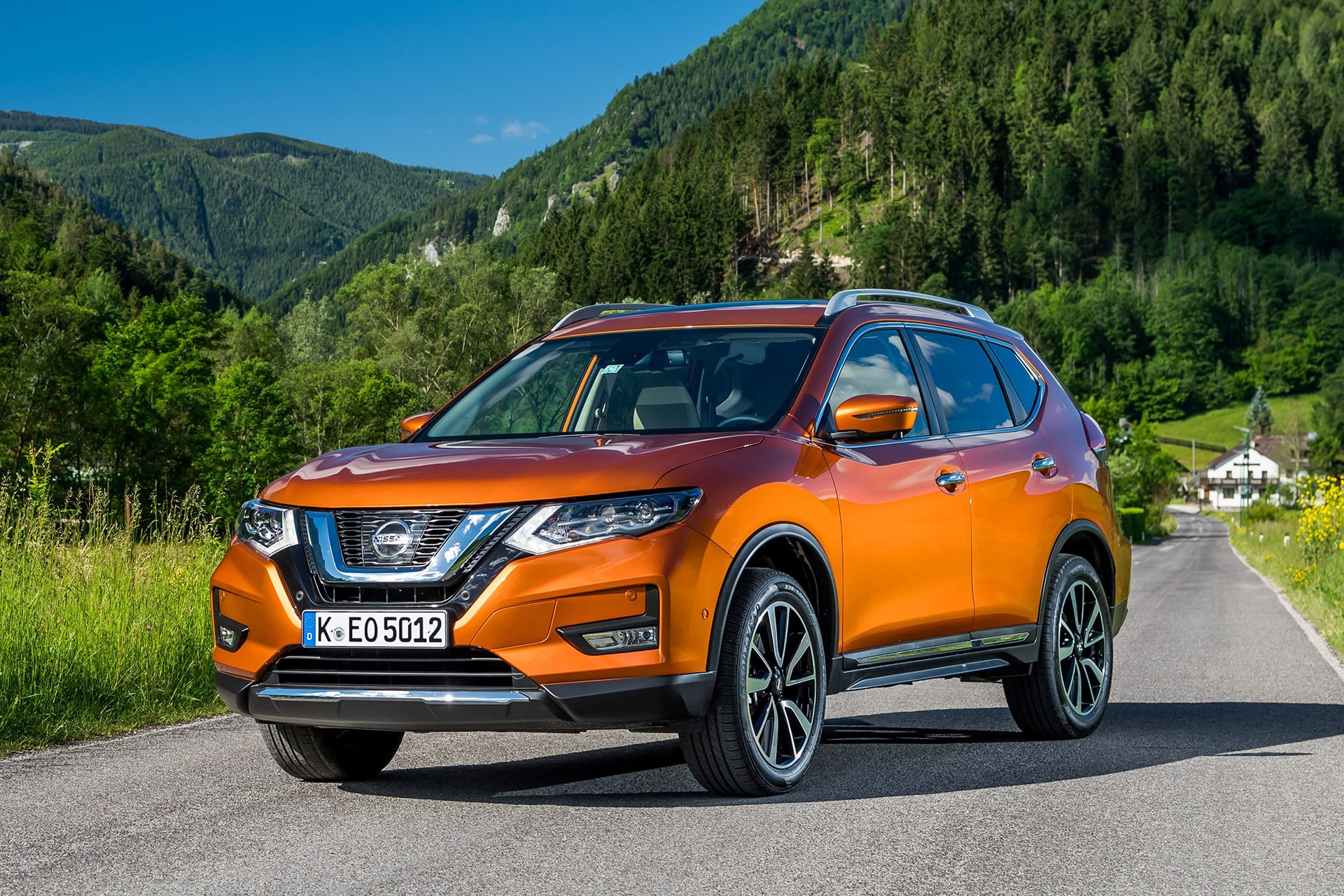
The family hybrid compact SUV is probably the most hotly contested category in the Spanish market. And within it, two Japanese models propose two very different ways of understanding electrification: the Nissan X-Trail e-Power, with its series hybrid where the combustion engine never drives the wheels, and the Toyota RAV4 Plug-in Hybrid, a 270 CV plug-in with a 22.5 kWh battery under the floor. Which one better swallows the luggage of a family of five when it’s time to drive 800 km on the motorway?
Let’s get to the point.
Why we are pitting these two family hybrid compact SUVs against each other
Both compete in the C-SUV segment, both are Japanese, both boast electrification — and that’s where the similarities end. The X-Trail e-Power uses a series hybrid layout: a 1.5 petrol engine acts as a generator and the wheels are driven solely by the electric motor. The RAV4 plug-in, on the other hand, fits a large battery, offers around 140 km of homologated electric range and allows 100% electric driving on daily journeys. Two philosophies, two price points and two very different consequences for the boot.
That difference is the key to the whole article. Because fitting 22.5 kWh under the floor has a cost — and the usable cargo capacity pays for it.
Nissan X-Trail e-Power Acenta 204 CV — from ≈42,000 €
The X-Trail e-Power we are comparing is the 1.5 e-Power 204 Acenta with 5 seats and automatic gearbox as standard. On paper, it is around 200 CV and homologates at roughly 5.5 l/100 km. The boot of the five-seat version measures an officially generous figure for the segment (around 585 litres with the seats in their usual position, according to manufacturer data), and as it has no large traction battery, the floor is flat and low, with a usable double floor.
| Power kW | Power CV | Top speed | Consumption | Fuel | Label |
|---|---|---|---|---|---|
| ≈150 kW | ≈200 CV | ≈170 km/h | ≈5.5 l/100 | Petrol hybrid | ECO |
On a long journey with five occupants and luggage, the X-Trail has a structural advantage: there are no battery packs taking up space under the floor. The modularity is reasonable, with 40/20/40 backrests and a loading sill at a good height. In our view, it is the hybrid C-SUV with the most “honest” boot in the segment — what seems like it will fit, fits.
That said, consumption on the motorway is not its strong point. The e-Power layout excels in town and on fast roads at medium pace, but at sustained 120 km/h the combustion engine works almost continuously and the homologated 5.5 l/100 km falls short of what the on-board computer shows.
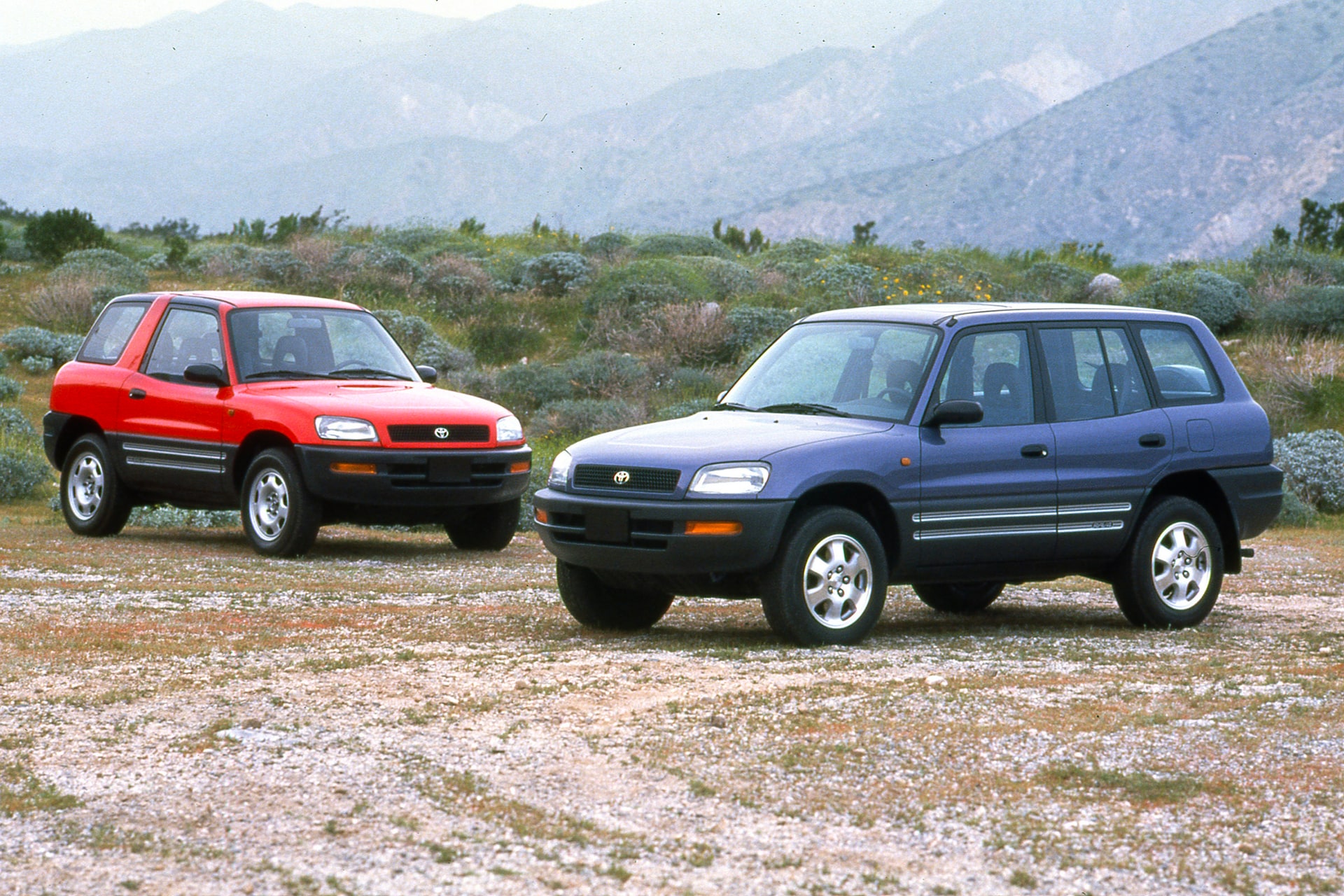
Toyota RAV4 Plug-in Hybrid 300 Advance 270 CV — from ≈50,500 €
The rival is the RAV4 Plug-in Hybrid 300 Advance, 268 CV combined, e-CVT gearbox and all-wheel drive. It homologates around 140 km of electric range, 1.5 l/100 WLTP (a figure that only resembles reality if you charge religiously) and 30 g/km of CO₂. Battery of 22.5 kWh under the boot floor.
| Power kW | Power CV | Top speed | Electric range | Consumption | Battery | Fuel | Label |
|---|---|---|---|---|---|---|---|
| ≈200 kW | ≈270 CV | ≈180 km/h | ≈140 km | ≈1.5 l/100 | ≈22.5 kWh | Petrol PHEV | ZERO |
The RAV4 PHEV is clearly more powerful, faster and, with a full battery, unbeatable in daily energy cost. ZERO label, access to ZBE zones without hesitation. But its boot pays the toll of the pack: the declared capacity drops compared with the conventional RAV4 hybrid and, what hurts most on a family trip, the double floor practically disappears. What you see is what you get.
On a long journey with the battery depleted — and over 800 km it will be depleted, one way or another — consumption settles at around 6-6.5 l/100 km in real terms, carrying 200 kg more battery. It’s not a disaster, but the “1.5 l/100 km” story is, in practice, pure marketing for anyone making long journeys every week.
Usable boot space: the metric that matters with five occupants
Here is the crux. In pure figures, the X-Trail e-Power offers more usable litres with five seats in use: low floor, regular space, no battery getting in the way. The RAV4 PHEV, although on paper it is not far off in declared volume, loses the double floor and has a floor with a less practical step for stacked rigid suitcases.
For a family loading two large suitcases, a small one, backpacks and the baby buggy, the X-Trail swallows more. It turns out the battery isn’t free — and it shows exactly where it is most inconvenient.
If your use case is real boot space with all seats occupied, the Nissan wins on interior packaging, not on marketing.
Real consumption on long trips: where each one wins and loses
The RAV4 PHEV with a full battery covers the first 100-120 km of real motorway driving almost for free. From there on, it becomes a heavy hybrid that consumes similarly to or slightly more than the X-Trail. The Nissan, by contrast, maintains flat consumption from start to finish: it doesn’t reward you for plugging it in (you can’t), but it doesn’t punish you when there’s no electricity left either.
On an 800 km trip starting with a full battery, the Toyota comes out ahead in total average consumption. On an 800 km trip with no option to charge at the start, the figures even out and the Nissan may even be more efficient.
Comparison table and score
| Model | Power | WLTP consumption | Electric range | Label | Usable boot with 5 seats | Price from | Warranty | Score |
|---|---|---|---|---|---|---|---|---|
| Nissan X-Trail e-Power Acenta | ≈200 CV | ≈5.5 l/100 | Not applicable (series hybrid) | ECO | Best (flat floor, no battery) | ≈42,000 € | 3 years | 8.2 |
| Toyota RAV4 Plug-in Hybrid 300 Advance | ≈270 CV | ≈1.5 l/100 (with battery) | ≈140 km | ZERO | Penalised by 22.5 kWh pack | ≈50,500 € | Up to 10 years Toyota Relax | 8.4 |
Prices are the manufacturer’s recommended RRP, without dealer discounts, one-off campaigns or aid (Plan Auto+ applies to the RAV4 PHEV due to its ZERO label, not to the X-Trail e-Power).
An important note: the RRP difference between the two exceeds 15% (≈8,500 €). It is not minor.
Verdict by use case
- Travelling family that prioritises usable boot space and has no charger at home: Nissan X-Trail e-Power. Cheaper, more usable space with five occupants and stable consumption without depending on a power socket. It is the rational choice.
- User with a wallbox at home and short daily journeys plus occasional trips: Toyota RAV4 Plug-in Hybrid. The ZERO label, the 140 km electric range and the Relax warranty of up to 10 years justify the premium if, and only if, you plug it in every day.
- Pure price-performance ratio: Nissan X-Trail e-Power. 8,500 € less and a better-resolved boot for typical family use outweigh the extra 70 CV of the Toyota in the vast majority of cases.
If your home socket is going to sit unused in the garage, the RAV4 PHEV is a magnificent car bought for the wrong reason.
Frequently asked questions
How many litres of boot space does the Nissan X-Trail e-Power have compared with the Toyota RAV4 PHEV?
The five-seat X-Trail e-Power offers around 585 litres with a flat floor and usable double floor. The RAV4 Plug-in Hybrid loses part of that usable space due to the 22.5 kWh battery under the floor, which eliminates almost all of the double floor. In usable boot space with five seats in use, the Nissan is clearly superior.
Is it worth paying 8,500 € more for the RAV4 PHEV compared with the X-Trail e-Power?
Only if you plan to charge it daily at a domestic wallbox. Without systematic charging, the extra cost is not recovered through consumption and you lose boot space. With daily charging and the ZERO label required for ZBE zones, it does pay off.
What does the X-Trail e-Power actually consume on the motorway?
In real use at sustained 120 km/h, consumption ranges between 6.5 and 7.5 l/100 km, above the WLTP figure. In town and on fast roads with variable pace, it easily drops to 5-5.5 l/100 km.
Does the Toyota RAV4 Plug-in Hybrid have all-wheel drive?
Yes, it has all-wheel drive through an additional electric motor on the rear axle (E-Four system), something the X-Trail e-Power also offers in its e-4ORCE version, but not in the Acenta trim compared here.

2 Comments
Pingback: Nissan X-Trail e-Power review: hasta dónde llega el SUV-C híbrido japonés como coche familiar con maletero grande en 2026 – Comparativa de Coches
Pingback: Toyota RAV4 Hybrid vs Honda CR-V Hybrid vs Nissan X-Trail e-Power: qué SUV-C híbrido familiar aguanta mejor ciudad y viaje largo – Comparativa de Coches