

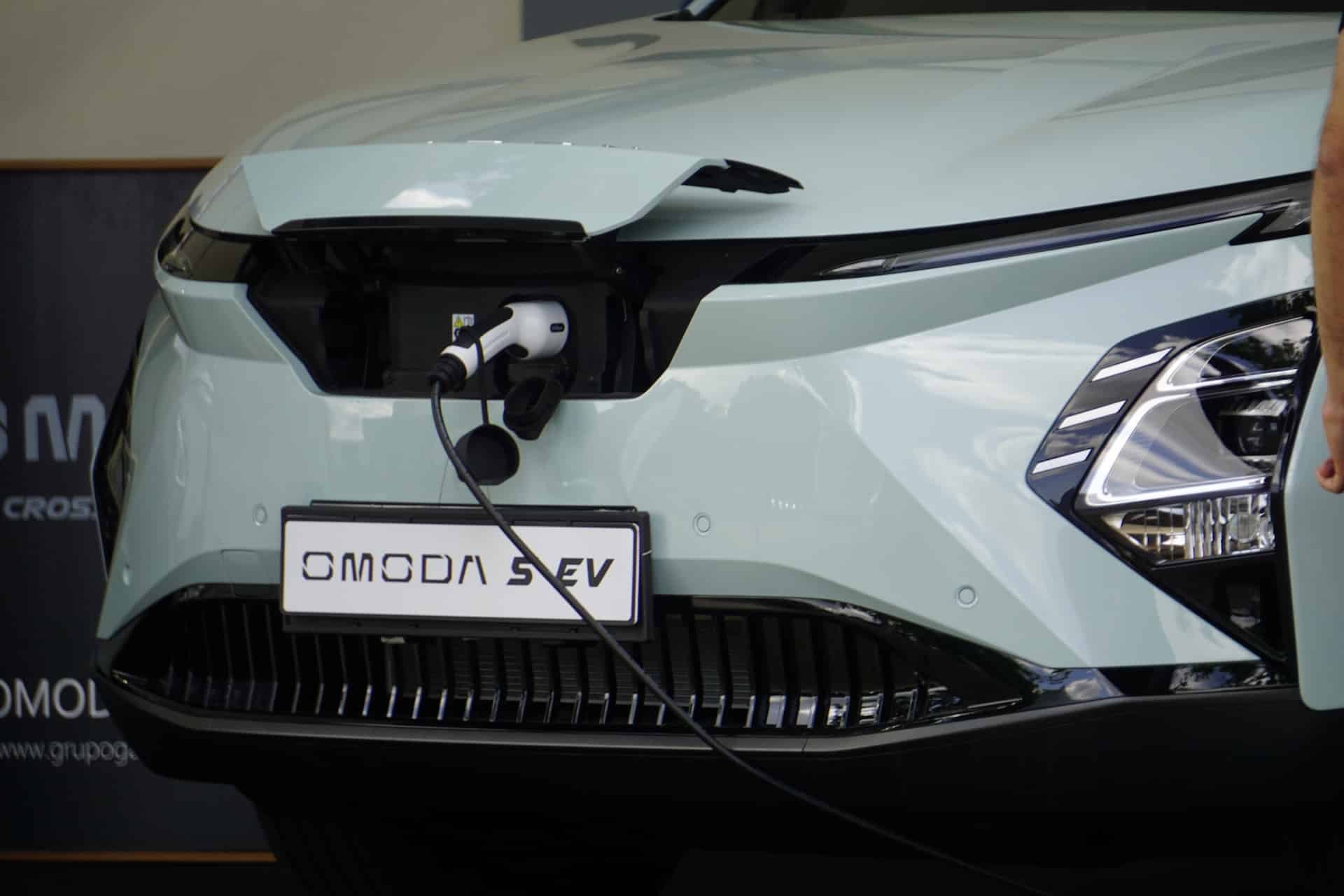
Comparing a full hybrid with a battery electric car may seem like a stretch at first glance. It isn’t: both compete for the same SUV-B buyer who doesn’t want to depend on a plug to get around, but also doesn’t want to give up the ECO or CERO label from the DGT. The Omoda 5 SHS and the Toyota C-HR Electric 230 differ by almost €11,000 in list price, and that figure alone already shapes much of the decision.
Let’s get to the point: one bets on the unlimited range of a petrol tank and a contained entry price; the other on zero local emissions and a range of almost 600 km that makes range anxiety unnecessary in day-to-day use. Neither is better in the abstract. Each wins on its own ground.
Omoda 5 SHS: the Chinese hybrid SUV-B pushing on price from €29,400
Omoda has been in Spain only a short time, but the 5 SHS has made a strong entrance into the B segment with a simple argument: 220 hp hybrid powertrain, generous standard equipment and a price that approaches the mid-range of conventional city cars. The 1.5 TGDI system combines a combustion engine with electric assistance, never needing to be plugged in, something we covered in depth in our article on what really distinguishes a full hybrid from a mild hybrid.
On the road it behaves with ease: the 220 Nm of torque and the 0-100 in about 8 seconds place it ahead of the segment average in terms of pulling power, although the homologated consumption of 5.5 l/100 km gets closer to 6.5-7 l/100 km in real driving if you abuse the motorway above 120 km/h. The support battery, barely 2 kWh, does its job during pull-offs and braking recovery, but let’s not fool anyone: it doesn’t run in pure electric mode for more than a few metres.
| Engine | Power | Torque | 0-100 | Top speed | Consumption | CO₂ | Fuel |
|---|---|---|---|---|---|---|---|
| 1.5 TGDI hybrid | 220 CV / 110 kW | 220 Nm | ≈8 s | 180 km/h | 5.5 l/100 km | 120 g/km | Hybrid |
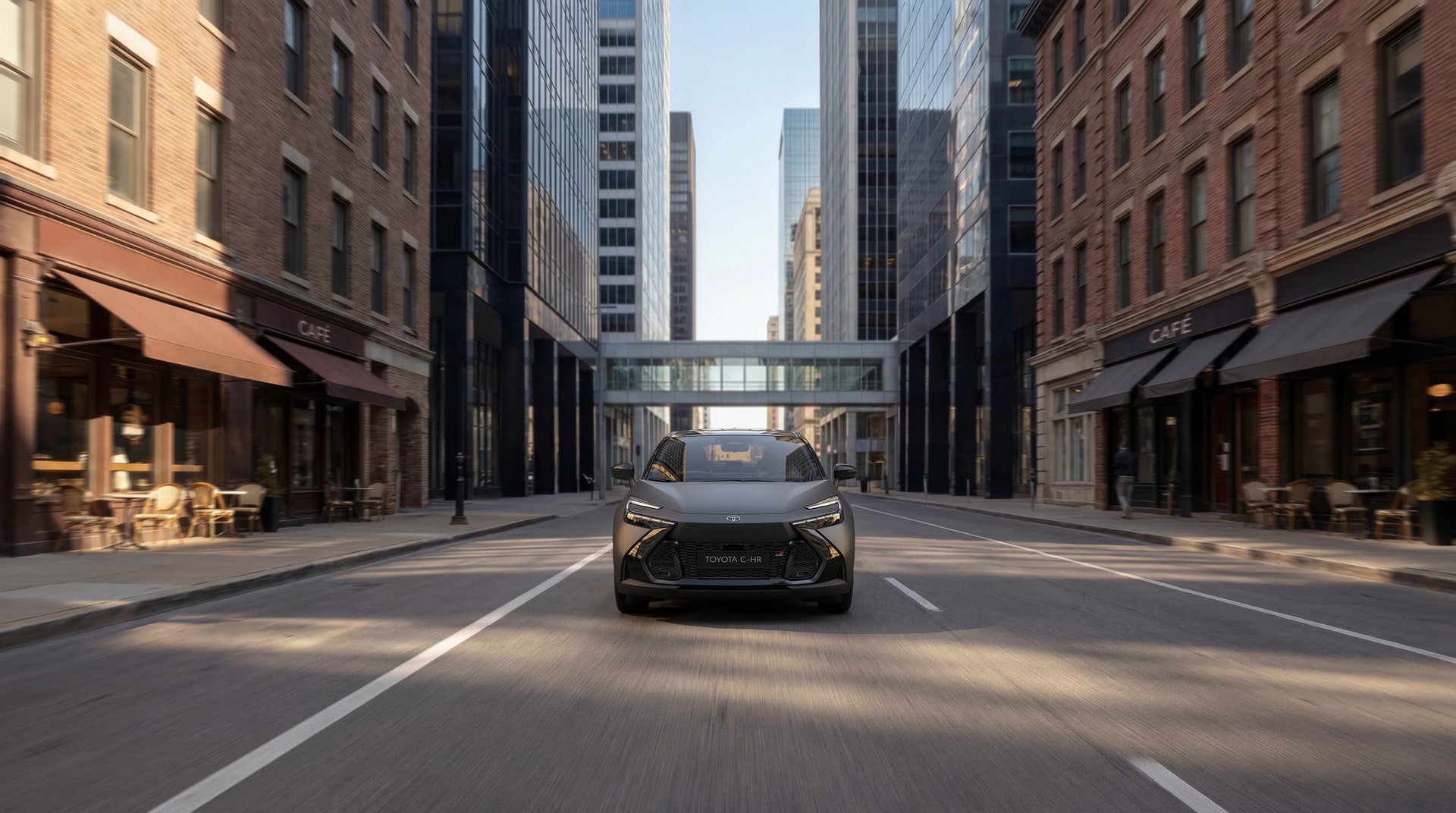
Toyota C-HR Electric 230: the premium electric SUV-B from €40,000
The Toyota C-HR has made the leap to full electrification with the Electric 230 variant, equipped with a 77 kWh battery and up to 600 km of homologated range. It is, by a wide margin, the option for anyone who already has a wallbox at home or a garage with a charging point and wants to forget the petrol station for good. Its 220 hp output almost exactly matches the Omoda’s, but the driving experience is another world: cabin silence, immediate electric motor response and a sense of refinement that the 5 SHS, frankly, doesn’t reach.
The drawback is evident before you even start the engine: the price. Starting from €40,000 list price puts the C-HR out of reach for much of the public looking for an SUV-B, a segment that traditionally competes below €30,000. Toyota knows this, which is why it positions this Advance trim as the high-end option, not as the entry point to the C-HR (which still has more affordable conventional hybrid versions, though outside the focus of this article).
| Version | Power | Top speed | Range | Battery | Fuel |
|---|---|---|---|---|---|
| Electric 230 77kWh Advance | 220 CV / 170 kW | 160 km/h | ≈600 km | 77 kWh | Electric |
Design and interior space: two different philosophies
The C-HR keeps the coupé-SUV line that has made it recognisable since its first generation: sloping roofline, thick C-pillar and rear visibility that penalises parking in a bay, although the 360º camera partly compensates. The Omoda 5 SHS plays the opposite card: more conventional compact SUV proportions, a greater sense of space in the rear seats and a boot that, without a confirmed homologated figure on the spec sheet, feels more practical for a small family or a couple with a large dog.
Inside, the Toyota wins on perceived quality: soft materials at contact points, a well-integrated central screen and ergonomics refined after years of platform evolution. The Omoda doesn’t fall short on equipment (dual screens, standard driver assistance systems), but the finish of some plastics reveals its shorter track record in the European market.
Where each model objectively wins
The Omoda 5 SHS prevails on two clear fronts: entry price, almost €11,000 below the C-HR, and total range without depending on charging infrastructure, relevant for those who make long journeys without advance planning of stops.
The Toyota C-HR Electric 230 wins on electric range (almost 600 km, a figure that no full hybrid can match in zero-emission mode) and in access to low-emission zones without future restrictions, with the CERO label versus the Omoda’s ECO.
Comparison table: Omoda 5 SHS vs Toyota C-HR Electric 230
| Model | Power | Consumption/Range | Price from | Fuel | DGT label | Score |
|---|---|---|---|---|---|---|
| Omoda 5 SHS | 220 CV | 5.5 l/100 km | €29,400 | Hybrid | ECO | 7.5/10 |
| Toyota C-HR Electric 230 | 220 CV | ≈600 km range | €40,000 | Electric | CERO | 8/10 |
The score jointly weighs price, performance, range/consumption and equipment. The C-HR holds the technical advantage, but the Omoda recovers it in value for money for those who prioritise the initial outlay.
Price and list price: the difference that cannot be ignored
The prices quoted are manufacturer’s recommended list prices, indicative and excluding dealer offers, one-off campaigns or current public aid such as the Plan Auto+, whose amount should always be checked on the official website before closing a budget. That said, the difference between the two models is around 36%, well above the 15% threshold that usually marks a change of buyer category. Looking for €29,400 is not the same as managing a €40,000 budget: they are different customer profiles, even though both cars technically compete in the same B segment.
Anyone torn between stretching the budget towards the electric or staying with the hybrid can find more context in our comparison Omoda 5 SHS versus the MG ZS Hybrid+, where the Chinese model is measured against another rival at a similar price.
Verdict: which to choose depending on your use case
For urban use with short trips and access to charging at home or at work, the Toyota C-HR Electric 230 is the most coherent option: lower cost per kilometre, real zero emissions and a more refined driving experience.
For those who make long journeys without planning charging stops, or simply don’t have a wallbox, the Omoda 5 SHS solves the problem better: refuelling in five minutes at any petrol station and a total range that depends neither on outside temperature nor on the state of the fast-charging network.
On value for money and performance, the Omoda 5 SHS wins. It offers the same power as the Toyota for €10,600 less, and although it loses on electric range and finish, for a buyer who looks at the monthly payment before the environmental label, the sums work in its favour.
Frequently asked questions
Which is cheaper, the Omoda 5 SHS or the Toyota C-HR?
The Omoda 5 SHS, with a list price from approximately €29,400, compared with the €40,000 entry price of the Toyota C-HR Electric 230. The difference is around 36%.
Does the Toyota C-HR electric need charging every day?
Not necessarily. With a homologated range of around 600 km, moderate urban or mixed use allows charging two or three times a week at a home wallbox, depending on daily kilometres.
Can the Omoda 5 SHS be plugged in?
No. It is a full hybrid: the support battery, of about 2 kWh, recharges only through the combustion engine and regenerative braking, with no need for an external charging point.
Which DGT label does each model carry?
The Omoda 5 SHS runs with an ECO label, being a non-plug-in hybrid. The Toyota C-HR Electric 230, being 100% electric, obtains the CERO emissions label, with unrestricted access to low-emission zones.
