

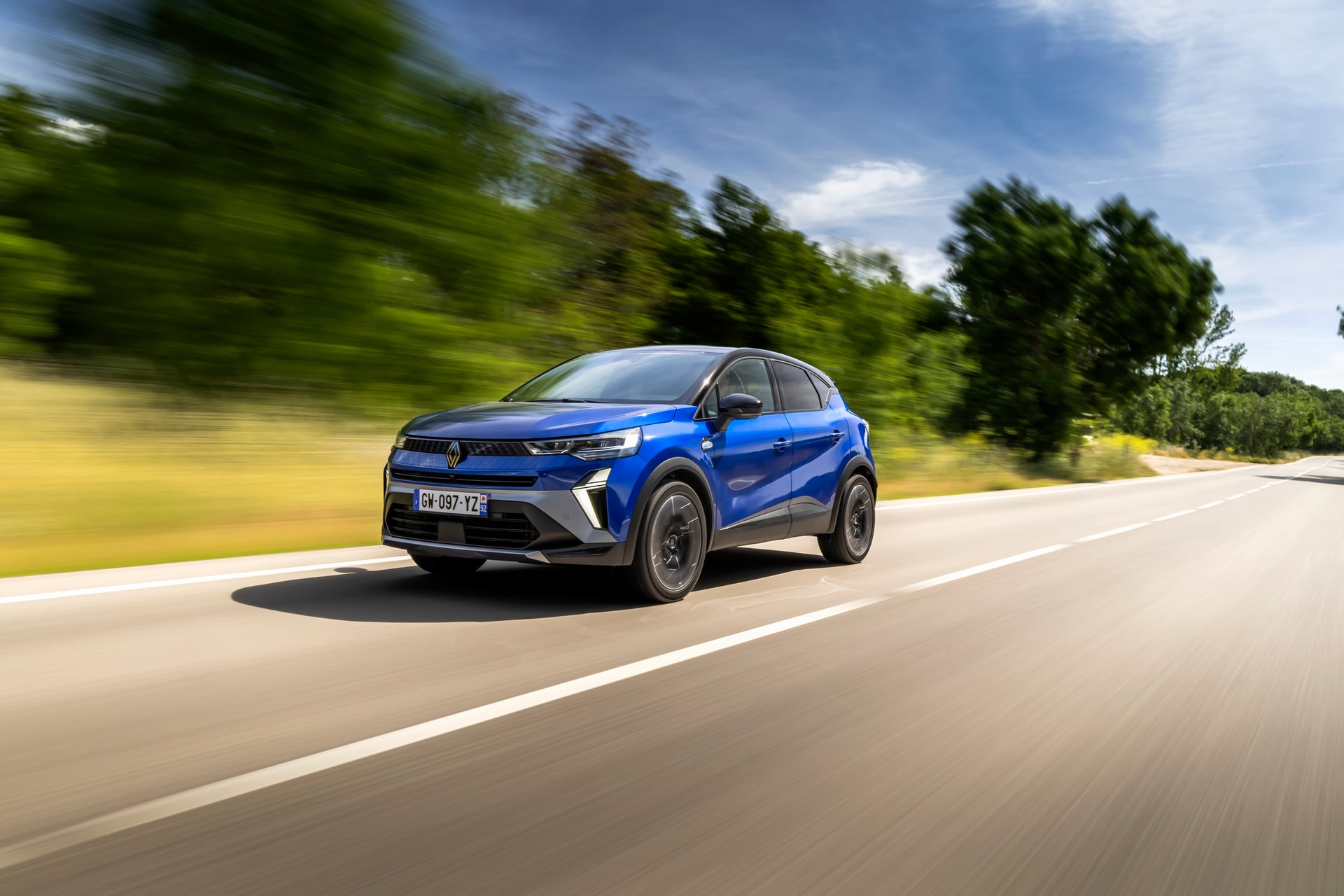
Buying an SUV-B hybrid for less than €30,000 in 2024 almost always means choosing between these two. The Renault Captur E-TECH and the Nissan Juke Hybrid share a philosophy: an atmospheric petrol engine, a pair of electric motors and a gearbox without a conventional clutch that works wonders in town. But they are not the same car, they do not cost the same, and that changes the equation for anyone on a tight budget.
Renault Captur E-TECH, from ≈€27,900: the French hybrid that prioritises your wallet
The version we compared is the E-Tech 1.6 145 Evolution 5dr S/S CVT, with 110 kW (150 CV) split between the combustion engine and the electric motors. It is the more affordable of the two, and this shows in an Evolution trim that covers the essentials without giving away many extras.
In town the Captur behaves as you would expect from an E-TECH system: silent pull-aways, energy recovery on every braking event and an automatic gearbox that makes the decisions for you without you noticing much. That said, when you floor it to join a fast road, the combustion engine climbs in revs with a vocal note that is not its best moment.
| Power (kW) | Power (CV) | Top speed | Consumption | CO₂ | Label | Fuel |
|---|---|---|---|---|---|---|
| 110 kW | 150 CV | ≈170 km/h | ≈4.5 l/100 km | ≈110 g/km | ECO | Hybrid (petrol/electric) |
Nissan Juke Hybrid, from ≈€30,800: its own design and a slightly pricier proposition
The Juke Hybrid we tested is the Hybrid 1.6 143 Acenta 5dr Auto, with 110 kW (140 CV) according to its homologated data sheet. The power figure is slightly below the Captur’s, something that is noticeable mainly on road overtakes, where the Juke asks the driver for a little more patience.
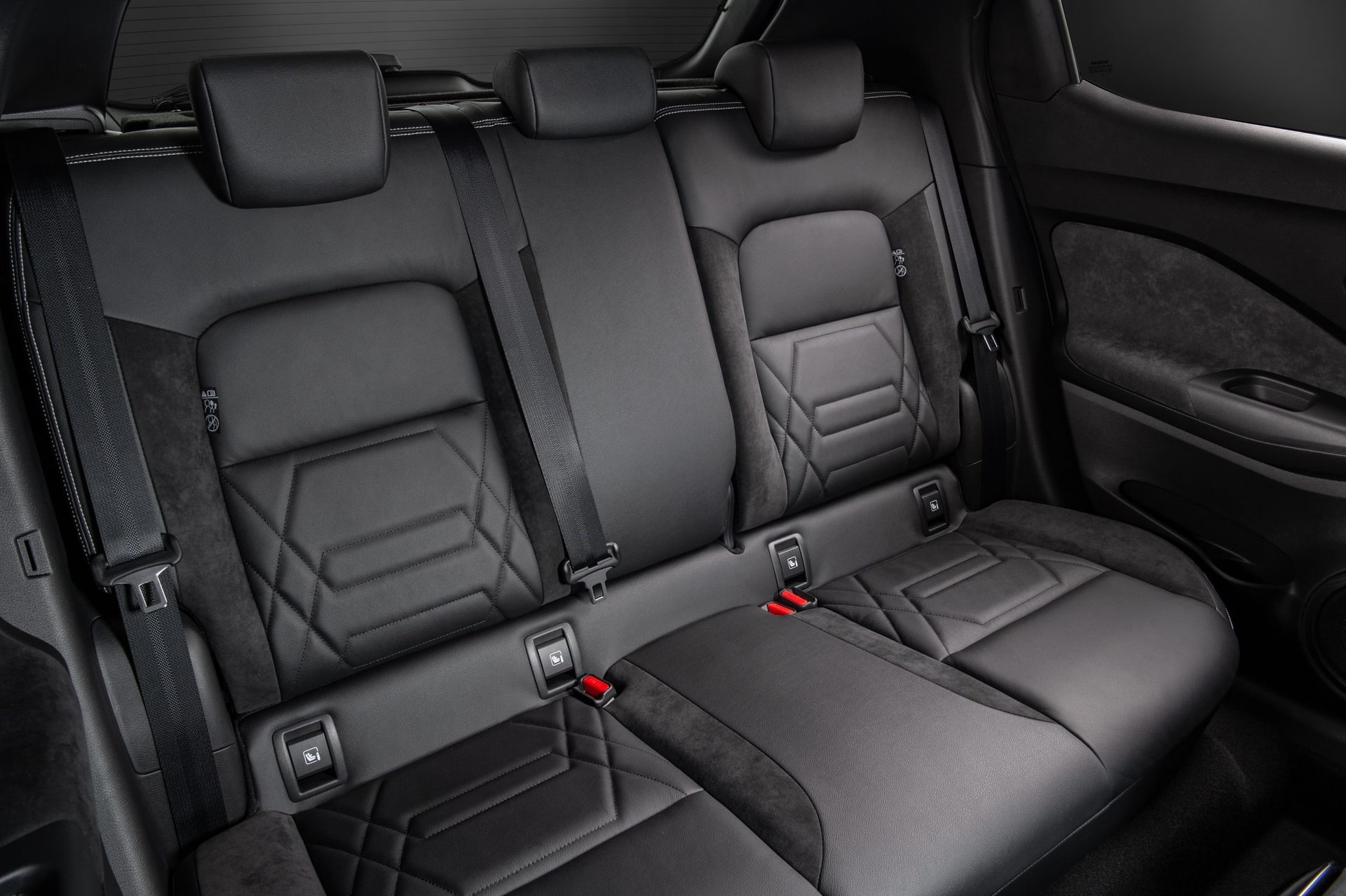
What the Nissan does better is character. Its exterior design, with those broken lines and the floating roof, still draws attention eight years after its debut. Inside, the step up in perceived quality over the Captur is noticeable: materials with a better feel where you touch them most often and a slightly sportier driving position.
| Power (kW) | Power (CV) | Top speed | Consumption | CO₂ | Label | Fuel |
|---|---|---|---|---|---|---|
| 110 kW | 140 CV | ≈170 km/h | ≈4.5 l/100 km | ≈110 g/km | ECO | Hybrid (petrol/electric) |
Real-world consumption and city behaviour
On paper, the contest here is practically a tie: both are homologated at around 4.5 l/100 km, and on an urban route with traffic lights and moderate traffic they perform within very similar ranges. The difference lies in driving nuances, not in the tank. The Captur moves in and out of electric mode more smoothly when pulling away from a standstill; the Juke takes a fraction of a second longer to decide which motor to use, something you only notice if you have just been driving the other one.
On a short motorway stretch, the scenario becomes even more even: neither stands out especially at a sustained 120 km/h, because the self-charging hybrid system is designed for the city, not for kilometres at cruising speed.
Boot, space and dimensions
This is where the Captur pulls ahead. Its boot is noticeably more practical for the weekly shop or an extra cabin case when four people are travelling. The Juke gives up cargo space in exchange for its bolder exterior design, and the rear seats feel somewhat tighter for headroom for passengers over 1.80 m.
If your real use often involves carrying a baby stroller, a large dog or luggage for more than a weekend, the Renault makes this easier without needing to play tetris.
Equipment and price: where the almost €3,000 difference shows
The Captur in Evolution trim comes with just the basics: air conditioning, a functional multimedia screen, parking sensors. The Juke Acenta adds some extra comfort details, but not enough to justify on its own the nearly €2,900 difference over the Renault, which in percentage terms is more than 10% on the price of the Captur.
It is worth remembering that these prices are manufacturer’s recommended RRPs, without dealer discounts or one-off campaigns, and that Plan Auto+ aid may exist that can reduce the final outlay; it is advisable to check the official website for the current amount.
| Model | Power | Consumption | Price from | Score |
|---|---|---|---|---|
| Renault Captur E-TECH | 150 CV | ≈4.5 l/100 km | ≈€27,900 | 8/10 |
| Nissan Juke Hybrid | 140 CV | ≈4.5 l/100 km | ≈€30,800 | 7.3/10 |
Verdict: which SUV-B hybrid to choose based on your use
For pure urban use, with priority on boot space and a tight budget: the Renault Captur E-TECH clearly wins. More power, more boot space and almost €3,000 less upfront outlay are arguments that are hard to ignore.
For those who value distinctive design and a somewhat higher perceived quality inside, and who can afford the extra cost: the Nissan Juke Hybrid does the job, though you should know that you pay for that character with less practical space.
In terms of value for money, there is no contest: the Captur offers more car for less money. If you want something different from the rest in the office car park, the Juke remains the candidate, with your eyes open about what that difference costs.
Anyone wishing to widen the field of rivals in this segment can also look at the Toyota C-HR compared with the Renault Captur E-TECH and the Hyundai Kona Hybrid, where the balance of forces changes when a third brand enters the equation.
Frequently asked questions
Which one uses less fuel in town, the Captur E-TECH or the Juke Hybrid?
Both are homologated with very similar consumption, at around 4.5 l/100 km. In real urban use the differences are minimal and depend more on driving style than on the car itself.
Which SUV-B hybrid has more boot space, the Captur or the Juke?
The Renault Captur E-TECH offers a more practical and versatile boot than the Nissan Juke Hybrid, whose bolder exterior design somewhat reduces cargo space.
Is it worth paying more for the Nissan Juke Hybrid over the Captur?
It depends on what you value. If you prioritise exterior design and perceived interior quality, yes. If you prioritise space and price, the Captur offers a better value for money ratio.
Do the prices in this comparison include discounts or public aid?
No. They are manufacturer’s recommended RRPs, without dealer promotions. Plan Auto+ aid, when applicable, can reduce the final price; it is advisable to check its current amount on the official website.
