

Three 7-seat SUVs, three different mechanical philosophies. The Skoda Kodiaq sticks with the tried-and-tested mild hybrid, the Volkswagen Tayron bets on the plug-in, and the Hyundai Santa Fe squeezes the full hybrid up to 240 CV. On paper they compete on the same ground: families of four or five who need a usable third row and a boot that doesn’t force you to choose between the large suitcase and the baby buggy. In practice, each one solves that problem differently, and that is where the real decision lies.
Skoda Kodiaq mHEV 1.5 TSI 150 Selection: starting price €46,800
The version we tested is the entry-level mild hybrid, 5-door, with DSG automatic gearbox. It is the most affordable of the three and also the mechanically simplest: no plug, no large battery management, just a 48V system that assists during pull-away and brake energy recovery.
| Power | Top speed | Consumption | CO₂ | Fuel | Starting price |
|---|---|---|---|---|---|
| 110 kW / 150 CV | 210 km/h | ≈6 l/100 km | ≈140 g/km | Petrol/electric mild hybrid | €46,800 |
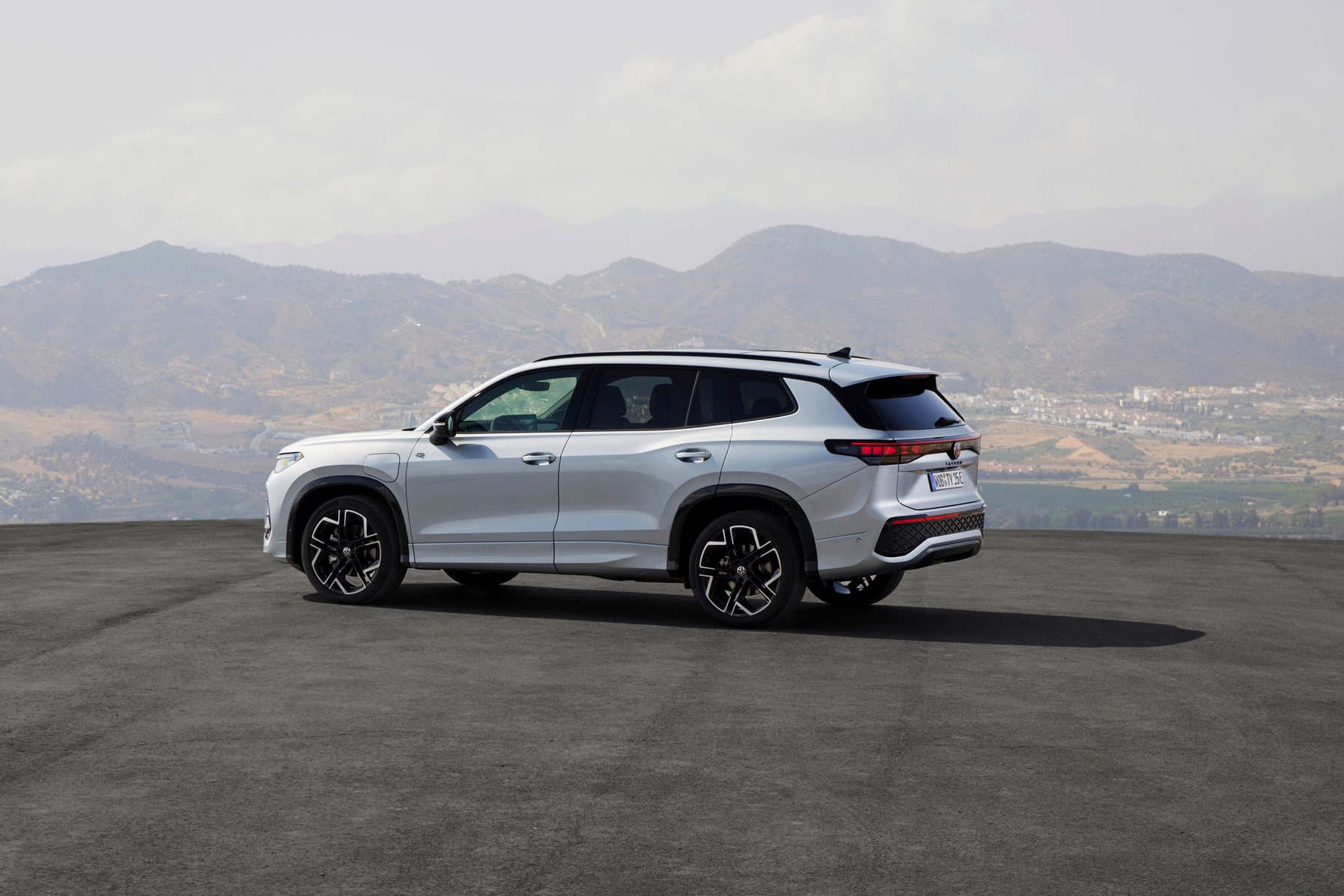
Volkswagen Tayron eHybrid 1.5 TSI 204 ‘Más’: starting price €58,000
The Tayron is the bigger sibling of the Tiguan and shares its platform with the Kodiaq itself, but here it arrives with a plug. The ‘Más’ version with DSG6 gearbox delivers 200 CV combined and a 25.5 kWh battery that allows pure electric driving for everyday urban use.
| Power | Top speed | Electric range | Consumption | CO₂ | Fuel | Starting price |
|---|---|---|---|---|---|---|
| 150 kW / 200 CV | 210 km/h | ≈120 km | ≈1.5 l/100 km | ≈40 g/km | Petrol/electric PHEV | €58,000 |
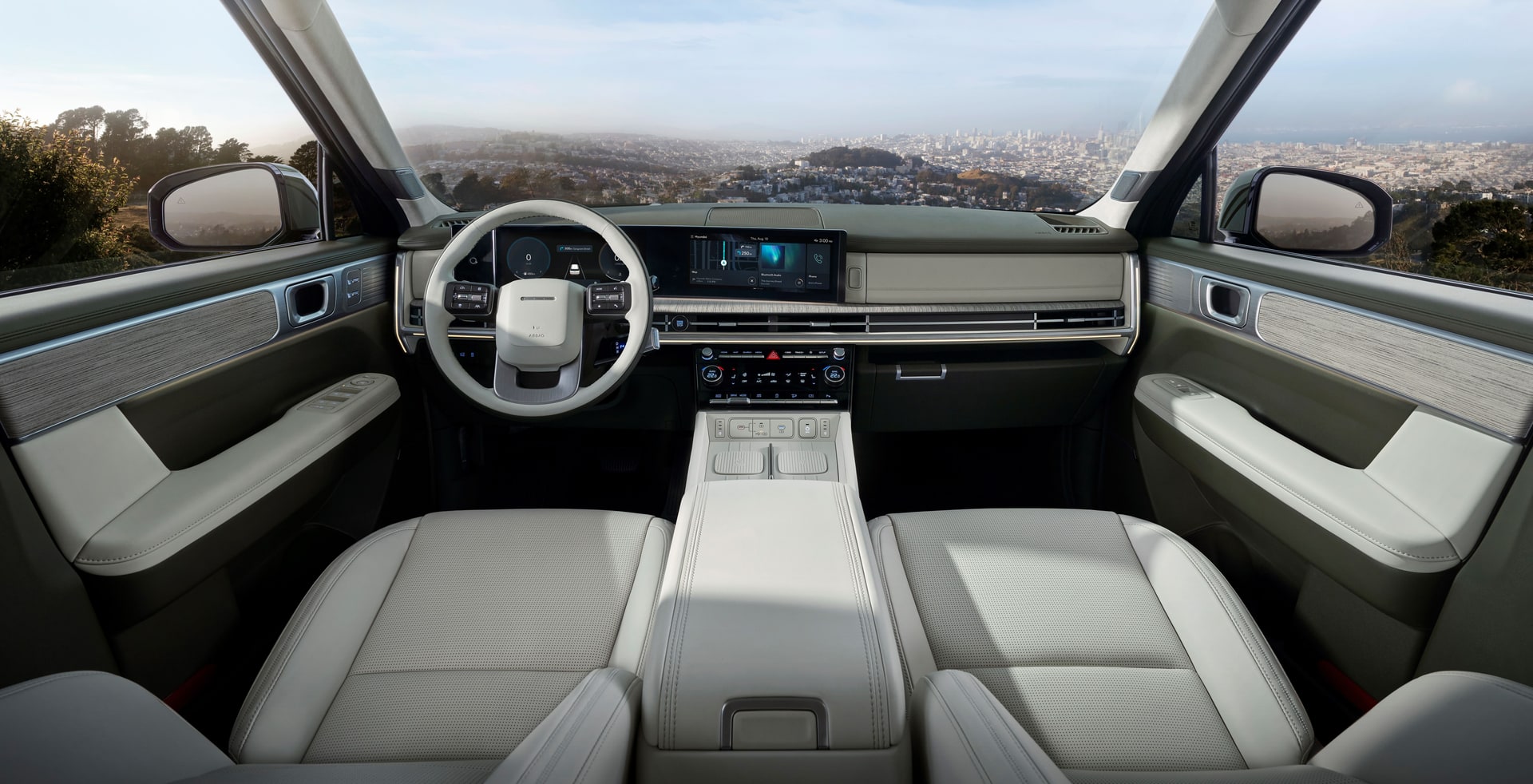
Hyundai Santa Fe HEV 1.6 TGDi 239 Maxx: starting price €56,000
The Santa Fe plays in another power league: 240 CV combined without ever needing to be plugged in, thanks to a self-charging hybrid system that constantly recovers energy. Of the three, it is the one that offers the most pulling power at road level.
| Power | Top speed | Consumption | CO₂ | Fuel | Starting price |
|---|---|---|---|---|---|
| 180 kW / 240 CV | 200 km/h | ≈6.5 l/100 km | ≈140 g/km | Petrol/electric hybrid | €56,000 |
Interior space and third-row access with children
Here the Kodiaq gains an advantage by design: the narrower body and the folding head restraint make it easier to fit a child seat in the second row without fighting the front seat. Access to the third row is reasonable for children up to 10-11 years old, although an adult sitting there will notice their knees pressed against the seatback on journeys longer than an hour.
The Tayron, sharing the MQB Evo platform with the Kodiaq, offers similar behaviour in the rear seats, with the nuance that the PHEV battery takes up some of the floor space that in other versions is used for storage. It’s not a drama, but you notice it when stowing loose items in the boot recesses.
The Santa Fe changes the register: its squarer design and generous wheelbase make the third row, of the three, the most liveable for adults on short trips and for children on any trip. For a family with teenagers who insist on going “all together” to the village every summer, that difference weighs more than any fuel consumption figure.
Boot capacity with all 7 seats in use
This is the point where any large family puts the magnifying glass, and where the three proposals leave the small print in plain sight. With the third row deployed, usable space shrinks drastically in all three models: none of them promises miracles, and in all three cases it is best to fold that row down as soon as possible to recover real load capacity.
The Kodiaq, being a mild hybrid with no traction battery under the boot, keeps the floor flatter and makes better use of the available space with all 7 seats in use. The Tayron loses some of that depth to the PHEV system electronics, although the difference only shows when trying to fit large hard suitcases. The Santa Fe, despite its larger external dimensions, distributes space more generously thanks to a third row that folds almost flush with the floor.
Real consumption and mechanics: mHEV vs PHEV vs HEV
Three philosophies, three recommended uses. The Kodiaq mHEV, with its homologated 6 l/100 km, is the most predictable on the motorway: it doesn’t depend on a plug or battery management, performs similarly in town and on the open road, and holds no surprises. It is the approach of someone who drives many motorway kilometres and doesn’t want complications.
The Tayron eHybrid, with its 120 km of electric range and 25.5 kWh battery, only makes sense if there is a wallbox at home or at work. Without daily charging, a PHEV of this size carries a weight penalty that pushes real consumption above the homologated figure on long journeys; with constant charging, on the other hand, it can handle daily driving almost entirely in pure electric mode.
The Santa Fe HEV needs no plug and delivers 240 CV without asking anything in return apart from somewhat higher consumption on sustained motorway driving, around 6.5 l/100 km compared with the Kodiaq’s 6. It is the most versatile mechanical setup for those who alternate city, road and the occasional towing without wanting to depend on a charging point.
| Model | Power | Consumption | Fuel | 3rd-row space | Boot with 7 seats | Starting price | Score |
|---|---|---|---|---|---|---|---|
| Skoda Kodiaq mHEV 150 | 150 CV | ≈6 l/100 km | Mild hybrid | 7 | 8 | €46,800 | 8.0 |
| Volkswagen Tayron eHybrid 204 | 200 CV | ≈1.5 l/100 km* | PHEV | 7 | 7 | €58,000 | 7.5 |
| Hyundai Santa Fe HEV 239 | 240 CV | ≈6.5 l/100 km | Hybrid | 9 | 8.5 | €56,000 | 8.3 |
*Homologated consumption under the cycle with a charged battery; on long journeys without recharging, real consumption comes closer to that of a conventional hybrid.
Verdict: which 7-seat family SUV to choose depending on your case
For long, constant motorway journeys without a plug at home, the Skoda Kodiaq mHEV is the most sensible option: it is the cheapest of the three, nearly €10,000 less than the Tayron (a difference of over 15% that should not be overlooked), and its consumption doesn’t depend on anything external.
For those with a wallbox who mix urban trips with the occasional weekend journey, the Volkswagen Tayron eHybrid justifies its higher price with the ability to drive in pure electric mode for much of the month, although it loses some boot depth because of the battery.
For families with teenagers who almost always travel as seven, the Hyundai Santa Fe HEV wins clearly: more power, a better third row and a boot that copes better with a full load, all without depending on a charging point. If your use case is “we go on holiday with everyone on board”, the Santa Fe is the one that asks you to give up the least.
As always with these prices, they are manufacturer’s recommended retail prices without dealer discounts or one-off campaigns, so it is worth requesting a real quote before deciding. If your family is heading past five seats for daily use, it is worth reviewing first how to choose a car for a large family of 5 children in 2026 according to real seats, boot space with everyone on board and third-row access, because some nuances of this segment repeat in bigger cars. And if the budget is tight and the 7th seat is occasional, it is also worth looking at the 5 most recommended compact SUV hybrids for families who combine city and long trips in 2026.
Frequently asked questions
Which of the three is best for long trips with the whole family?
The Hyundai Santa Fe HEV, for its more liveable third row and its boot that copes better with a full load with all 7 seats occupied, plus its 240 CV for overtaking with the car loaded.
Is it worth paying more for the Volkswagen Tayron eHybrid if I don’t have a wallbox at home?
Not especially. Without frequent charging, its real consumption on long trips approaches that of a conventional hybrid, and you pay almost €11,200 more than for the Kodiaq without taking advantage of its main benefit.
Is the Skoda Kodiaq mHEV enough for a family of four with young children?
Yes, as long as the third row is used occasionally. For daily use with five or more fixed passengers, the Santa Fe offers more real margin.
Are there public grants to buy any of these three SUVs?
It is advisable to check the current conditions of the Plan Auto+ on the official website, as the amounts and requirements may vary and are not guaranteed at the time of purchase.
