

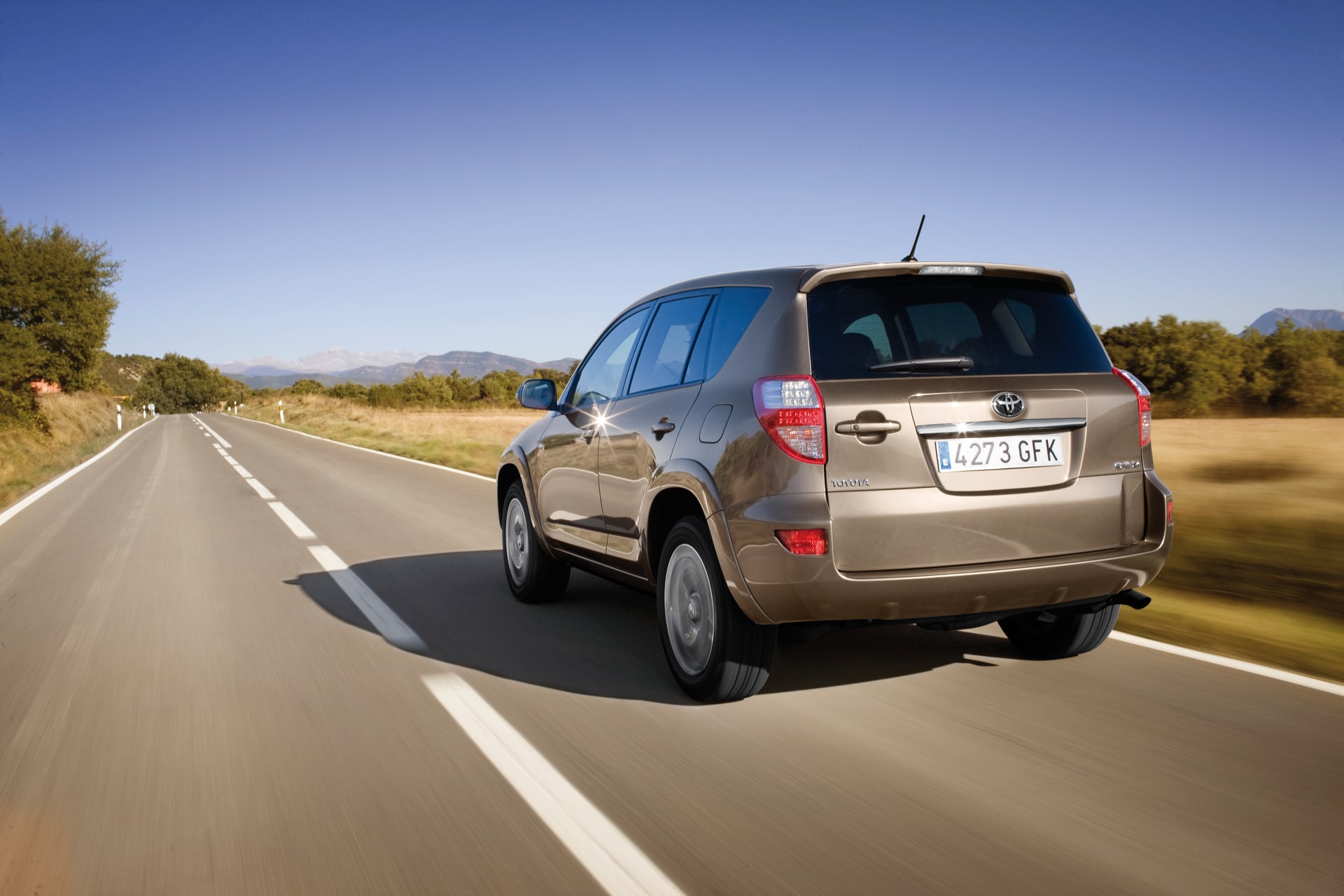
Choosing a compact family hybrid SUV in Spain is no longer a question of brand: it is a question of which type of hybrid suits you. And three very different philosophies coexist in the same segment. The Toyota RAV4 plays the PHEV card with a plug and 140 km of certified electric range. The Honda CR-V Hybrid uses its i-MMD series-parallel system, the most established of the group but also the most refined. And the Nissan X-Trail e-Power does something different: the petrol engine never drives the wheels, it only generates electricity. Three paths, one destination: moving a family without paying consumption tolls.
Before we get into it: all prices you will see are manufacturer’s recommended RRP, without dealer discounts, one-off campaigns or Plan Auto+ aid. Treat them as an indicative reference.
Three hybrid philosophies in the same segment
What is interesting about this trio is that they do not share an architecture. The RAV4 Plug-in is the only one that can run your daily life in pure electric mode if you plug it in overnight. The CR-V switches between combustion and electric motors as needed, with direct transmission on motorways. The X-Trail always converts petrol into electricity and then drives the wheels with the electric motor — like an EV with an on-board generator.
That technical difference translates into very different behaviour in the city, on the motorway and in your wallet.
Toyota RAV4 Plug-in Hybrid 300 Advance — from ≈50,500 €
The RAV4 PHEV is the most powerful of the trio and, by a wide margin, the one with the greatest electric range. If your daily routine is 40-60 km and you have a plug at home or at work, you can go weeks without refuelling with petrol. The homologated 1.5 l/100 km is, obviously, a laboratory figure that depends on how much you plug in — if you never charge it, it will consume what any full hybrid of 2 tonnes with 270 CV does, that is, between 6 and 7 litres.
Its strong point: real fast-car performance (0-100 in under 6 seconds) without losing the DGT CERO label. Its weak point: you have to plug it in for it to make sense. If you buy it and use it like a conventional hybrid, you are paying 50,500 € for a car that performs like one at 40,000 €.
| Power kW | Power CV | Top speed | Electric range | Consumption | Label | Fuel |
|---|---|---|---|---|---|---|
| ≈200 kW | ≈270 CV | ≈180 km/h | ≈140 km | ≈1.5 l/100 | CERO | PHEV petrol |
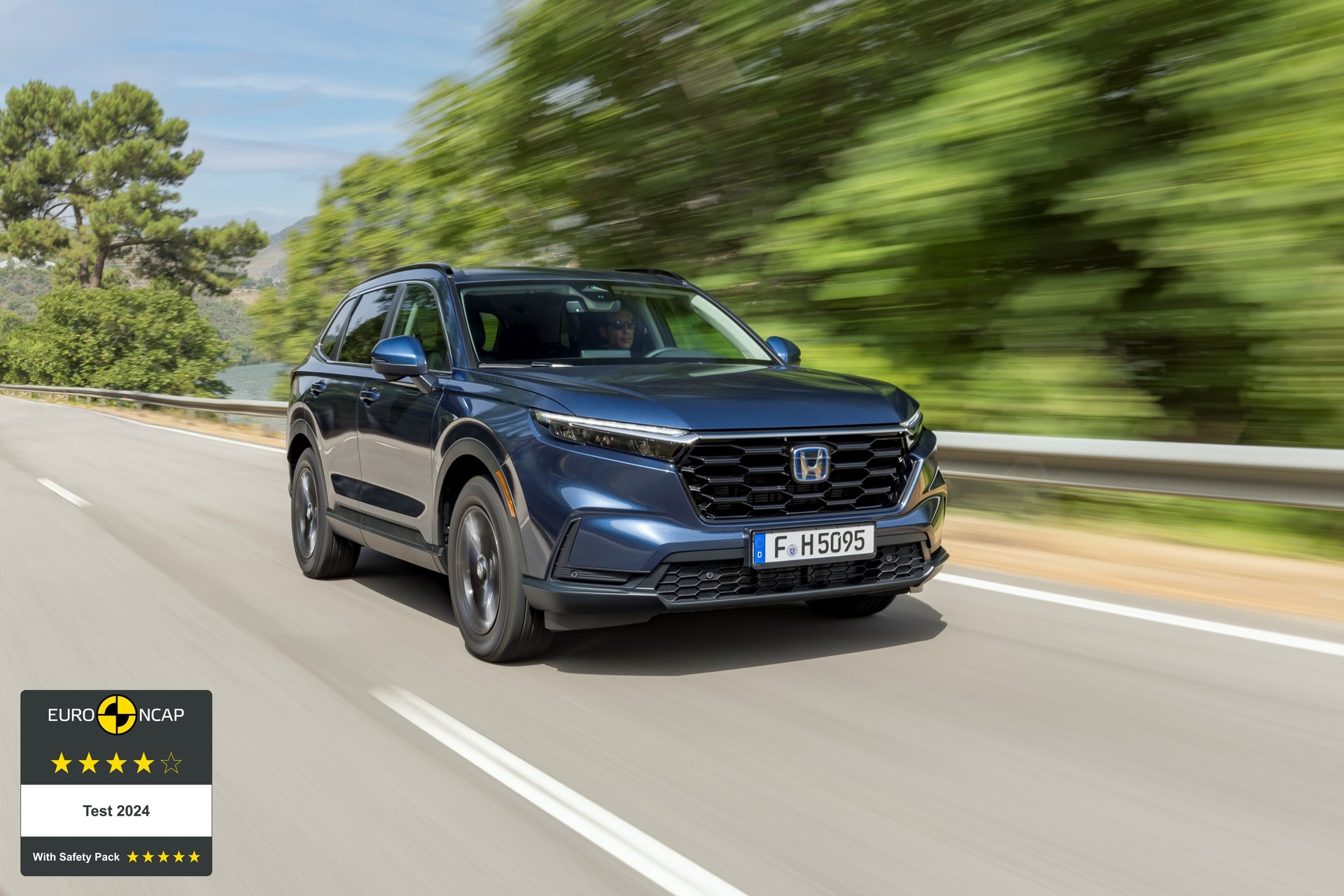
Honda CR-V Hybrid 2.0 i-MMD 184 Elegance — from ≈51,500 €
The CR-V is the most expensive of the trio and the least powerful on paper. But the i-MMD system has been refined for years and it shows: the transition between combustion and electric motors is so smooth that you have to look at the screen to know what is moving the car. On the motorway, at sustained speeds, it engages a direct ratio between the petrol engine and the wheels, and that is where it manages to maintain the 6 l/100 km real-world figure it homologates — something the X-Trail e-Power does not achieve by design.
Inside, the feeling is a step above the other two. Materials, soundproofing, ergonomics. The rear seat is among the most generous in the segment. That said, with an ECO label (not CERO) and no plug-in option, its tax appeal is lower than the RAV4’s in cities with strict restrictions.
| Power kW | Power CV | Top speed | Consumption | CO₂ | Label | Fuel |
|---|---|---|---|---|---|---|
| ≈140 kW | ≈184 CV | ≈190 km/h | ≈6 l/100 | ≈140 g/km | ECO | Petrol hybrid |
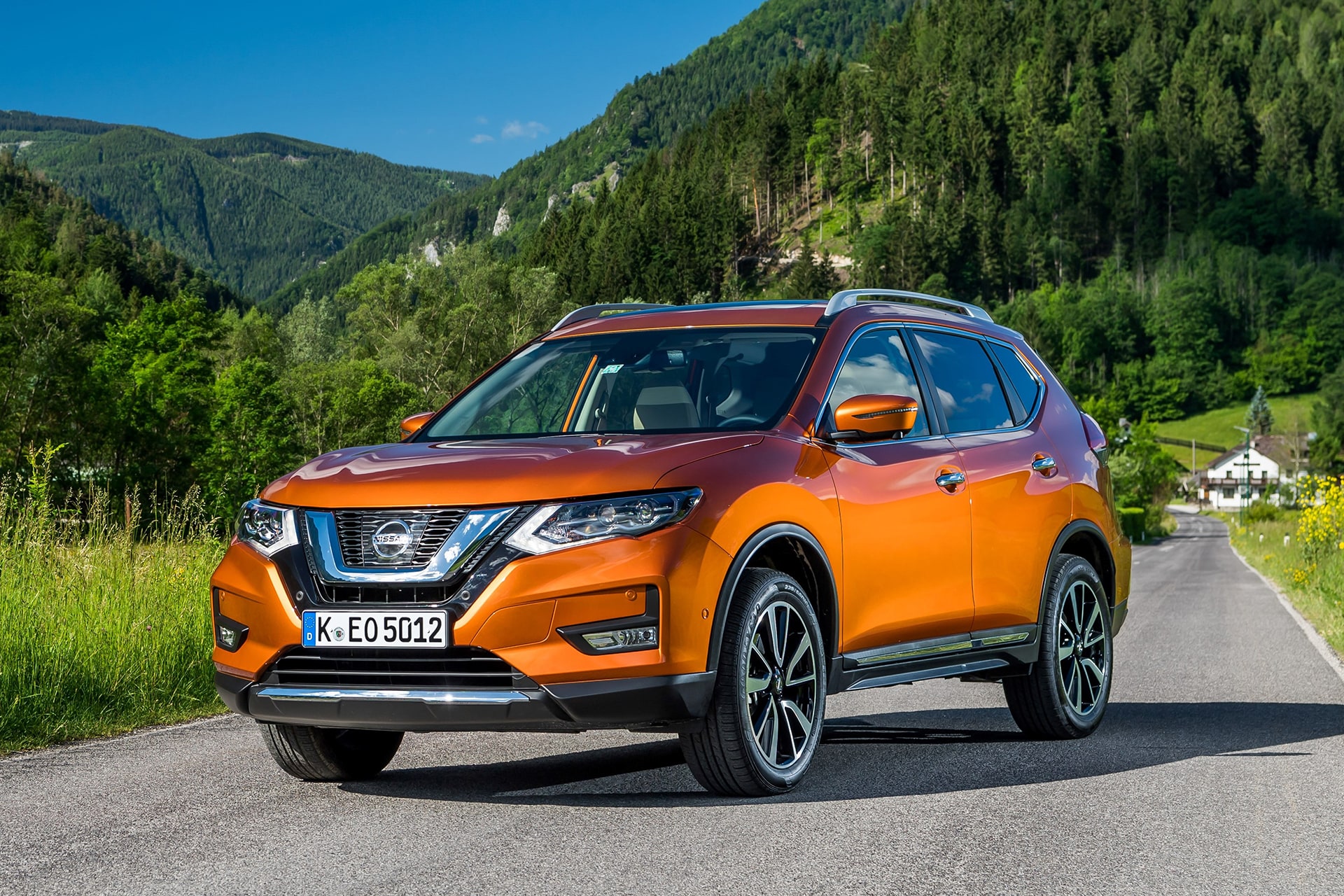
Nissan X-Trail e-Power 204 Acenta — from ≈42,000 €
The X-Trail is the cheapest of the trio by a considerable margin: almost 10,000 € less than the other two in the compared trim. And its e-Power system has a very specific argument for the city: the driving feel is that of an EV. Instant acceleration, one pedal, zero vibration at low speeds. In traffic jams it works wonderfully.
The problem appears on the motorway. As the petrol engine never drives the wheels directly, on long trips at 120 km/h the generator has to work at high revs to power the battery, and consumption soars above 7 real l/100 km in many independent tests. The homologated 5.5 l/100 km is hard to see outside the urban cycle. For someone who does 80% city and 20% road, it is a well-rounded purchase. For someone who drives the A-6 every weekend, it is not.
We have already analysed this model in depth in the X-Trail e-Power review.
| Power kW | Power CV | Top speed | Consumption | CO₂ | Label | Fuel |
|---|---|---|---|---|---|---|
| ≈150 kW | ≈204 CV | ≈170 km/h | ≈5.5 l/100 | ≈130 g/km | ECO | Petrol hybrid |
Where each one wins, no half measures
The RAV4 wins if you have a plug and make short trips during the week: it is the only one that lets you drive in true pure electric mode, with the CERO label that opens Madrid Centro and Barcelona ZBE without issues. It also wins on raw performance — it is a different car when you press the accelerator.
The CR-V wins on long trips. Full stop. Its system with direct clutch at high speeds is the only one of the three that does not penalise the motorway. It also wins on perceived interior quality, although this is a subjective advantage.
The X-Trail wins on price and urban feel. Almost 10,000 € less than the other two for a proposal that, if you live in the city, more than meets the need.
Summary table and scoring
| Model | Price from | Power | Homologated consumption | Label | City | Long trip | Price-performance | Overall score |
|---|---|---|---|---|---|---|---|---|
| Toyota RAV4 PHEV Advance | ≈50,500 € | 270 CV | 1.5 l/100 (with charging) | CERO | 9/10 | 7/10 | 6/10 | 7.5/10 |
| Honda CR-V Hybrid Elegance | ≈51,500 € | 184 CV | 6 l/100 | ECO | 7/10 | 9/10 | 6/10 | 7.5/10 |
| Nissan X-Trail e-Power Acenta | ≈42,000 € | 204 CV | 5.5 l/100 | ECO | 9/10 | 6/10 | 8/10 | 7.5/10 |
Verdict by use case
- Pure urban use with a home charger: Toyota RAV4 Plug-in Hybrid. It is the only one that lets you drive truly electric, and the CERO label is worth gold in Madrid and Barcelona.
- Regular long trips, weekly motorway driving: Honda CR-V Hybrid. Its direct motorway clutch is decisive and it is where the other two pay a consumption toll.
- Best price-performance ratio: Nissan X-Trail e-Power. Almost 10,000 € less (a difference well above 15% compared with its rivals) for a compact SUV with an EV feel in the city. If you are not going to plug in a PHEV and do not spend your life on the motorway, it is the one that gives you the most car per euro.
Frequently asked questions
Which of the three consumes least in the city in real conditions?
The Nissan X-Trail e-Power is the most efficient in a 100% urban environment because it always drives the wheels with the electric motor. The RAV4 can also be unbeatable if you plug it in and make trips within its 140 electric km.
Is it worth paying 8,500 € more for the RAV4 over the X-Trail?
Only if you are really going to plug it in and need the CERO label. If you do not have an accessible charging point, the difference will never be recouped.
Why does the X-Trail consume more on the motorway than the CR-V if it has less power?
Because its petrol engine does not drive the wheels: it generates electricity for the electric motors. At a sustained 120 km/h, that double conversion loses efficiency compared with Honda’s direct coupling in the i-MMD.
Which is best for a family with three child seats?
The CR-V offers the most generous rear seat in width, followed by the X-Trail. The RAV4 is the tightest of the three on the rear bench for three seats side by side.
